What Each Travel Style Actually Means
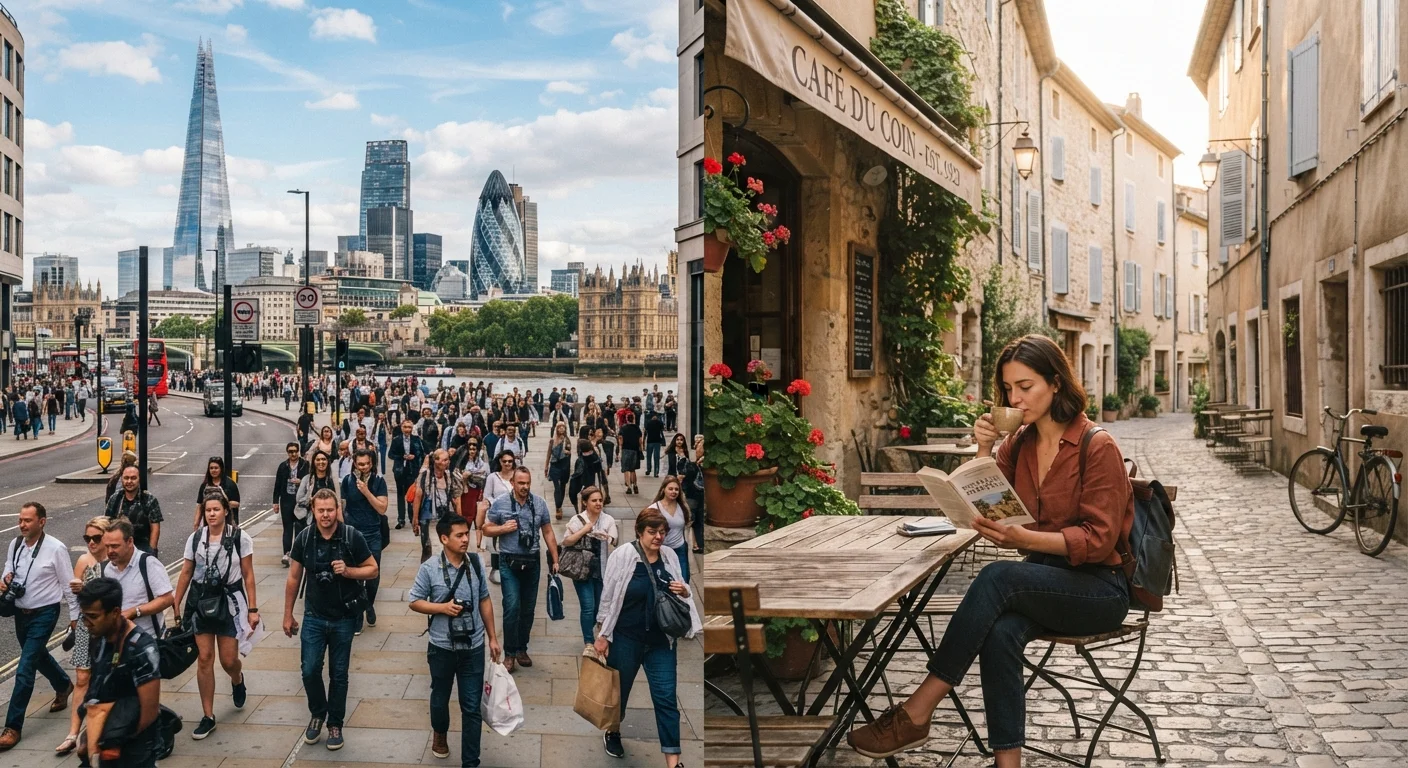
A city break is a short trip — typically two to five days — centered on seeing as many highlights as possible. Think arriving in a new destination on a Friday evening, cramming museums, neighborhoods, and restaurants into the weekend, and flying home by Sunday night. It's fast, focused, and deliberately efficient.
Slow travel is the opposite instinct. Instead of hopping between cities, you choose one place and settle in for an extended stay — often several weeks or even months. You shop at the same market, learn the barista's name, and start recognizing faces on your morning walk. The destination stops being a checklist and starts feeling like a temporary home.
Neither approach is a niche trend. City breaks have long dominated short-haul European travel, while slow travel has gained momentum as remote work made longer stays more practical for many people. For first-time travelers trying to figure out their style, understanding the genuine trade-offs is more useful than following any particular travel influencer's philosophy. See our step-by-step planning guide for help structuring whichever approach you choose.
The Case for City Breaks
If your annual leave is measured in days rather than weeks, city breaks are genuinely powerful. You can visit two European capitals in a single ten-day trip, sampling each city's character before deciding which deserves a longer return visit someday.
See multiple destinations in one trip
City breaks allow travelers to experience two or three places within a single holiday, ideal for those still exploring which destinations resonate with them most.
Lower planning complexity for beginners
Short, focused itineraries are easier to research and book, with fewer variables like long-stay visa rules or monthly rentals to navigate.
Suits limited vacation time perfectly
For travelers with only five to seven days of annual leave, city breaks maximize variety without requiring extended time away from work or responsibilities.
Maintains high energy and novelty throughout
Constant new surroundings, food, and experiences keep the trip feeling exciting and stimulating from start to finish.
City breaks also tend to be logistically simpler for beginners. Hotels handle the details, itineraries are compact, and you never need to think about what life looks like after the tourist highlights run out. The trade-off is that you often leave with a highlights-reel impression rather than an honest one — you'll know the famous square but not the residential street two blocks behind it.
The Case for Slow Travel
Slow travel's central gift is context. When you spend three weeks in a single neighborhood, you start noticing rhythms that no guidebook documents: when the local market sets up, which café fills with office workers at noon, how the light changes over a particular rooftop in the late afternoon. That kind of familiarity is genuinely hard to manufacture in 48 hours.
Surface-level impressions replace genuine understanding
Two days in a city reveals landmarks but rarely the texture of daily local life, leaving travelers with a curated tourist experience rather than an honest one.
Travel fatigue accumulates quickly
Packing airports, check-ins, and new orientation into every few days is physically and mentally exhausting, especially across multiple time zones.
Higher per-night accommodation costs
Standard nightly hotel rates offer no discount for brevity, while slow travelers can negotiate significantly lower weekly or monthly rates for apartments.
Limited space for spontaneity or recovery
When an itinerary spans only 48 hours, a rainy afternoon or a single unexpected delay can derail carefully planned visits with no time to reschedule.
There's a financial logic to slow travel that surprises many beginners. Weekly and monthly accommodation rates are often significantly lower per night than standard hotel bookings, and cooking a few meals at home dramatically cuts daily spending. Our accommodation style guide breaks down how apartment rentals compare to hotels for extended stays.
30–50%
Potential nightly savings on long-stay rentals
Short-term rental platforms commonly show per-night rates drop substantially when booking weekly or monthly stays compared to equivalent nightly rates.
4–5 days
Average length of a city break trip
European travel research consistently shows that most short-haul city trips cluster around a long weekend to mid-week duration.
The slower pace also reduces the culture shock that rapid destination-hopping can intensify — you have time to adjust, make mistakes, and recover gracefully.
Practical Factors That Should Shape Your Choice
Beyond philosophy, a few practical realities often decide the question for you.
- Available time: Three days off work means a city break. Three months of sabbatical opens the door to slow travel.
- Luggage: City-breakers can realistically travel carry-on only, moving nimbly between airports. Slow travelers need clothes for varying weather and longer stretches — check out the carry-on vs. checked bag trade-offs before you pack.
- Destination type: Some places reward slow travel more than others. A dense city like New York has enough layers to absorb months of exploration. A small island might be genuinely exhausted in a few days.
- Seasonality: Slow travelers especially benefit from timing — arriving just as peak crowds thin out delivers better prices and a more authentic off-season experience.
Visa Rules Can Decide for You
Many popular destinations — including countries in the Schengen Area of Europe — limit tourist stays to 90 days within any 180-day period. If slow travel is your goal, always verify visa and entry requirements through your government's official travel portal well before booking. Rules vary significantly by nationality and destination, and they do change. Never rely solely on travel blogs or forums for entry requirements.