Getting Around: Which City Is Easier to Navigate?
For a first-time traveller stepping off a transatlantic flight, navigating an unfamiliar city can feel daunting. Paris edges ahead here. Its Métro system covers the city comprehensively, is colour-coded, and uses clear multilingual signage — most first-timers feel confident on it within a day. The city's layout also follows a rough spiral (the arrondissements, or numbered districts, spiral outward from the centre), which gives a useful mental map.
Rome is trickier. Its public transit — a combination of buses, trams, and a limited two-line metro — is less intuitive, and many visitors end up walking far more than planned. That's not entirely a bad thing: Rome's streets are spectacular to wander. But if you're already tired or carrying luggage, the winding cobblestone lanes and aggressive traffic can quickly become stressful. Plan your accommodations near the sites you care most about to minimise transit headaches.
| Criterion | Paris | Rome |
|---|---|---|
| Transit ease | Excellent metro, well-signposted | Limited metro, buses complex |
| Walkability | Very walkable central districts | Walkable but uneven cobblestones |
| Average dining cost | Higher (especially cafés) | Lower at local trattorias |
| Free attractions | Some (parks, markets, select museums) | Many (piazzas, fountains, exteriors) |
| English spoken | Widely in tourist areas | Common in tourist areas |
| Day trip options | Versailles, Champagne region | Florence, Pompeii, Amalfi Coast |
| Crowd management | Timed entry widely used | Advance booking essential |
Cost and Budget: What to Realistically Expect
Neither Paris nor Rome is a bargain destination by global standards, but Rome generally offers more flexibility for budget-conscious travellers. A sit-down lunch in a Roman trattoria away from the tourist corridors can be genuinely affordable, and iconic spots like the Trevi Fountain, the Pantheon's exterior, and every piazza in the city are free to simply experience.
Paris commands higher prices across accommodation, dining, and museums. That said, many Paris museums offer free entry on the first Sunday of each month, and the city's parks and markets are wonderful, no-cost experiences. Before you travel, make sure you understand your payment options and entry fees — our guide on first international trip essentials covers the financial planning basics in detail.
~30M
Annual international visitors to Paris
Paris consistently ranks among the world's most-visited cities, according to Euromonitor International tourism data.
~10M
Annual visitors to the Colosseum alone
The Colosseum is one of Italy's single most-visited paid attractions, per Italy's Ministry of Culture visitor figures.
3,000+
Years of continuous habitation in Rome
Rome is considered one of the oldest continuously inhabited cities in the Western world, with settlements dating to at least the 8th century BCE.
Culture, Pace, and the Feel of Each City
Paris has a reputation for formality that can unnerve first-timers, but a few simple courtesies — greeting shopkeepers with a bonjour, attempting even a word or two of French — go a long way. The city rewards a slower pace: linger over a café crème, stroll along the Seine, and resist the urge to check every landmark off a list. Parisians take their leisure seriously, and visitors who do the same tend to have richer experiences.
Rome operates on a warmer, more spontaneous energy. Conversations start easily, waiters are chattier, and the city feels less self-conscious about being a tourist destination. The flipside is that popular sites like the Vatican Museums and the Colosseum require advance booking and can still feel crowded. Both cities, frankly, are best appreciated when you embrace a slow travel mindset rather than sprinting between landmarks.
Book Major Attractions Well in Advance
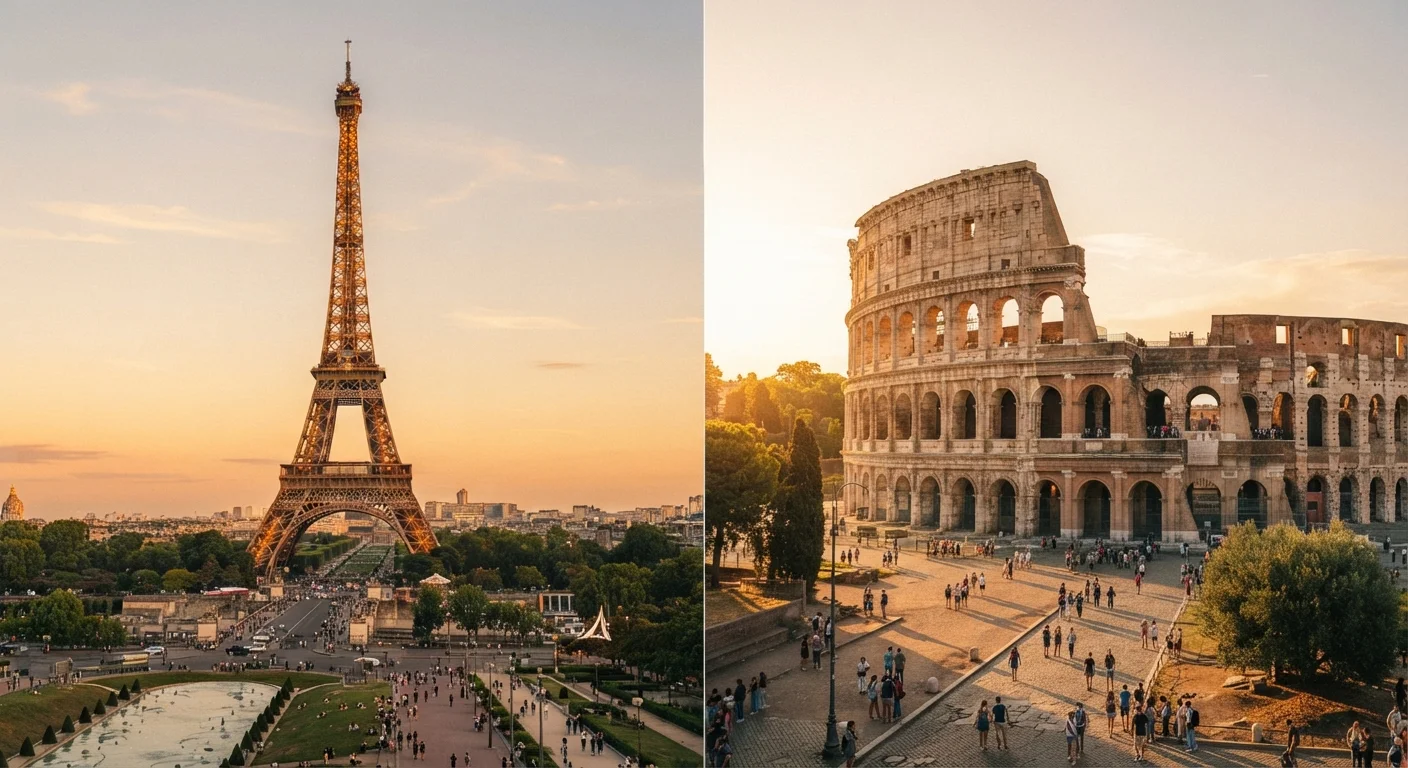
Both the Eiffel Tower (Paris) and the Colosseum or Vatican Museums (Rome) sell out weeks ahead during peak season, which generally runs from April through October. Purchasing timed-entry tickets before you leave home is strongly recommended. Check official venue websites directly for the most current booking information, as policies and availability change regularly.
So, Which Should You Choose?
Honestly, you can't go wrong — but the right answer depends on what kind of traveller you already suspect you are. If structure, reliable transit, and a tightly curated cultural itinerary appeal to you, Paris is a remarkably well-designed first European city. If you crave sensory overload, ancient history around every corner, and a more flexible, wandering approach, Rome will feel electric from day one.
If you're still building your confidence as an international traveller and want to broaden your horizons beyond Europe, our Tokyo first-timer's guide is another excellent read — it proves that even more unfamiliar destinations become manageable with the right preparation. Wherever you choose to go first, the act of going is the most important step.