Understanding Tokyo's Scale
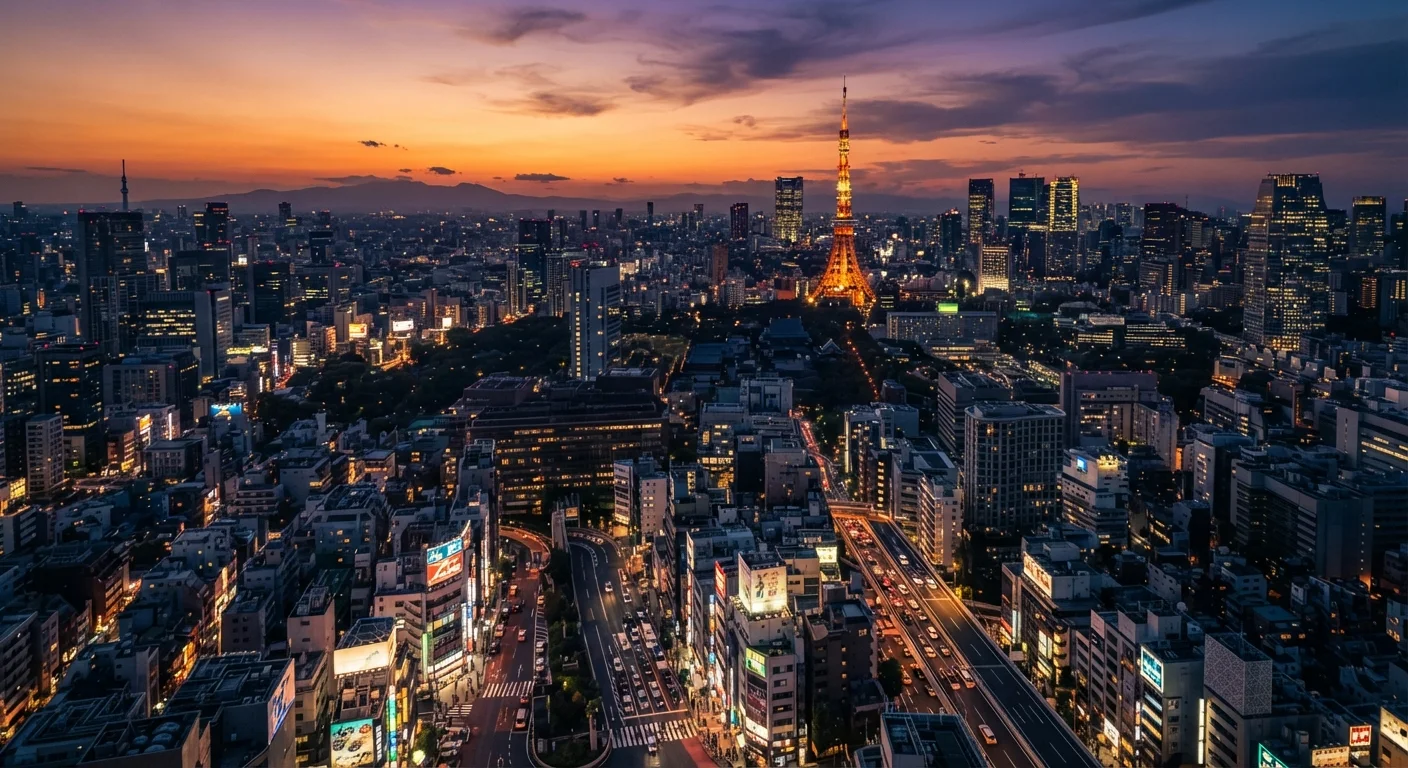
First-timers often land in Tokyo expecting something like a very large version of a familiar city. What they find instead is something else entirely. The greater Tokyo metropolitan area is one of the most populous urban regions on Earth, and even the city proper holds roughly 14 million residents across dozens of distinct neighbourhoods — each with its own character, pace, and purpose.
This scale is not a reason to be intimidated; it is a reason to plan deliberately. Tokyo is not a city you absorb by wandering randomly. Picking a handful of neighbourhoods to explore each day, and anchoring yourself near good transit connections, makes the difference between feeling lost and feeling like you own the place.
Compared to navigating a city like New York — where borough geography shapes everything — Tokyo is organised around a ring-and-spoke rail network rather than a grid. Once that mental model clicks, the city starts to make sense. See how borough-based thinking applies to another major destination in our guide to understanding New York City's five boroughs.
IC card
A rechargeable contactless payment card used to pay for trains, subways, and buses across Tokyo by tapping in and out at station gates. Suica and Pasmo are the two main versions.
Yamanote Line
A circular JR railway line that loops through Tokyo's most visited areas, including Shinjuku, Shibuya, Ueno, and Tokyo Station. It is the backbone of most visitor itineraries.
Ryokan
A traditional Japanese inn where guests typically sleep on futons, wear provided robes, and dine on multi-course Japanese meals. Shoes are always removed at the entrance.
Genkan
The entrance area of a Japanese home, inn, or traditional restaurant where outdoor shoes are removed before stepping up into the main living or dining space.
JR (Japan Railways)
The main national rail operator in Japan. In Tokyo, JR operates several key lines including the Yamanote Line and the Narita Express connecting the airport to the city.
Choosing a Neighbourhood Base
Where you stay shapes your entire trip. Tokyo's most visitor-friendly neighbourhood bases include Shinjuku, Shibuya, Asakusa, and Ginza — each with genuinely different personalities.
- Shinjuku is loud, dazzling, and supremely connected. It sits at one of the world's busiest train hubs and gives you easy access to both central Tokyo and day trips further afield. It suits travellers who want maximum efficiency.
- Shibuya radiates youthful energy and is home to the famous scramble crossing. It is a strong base for those interested in fashion, pop culture, and nightlife.
- Asakusa offers a slower, more historic atmosphere — traditional craft shops, the Senso-ji temple complex, and quieter streets. First-timers who want a sense of old Tokyo often love it here.
- Ginza leans upscale and polished, with wide avenues and excellent access to central attractions. It is calm by Tokyo standards and a comfortable introduction for travellers who prefer a more sedate pace.
There is no wrong answer. The key is choosing an area close to a major train station — ideally on the JR Yamanote Line, which loops through most of the city's main hubs.
Book Accommodation Near a Yamanote Line Stop
When searching for hotels, filter by proximity to any stop on the JR Yamanote Line. This single habit saves you enormous time and simplifies every day's logistics. Most of the city's major attractions are within one or two stops of the loop.
Mastering the Train Network
Tokyo's train network looks bewildering at first glance — multiple operators, hundreds of lines, and station complexes that function as small cities underground. In practice, most visitors use a surprisingly small slice of it.
The IC card — either Suica (issued by JR East) or Pasmo — is your single most important tool. Load it with yen, tap it on any gate, and it works across virtually every train, subway, and bus in the city. You do not need to buy individual tickets or decode fare charts. These cards are available at airport vending machines and major stations.
The JR Yamanote Line is your backbone. It is a loop line connecting Shinjuku, Shibuya, Harajuku, Ebisu, Osaki, Shinagawa, Tokyo, Ueno, Akihabara, and several other key stops. Ride it in either direction and you can reach most tourist areas within 20–30 minutes.
For deeper navigation, Google Maps gives accurate, real-time transit directions including platform numbers. Download offline maps of Tokyo before you fly — useful when data access is spotty on arrival.
Tokyo Has Multiple Rail Operators
Not all trains in Tokyo are run by JR — Tokyo Metro and Toei Subway are separate operators with their own lines. The good news: your IC card (Suica or Pasmo) works across all of them without any extra setup. Just tap and go.
Cultural Basics Every Visitor Should Know
Tokyo rewards visitors who arrive having done a little cultural homework. For a thorough pre-trip etiquette checklist, our guide before you land covers the essentials across many destinations. For Tokyo specifically, a few norms stand out:
- Quiet on transit: Talking loudly on trains is considered disruptive. Phone calls are avoided in train carriages. Follow the lead of those around you.
- Shoes off indoors: Many traditional restaurants, ryokan (Japanese inns), and some homes require shoes to be removed at the entrance. Look for the step up (called an genkan) and follow suit.
- Cash matters: Despite its technological sophistication, Tokyo has many cash-preferred or cash-only establishments. Carry yen.
- Rubbish bins are rare: Public bins are scarce outside convenience stores. Many locals carry a small bag for their own rubbish until they can dispose of it properly.
- Queuing is taken seriously: Lines for trains, escalators, and food stalls are orderly. Stand on one side of the escalator (left in Tokyo) and wait your turn.
None of these norms are punishing — they reflect a broader culture of mutual consideration that makes Tokyo one of the most pleasant major cities to move through.
Practical Essentials Before You Arrive
Before booking flights, confirm your visa situation. Many nationalities — including US citizens — can visit Japan visa-free for short tourist stays, but requirements do change. Always verify current entry rules directly with Japan's Ministry of Foreign Affairs or your country's official government travel advisory. For broader first-international-trip preparation, our guide everything you need to know before your first international trip covers passports, money, and safety basics in one place.
- Pocket Wi-Fi or SIM card: Reliable data access makes navigation far easier. Pocket Wi-Fi devices can be reserved online and picked up at the airport on arrival.
- Yen cash: Exchange currency before you go, or withdraw from 7-Eleven and Japan Post ATMs, which reliably accept foreign cards.
- Comfortable shoes: Tokyo is a walking city. Even with excellent transit, daily step counts in the range of 15,000–20,000 are common.
- Translation app: Google Translate's camera function can read Japanese menus and signs in real time — genuinely useful and often entertaining.
Tokyo has a well-earned reputation for being one of the most beginner-friendly cities in the world, despite its size. Go with an open mind, a charged phone, and a loaded IC card — and you are already halfway there.
This article provides general travel information only. Visa requirements, entry rules, and travel conditions can change; always verify with official government sources and your airline before travelling.
Japan Tourism Agency Official Website
Japan's official national tourism portal provides destination overviews, regional travel ideas, and up-to-date practical information for international visitors.
Hyperdia or Google Maps (Transit Mode)
Both tools provide accurate, step-by-step transit directions across Tokyo's train and subway network, including platform numbers, transfer instructions, and fare estimates.
Japan Visa Information (Ministry of Foreign Affairs)
The official source for checking whether your nationality requires a visa to enter Japan and what documentation is needed for tourist stays.