Manhattan: The Island Everyone Recognizes
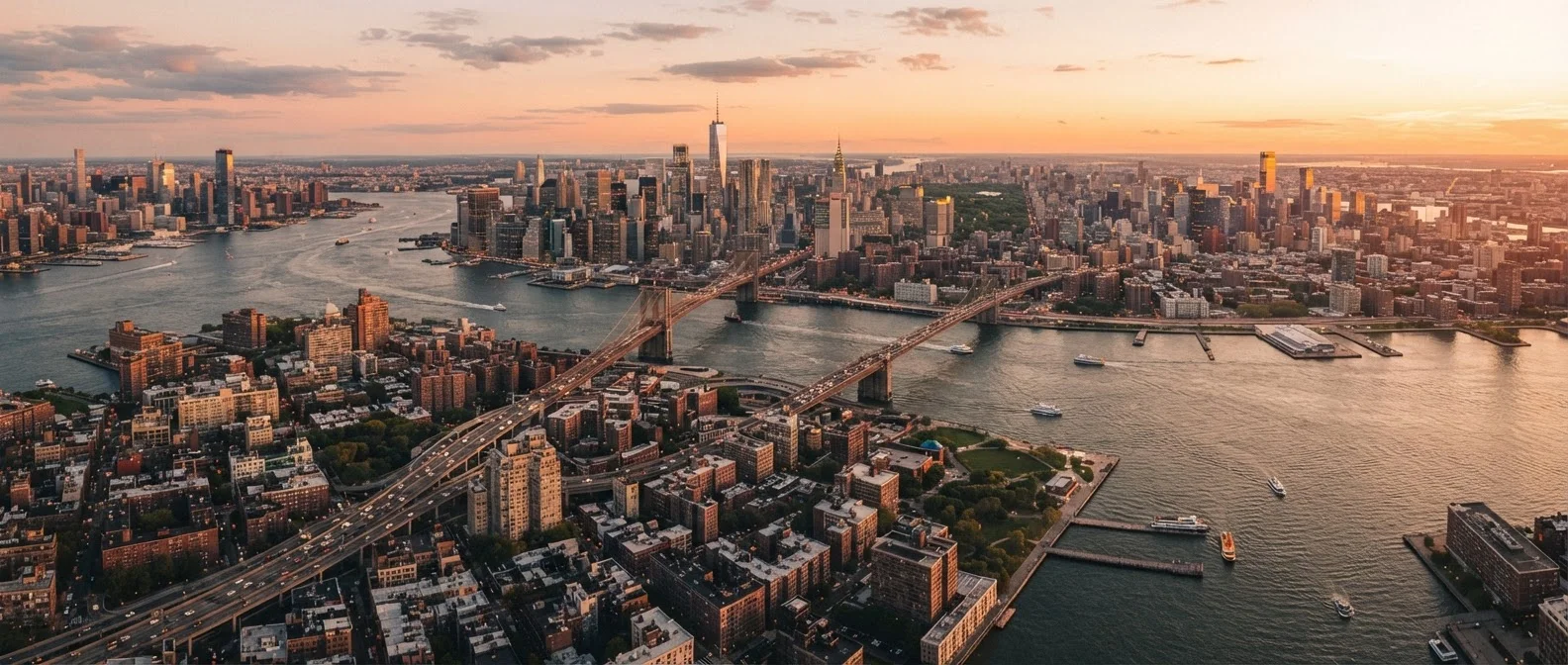
When most people picture New York, they're picturing Manhattan — the narrow island packed with skyscrapers, Central Park, Broadway theaters, and yes, Times Square. It's real, it's iconic, and it absolutely deserves a visit. But Manhattan is also expensive, crowded, and just one-fifth of the city.
Midtown Manhattan — home to the Empire State Building, Rockefeller Center, and the Theater District — is where first-time tourists tend to cluster. Venture further, though, and the borough reveals entirely different moods: the cobblestone streets of the West Village, the street art of Harlem, the financial history of Lower Manhattan, and the tranquil paths of Riverside Park. Manhattan alone could fill a week if you let it breathe.
Brooklyn: Culture, Food, and Waterfront Views
Brooklyn is New York City's most populous borough, and it has spent the past two decades becoming a destination in its own right. The neighborhoods here are strikingly varied: Williamsburg buzzes with independent restaurants and music venues; DUMBO offers some of the most photographed views of the Manhattan skyline from beneath its famous bridge arches; Prospect Park gives locals their version of Central Park; and Coney Island delivers classic seaside boardwalk nostalgia.
Food is a serious draw. Brooklyn's restaurant scene spans everything from celebrated Caribbean spots in Flatbush to old-school Italian bakeries in Bensonhurst. The Brooklyn Museum is one of the largest art museums in the United States and rarely as crowded as comparable institutions in Manhattan.
Walk the Brooklyn Bridge for Free
The pedestrian walkway on the Brooklyn Bridge is open to walkers and cyclists and costs nothing. Start on the Manhattan side near City Hall and walk to DUMBO in Brooklyn for a rewarding introduction to both sides of the East River. Allow about 30–40 minutes at a relaxed pace.
Queens: The Most Diverse Place on Earth
Queens is frequently cited as one of the most ethnically diverse urban areas on the planet, with residents representing more than 100 countries and speaking over 160 languages. For food lovers, that makes it an extraordinary destination. Jackson Heights alone offers a dense stretch of South Asian, Latin American, and Tibetan restaurants within a few city blocks.
Flushing is home to one of the largest Chinatowns in the United States, with sprawling food courts offering regional Chinese cuisines rarely found elsewhere in the city. Astoria has long been celebrated for its Greek community and Mediterranean dining. Queens also houses both JFK and LaGuardia airports, meaning many visitors pass through without ever realizing the culinary adventure just outside the terminal.
Airport Neighborhoods Are Worth Exploring
Both JFK and LaGuardia airports sit within Queens, meaning visitors arriving early or departing late are ideally positioned for a detour into neighborhoods like Astoria or Jackson Heights. These areas see far fewer tourists than Manhattan but offer some of the city's most celebrated dining and street life.
The Bronx and Staten Island: Often Overlooked, Worth the Trip
The Bronx is the birthplace of hip-hop, home to the New York Botanical Garden, and the location of the world-famous Bronx Zoo — one of the largest metropolitan zoos anywhere. Arthur Avenue, sometimes called the real Little Italy, is a beloved destination for Italian-American food that feels genuinely neighborhood-rooted rather than tourist-facing.
Staten Island is the quietest and most suburban of the five boroughs. It's reached via the free Staten Island Ferry, which departs from Lower Manhattan and offers sweeping harbor views of the Statue of Liberty and the skyline — completely free of charge. The borough is also home to Snug Harbor Cultural Center and the Staten Island Greenbelt, a surprising stretch of protected forest in the middle of New York City.
Getting Around: The Subway Is Your Friend
New York City's subway system runs 24 hours a day, seven days a week, connecting all five boroughs (with the exception of Staten Island, which has its own surface rail line). A single fare covers you from the Upper West Side to Far Rockaway in Queens, or from the Bronx all the way down to Coney Island. The system can feel overwhelming at first, but free apps like the MTA's official route planner make navigation approachable even for complete beginners.
The NYC Ferry is an increasingly popular alternative, offering scenic water routes between Brooklyn, Queens, the Bronx, and Manhattan. It requires a separate fare but provides a uniquely unhurried way to experience the city's waterfront geography.
If you enjoy exploring a big city this way, our Tokyo for First-Time Visitors guide offers a similar borough-by-neighborhood breakdown for another iconic transit city. And if you're deciding how deeply to explore NYC versus moving on quickly, our look at city break vs. slow travel lays out both approaches honestly.
472
Subway stations across NYC's subway system
According to the Metropolitan Transportation Authority, the NYC subway has 472 stations — more than any other rapid transit system in the world by station count.
800+
Languages spoken in New York City
Research from the Endangered Language Alliance has estimated that more than 800 languages are spoken across New York City, making it one of the most linguistically diverse cities on Earth.
302 sq mi
Total land area of the five boroughs
New York City covers approximately 302 square miles of land, spread across five distinct boroughs connected by bridges, tunnels, and ferries.