Why Barcelona's Districts Feel Like Separate Cities
Barcelona is one of those rare cities where every few blocks, the entire vibe shifts. The narrow medieval lanes of the Gothic Quarter give way to the broad, tree-lined avenues of Eixample, which eventually melt into the village-like calm of Gràcia. Understanding the city's distinct barrios (neighborhoods) helps you navigate like a local and choose where to spend your precious time.
Barcelona is divided into ten official districts, but for first-time visitors, focusing on the six most visited neighborhoods gives the clearest picture of the city's personality. Each one reflects a different chapter of the city's history, architecture, and culture.
The Six Neighborhoods Every Visitor Should Know
Gothic Quarter (Barri Gòtic)
This is the oldest part of Barcelona, built on top of a Roman settlement. Expect a labyrinth of narrow stone streets, hidden plazas, and buildings dating back to the Middle Ages. The Barcelona Cathedral and Plaça Reial anchor the area. It's lively, tourist-friendly, and genuinely historic — though it can feel crowded in peak summer months.
El Born (Sant Pere, Santa Caterina i la Ribera)
Just east of the Gothic Quarter, El Born has reinvented itself as a hub for independent boutiques, tapas bars, and contemporary art galleries. The Basílica de Santa Maria del Mar is a stunning Gothic church that locals genuinely love. This neighborhood balances history and cool-factor exceptionally well.
Eixample
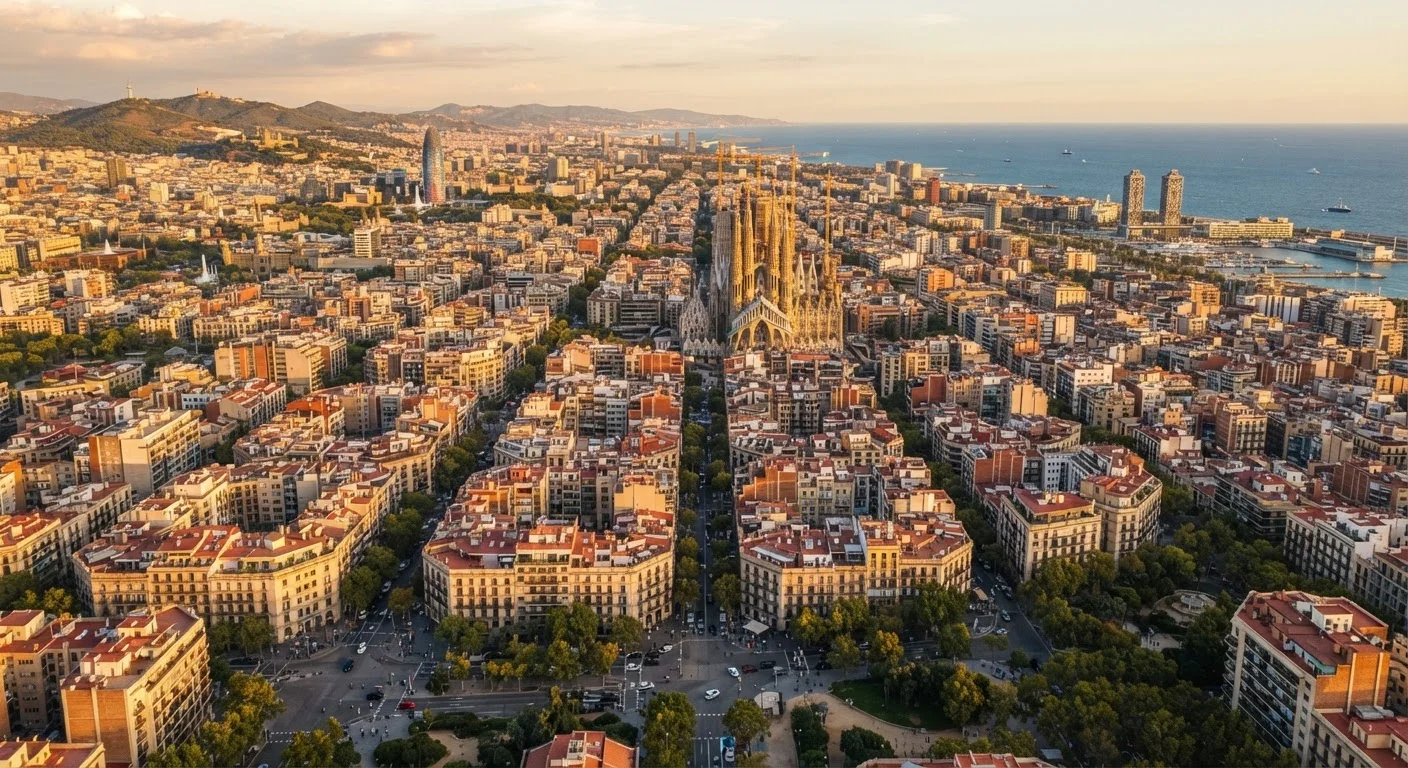
Designed in the 19th century by urban planner Ildefons Cerdà, Eixample is Barcelona's modernist showcase. Its unmistakable octagonal city blocks — visible even from satellite maps — are lined with Antoni Gaudí's masterpieces, including La Sagrada Família and Casa Batlló. The neighborhood is also home to upscale restaurants and the vibrant LGBTQ+ district known as the Gayxample.
Gràcia
Once an independent village, Gràcia still feels refreshingly separate from the tourist bustle. Bohemian cafés, independent bookshops, and colorful festivals define its character. The neighborhood hosts the famous Festa Major de Gràcia each August, when residents decorate entire streets with elaborate handmade displays. It's a favorite among locals and long-term expats.
Barceloneta
Barcelona's beachside neighborhood sits on a narrow peninsula between the port and the Mediterranean Sea. Built in the 18th century to house displaced residents, it now offers seafood restaurants, sandy beaches, and a distinctly relaxed atmosphere. It can get packed in summer — visiting on a weekday morning rewards you with a much calmer experience.
Poble Sec & Montjuïc
Poble Sec is a working-class neighborhood experiencing a creative resurgence, with a growing arts scene along Carrer de Blai — famous for its pintxos bars. Above it rises Montjuïc hill, home to the Fundació Joan Miró, the Olympic Stadium, and sweeping views over the city and harbor.
Barri / Barrio
The Catalan and Spanish words, respectively, for 'neighborhood.' In Barcelona, locals typically use the Catalan term 'barri' in everyday speech.
Modernisme
The Catalan variant of the Art Nouveau movement, flourishing roughly from the 1880s to 1910s. Barcelona's Eixample district is the world's greatest concentration of Modernisme architecture.
Pintxos
Small snacks or appetizers, similar to tapas, typically served on slices of bread and secured with a toothpick. Originally from the Basque Country, they've become widely popular in Barcelona's bar scene.
Eixample
Literally meaning 'extension' in Catalan, Eixample refers to Barcelona's 19th-century planned expansion district, characterized by its grid layout with chamfered (angled) corners at intersections.
Festa Major
A major neighborhood festival celebrated in many Catalan towns and city districts, typically featuring street decorations, traditional music, fire runs, and community gatherings.
Practical Tips for Exploring Barcelona's Neighborhoods
Barcelona's neighborhoods are generally walkable, though the city's metro system connects all major districts efficiently. A T-Casual card (a rechargeable multi-journey transit card) is widely regarded as a convenient option for getting around — verify current fares and card types with the official Transports Metropolitans de Barcelona (TMB) website before your trip.
Entry to many of Barcelona's top architectural sites requires advance booking, especially Gaudí landmarks. Availability changes seasonally, so check official site websites directly rather than relying on third-party information.
Always Check Entry Requirements Before Visiting
Ticket availability, opening hours, and booking requirements for Barcelona's major attractions — including Gaudí landmarks — can change significantly between seasons. For the most up-to-date information, always verify directly with official attraction websites or the official Barcelona tourism portal (visitbarcelona.com). Entry rules for visitors from outside the EU may also apply; check your country's official government travel guidance before departure.
Each neighborhood has its own market worth visiting: La Boqueria in the Gothic Quarter, Mercat de Santa Caterina in El Born, and Mercat de l'Abaceria in Gràcia each reflect their surrounding area's character and are excellent spots to sample local produce.