When to Go: Seasons, Daylight, and Weather
Iceland is a year-round destination, but each season delivers a completely different experience — sometimes on the same day. Understanding what you're signing up for makes all the difference.
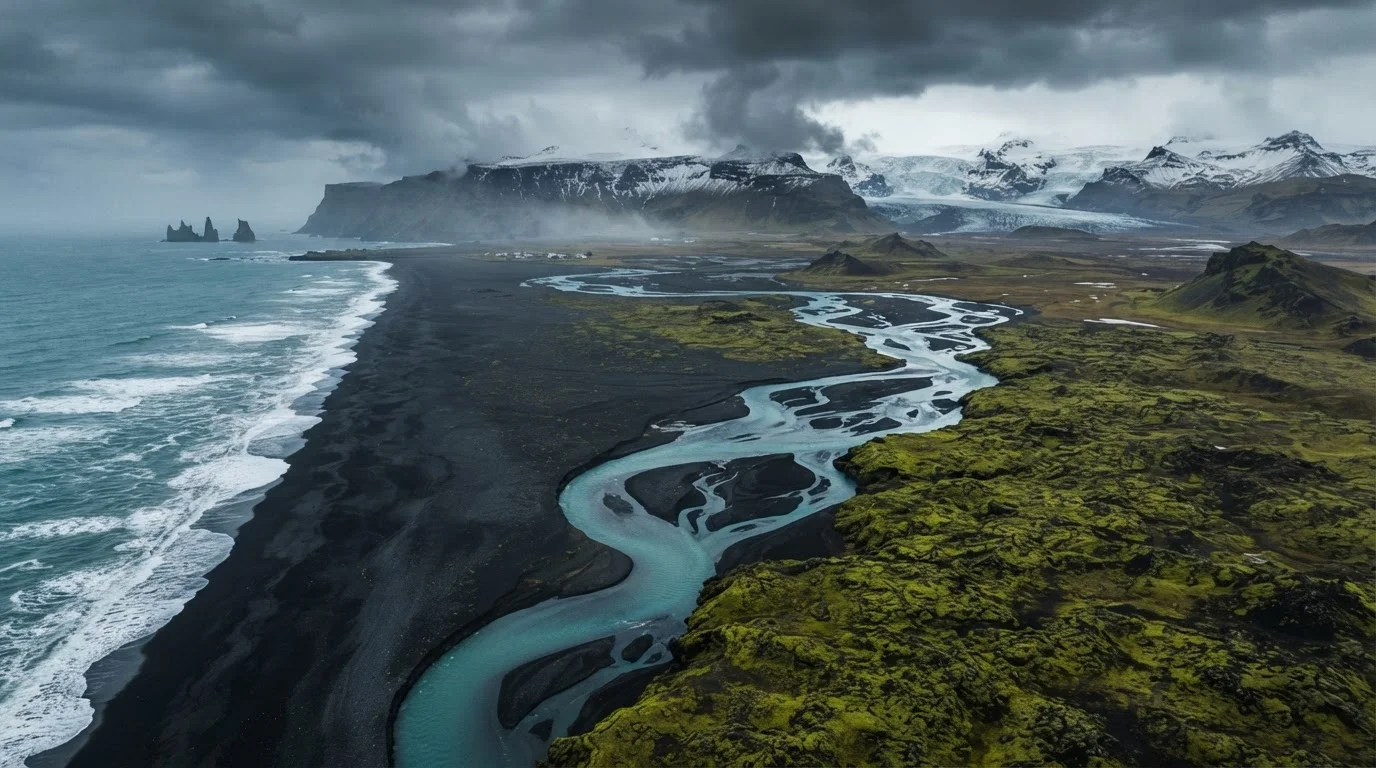
Summer (June–August) brings the famous midnight sun, where the sky never fully darkens. Temperatures hover between 50–65°F (10–18°C), wildflowers carpet the hillsides, and puffins nest along the cliffs. The tradeoff: crowds and higher accommodation prices. Winter (November–February) is prime aurora borealis season. Skies darken early and you'll need clear conditions to spot the Northern Lights — cloud cover can foil even the best-planned evenings. Expect temperatures around 23–35°F (-5–2°C) and limited daylight hours. Shoulder seasons (April–May and September–October) offer a compelling middle ground: thinner crowds, dramatic landscapes of contrasting colors, and reasonable chances of both auroras and greenery.
~330,000
Iceland's total population
Despite its small population, Iceland welcomed over 1.7 million international visitors annually before 2020, according to Icelandic Tourist Board data.
24 hrs
Daylight at peak summer solstice
Around June 21, Reykjavík experiences nearly continuous daylight, with the sun dipping just below the horizon for a brief twilight period.
828 miles
Length of the Ring Road (Route 1)
Iceland's primary highway encircles the entire island and connects most major tourist regions, according to the Icelandic Road and Coastal Administration.
Regardless of when you go, check road and weather conditions daily at road.is and vedur.is — Iceland's official sources for up-to-the-hour updates. Conditions can shift from sunny to blizzard within an hour.
Getting Around: Roads, Driving Rules, and the Ring Road
Iceland doesn't have an extensive train or bus network, so most first-timers rent a car. Route 1, the Ring Road, circles the entire island (roughly 828 miles / 1,332 km) and connects the country's major highlights. Many visitors complete a full loop in 7–10 days, though two weeks allows for meaningful detours.
F-Roads Are Not for Every Rental Vehicle
Iceland's highland F-roads are rough, often river-crossed tracks that require genuine 4WD capability. Driving a standard car onto an F-road voids your rental insurance, risks stranding your vehicle, and damages terrain that can take a century to recover. If the road number starts with 'F' on your map app, double-check your vehicle before proceeding. When in doubt, ask your rental agency directly.
A few driving rules are essential to know before you turn the key:
- F-roads (highland tracks marked with an "F") are only legal to drive with a 4WD vehicle. Driving a regular car on them voids your rental insurance and can damage the fragile terrain.
- Never drive off-road — it's illegal and causes lasting damage to Iceland's moss and lava fields, which can take decades to recover.
- Speed limits are strictly enforced: 50 km/h in towns, 80 km/h on gravel roads, and 90 km/h on paved roads.
- Headlights must be on at all times, regardless of daylight.
If this is your first international road trip, see our beginner's guide to international travel for a broader orientation before booking flights.
What to Pack: Layering for Iceland's Unpredictable Climate
Experienced Iceland travelers joke that you can experience all four seasons before lunch. Packing light but smart is the key. Build your wardrobe around a layering system:
- Base layer: moisture-wicking thermal tops and leggings
- Mid layer: a fleece or insulated jacket for warmth
- Outer layer: a waterproof, windproof shell jacket and pants — this is non-negotiable
Beyond clothing, pack waterproof hiking boots with ankle support (many trails are uneven lava rock), a buff or neck gaiter, and sunscreen — yes, even in winter. Snow reflection and summer sun at high latitudes can cause unexpected sunburn. Leave fragile or fashion-first footwear at home; Iceland is a boots-and-layers destination.
Pack a sleep mask even for summer travel — the midnight sun will stream through most curtains and disrupt sleep more than you'd expect. Blackout curtains are common in hotels but not guaranteed.
Sleep disruption is one of the most-reported issues for first-time summer visitors to Iceland, and it's entirely preventable with a $5 eye mask.
Download offline maps of Iceland before you go — cell coverage drops in the highlands and along remote coastal roads, sometimes for long stretches.
Iceland's interior and some coastal routes have significant dead zones, and relying on a live connection for navigation can leave drivers stranded mid-route.
Geothermal Pools: Etiquette and What to Expect
Iceland's geothermal pools range from the world-famous Blue Lagoon to small community pools (sundlaugar) found in nearly every town. For first-timers, the community pools are often the more authentic — and affordable — experience.
One rule is universal and firmly enforced: you must shower without your swimsuit before entering any pool. Attendants will check. This isn't optional etiquette; it's a hygiene standard upheld across all public facilities in Iceland. Signs guide you through the shower routine, and staff are friendly about explaining expectations to visitors.
Most pools have multiple hot pots at varying temperatures (around 100–108°F / 38–42°C) plus cold plunge pools. Bring your own towel, as rentals aren't always available at smaller spots. Children are welcome at most community pools, and many Icelanders treat their local pool as a daily social ritual — join in the spirit of it.
For broader cultural preparation before you arrive, our cultural preparation checklist is a helpful companion read.
Wildlife, Nature, and Leave-No-Trace Principles
Iceland's wildlife calendar is one of the country's great draws. Puffins arrive on coastal cliffs from around May to August. Humpback and minke whales are spotted on boat tours from Húsavík and Reykjavík. Arctic foxes — Iceland's only native land mammal — inhabit the Westfjords year-round. Reindeer roam the East.
That said, Iceland's ecosystems are unusually fragile. The moss-covered lava fields that look springy and inviting can take over 100 years to grow, and a single footstep off the path can kill patches that won't recover in your lifetime. Stick to marked trails at all times and treat every landscape as something borrowed, not owned.
These principles echo what park rangers emphasize globally — our guide on what rangers wish first-time park visitors knew covers Leave No Trace in depth and applies directly to Iceland's protected areas.
Sign Up for Wildlife Boat Tours Early
Whale watching and puffin boat tours from ports like Húsavík and Reykjavík frequently sell out during peak summer months. Book at least a few weeks ahead if you have a specific date in mind. Morning departures tend to have calmer seas, which is worth considering if anyone in your group is prone to motion sickness.
Entry, Currency, and Practical Logistics
Iceland is a member of the Schengen Area, meaning US citizens can visit without a visa for up to 90 days within a 180-day period. Always verify current entry requirements through the official Icelandic Directorate of Immigration before travel, as rules can change.
The local currency is the Icelandic króna (ISK). Card payments are accepted almost everywhere — even small roadside hot dog stands frequently take contactless payment. Carrying a small amount of cash is sensible but rarely essential. ATMs are available in Reykjavík and larger towns.
A few more logistics worth knowing:
- Electricity: Iceland uses 230V outlets with Type F (European two-pin) plugs — pack an adapter.
- Language: Icelandic is the official language, but English is widely spoken across the country.
- Tipping: Not customary in Iceland; service is included in prices.
- Safety: Iceland consistently ranks among the safest countries in the world, but natural hazards — sudden weather, rough surf, geothermal activity — are real. Register your itinerary at safetravel.is if venturing into the highlands.
If you're planning the full logistics of your international trip — from passport checks to airport prep — our step-by-step trip planning guide walks you through the entire process.
This article provides general travel information only. Entry requirements, road conditions, and travel advisories can change; always verify current details with official government sources and local authorities before travelling.