
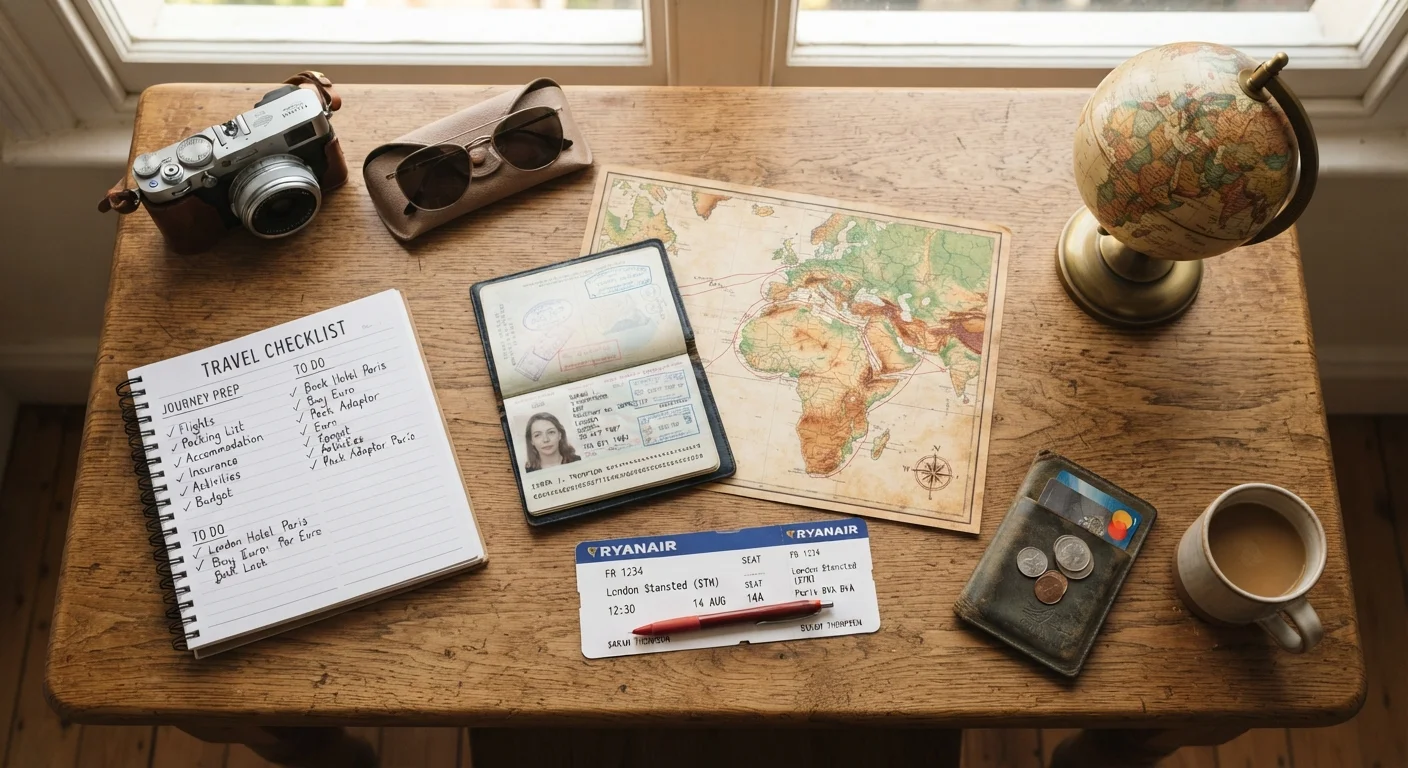
Choose Your Destination
The most exciting part of planning any international trip is also the first: picking where to go. As a beginner, it helps to narrow choices by a few practical factors — not just wanderlust. Think about climate (what season will it be there?), language accessibility, cost of living, and how straightforward entry requirements are for your passport.
Official tourism boards for each country publish reliable overviews of what visitors can expect. Our Destination Guides hub is also a great starting point for first-timers weighing up popular options.
Start with a 'First-Timer-Friendly' Destination
If this is your first time abroad, consider countries known for straightforward entry processes, English-speaking tourism infrastructure, and clear signage. This lowers the logistical load so you can focus on actually enjoying the experience. Portugal, Japan, and Canada are frequently cited by travel writers as excellent introductory international destinations for US-based first-timers.
Once you've shortlisted two or three destinations, compare them against your available vacation days. Some countries reward longer stays; others are perfectly suited to a long weekend.
Sort Passports, Visas, and Entry Requirements
Entry documents are the most consequential part of any international trip — get them wrong and you won't board your flight. Start here, well before you book anything non-refundable.
- Passport validity: Many countries require your passport to be valid for at least six months beyond your travel dates. Check yours now.
- Visa requirements: Depending on your nationality and destination, you may need to apply for a visa weeks or months in advance. Some countries offer visa-on-arrival or electronic travel authorization (ETA) schemes that can be handled online.
- Health documentation: Some destinations require proof of vaccinations. Check the destination country's official immigration website and your own government's travel advisory portal for current requirements.
Always Verify Entry Requirements Officially
Entry rules change. Always verify visa and health requirements directly with the destination country's official embassy or immigration authority, and with your own government's foreign travel advice service, as close to your departure date as possible. Do not rely solely on third-party travel sites for this information.
Entry rules change. Always verify visa and health requirements directly with the destination country's official embassy or immigration authority, and with your own government's foreign travel advice service, as close to your departure date as possible. Do not rely solely on third-party travel sites for this information.
Budget, Book, and Build Your Itinerary
With destination and documents in motion, it's time to shape the trip financially and logistically. Build a realistic budget that accounts for flights, accommodation, local transport, food, activities, and a contingency buffer for surprises.
6 months
Minimum passport validity required by many countries
A widely applied entry rule: many nations require your passport to remain valid for at least six months beyond your planned departure date.
3 hours
Recommended airport arrival time for international flights
Major airports and airlines generally advise international travellers to arrive at least three hours before scheduled departure to allow for check-in and security.
When booking flights, flexibility on travel dates — even by a day or two — can make a meaningful difference in price. For accommodation, consider what matters most to you: location, privacy, local character, or kitchen access to save on meals.
A loose day-by-day itinerary keeps you from over-scheduling (a very common first-timer mistake) while ensuring you don't miss the things you're most excited about. Build in buffer days for rest and spontaneous exploration. Pair your plan with cultural preparation using our cultural preparation checklist so you arrive informed and respectful.
Pack Smart for International Travel
Packing well is a skill, and it genuinely improves with practice. The golden rule for beginners: pack less than you think you need, then remove one more item.
Carry-On Essentials
Always pack these in your carry-on bag, not your checked luggage:
- Passport and printed copies of key documents
- Medications you take regularly
- Phone charger and a universal travel adapter
- A change of clothes and basic toiletries
- Local currency or a travel card with low foreign-transaction fees
Checked Luggage Strategy
Check your airline's baggage allowance before packing — weight limits and size restrictions vary significantly by carrier and ticket class. Rolling clothes rather than folding them saves space and reduces creasing.
Pack a small, lightweight day bag inside your main luggage. It's invaluable for day trips, hikes, and city exploration without hauling your full suitcase.
Experienced travellers consistently cite a packable day bag as one of the most-used items on any international trip, eliminating the need to buy one on arrival.
Screenshot your accommodation address in the local language before you land — this makes communicating with taxi drivers or locals far easier if you don't speak the language.
Translation apps require connectivity, which isn't always guaranteed immediately after landing. A pre-saved screenshot works offline and instantly.
Don't forget to check weather forecasts for your specific travel window rather than general seasonal averages, which can be misleading depending on the region.
Stay Safe and Prepared on the Ground
Staying safe abroad comes down largely to preparation and awareness — not fear. A few habits make a significant difference:
- Travel insurance: Purchase a policy that covers medical emergencies, trip cancellation, and baggage loss. Read what's excluded before buying.
- Digital document backups: Email yourself scans of your passport, visa, insurance policy, and accommodation confirmations. Store them somewhere accessible offline too.
- Bank and card notification: Tell your bank you're travelling so your card isn't frozen for suspicious foreign transactions.
- Local emergency numbers: Look up the local equivalent of emergency services for your destination — it varies by country.
- Register with your embassy: Many governments offer a free traveller registration service so they can reach you if something goes wrong in-country.
If you're heading off alone, the habits covered in our solo travel safety guide are especially worth reading before you leave.
Know Local Laws Before You Arrive
What's perfectly legal at home may be restricted or prohibited in your destination country — this includes common medications, certain foods, photography in specific locations, and dress codes at religious sites. Your government's official travel advisory page for the destination is the most reliable source for this information. Ignorance of local law is generally not a legal defense.
Airport Day and What Comes After
You've planned, packed, and prepared — now it's showtime. For international departures, arrive at the airport at least three hours before your scheduled flight. International check-in, security, passport control, and boarding all take longer than domestic equivalents.
At the Airport
- Have your passport and boarding pass (printed or on your phone with a screenshot backup) readily accessible.
- Liquids in carry-on bags must comply with security rules — typically containers of 100ml or less, stored in a small clear bag.
- Customs declarations: be honest and thorough. Penalties for misdeclaring goods vary but can be severe.
When You Land
After clearing immigration and collecting luggage, your first priorities are connectivity (a local SIM or an international data plan), local currency if you need it, and getting to your accommodation safely. Pre-book your airport transfer if you're arriving late or in an unfamiliar city.
The full picture of what to expect as a first-time international traveller — including passports, money, and safety fundamentals — is covered in our companion piece: Your First International Trip.
Jet Lag Is Real — Plan for It
Crossing multiple time zones affects sleep, appetite, and energy levels, sometimes for several days. Scheduling a low-key first day at your destination — rather than packing it with activities — helps your body adjust and makes the whole trip more enjoyable. Staying hydrated on the flight and adjusting your sleep schedule a day or two before departure can also help.
With your plan in place, your bags packed thoughtfully, and your documents in order, you're genuinely ready. International travel has a learning curve — but the rewards are absolutely worth every checklist item.