The Three Building Blocks of Soil Texture
Every garden soil is a mixture of three mineral particle types: sand, silt, and clay. Their proportions define how your soil behaves — and how forgiving it will be to work with.
- Sandy soil has large particles with big gaps between them. Water drains through quickly, which means nutrients wash away fast too. Plants in sandy soil need more frequent watering and feeding.
- Clay soil has tiny, tightly packed particles that hold water and nutrients well — sometimes too well. It can become waterlogged, crack when dry, and is hard to dig. Roots struggle to penetrate compacted clay.
- Loamy soil is a balanced mixture of all three particle types. It drains adequately, retains moisture between waterings, and holds nutrients near the root zone. Most gardeners aim to move their soil toward this texture.
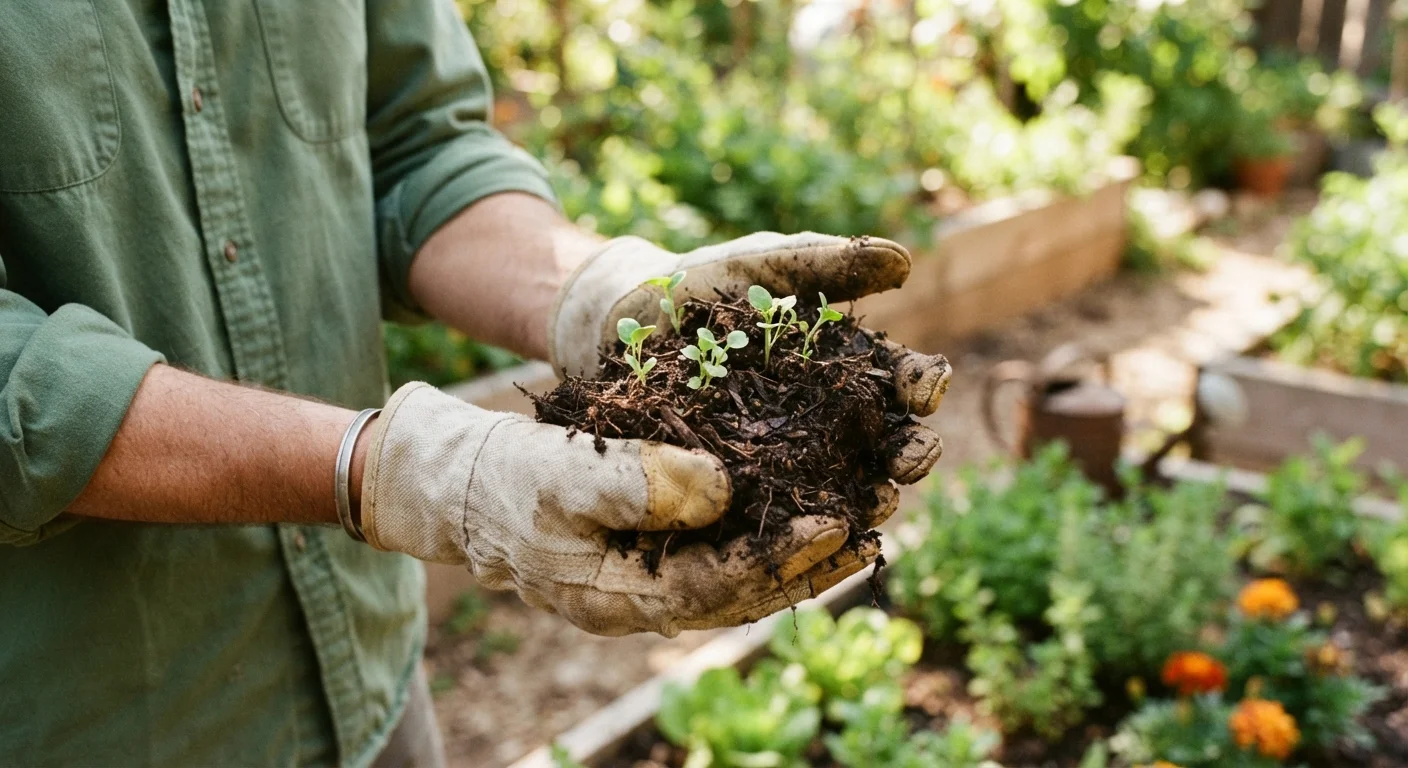
A quick texture test requires no equipment: moisten a small handful of soil, squeeze it, then open your hand. Sandy soil crumbles apart; clay soil holds a slick, ribbon-like shape; loam holds briefly but breaks apart gently when pressed.
This is a great first step before any planting season — and it pairs well with the broader prep steps in our seasonal garden prep checklist.
95%
Of plant problems traced to soil issues
Soil health educators at cooperative extension programs frequently cite soil as the root cause of the vast majority of garden failures, including poor drainage, nutrient deficiency, and pH imbalance.
6.0–7.0
Ideal pH range for most vegetables
This slightly acidic to neutral range maximizes the availability of nitrogen, phosphorus, and potassium — the three nutrients plants need in the greatest quantities.
2–3 inches
Compost to add each planting season
University extension guidelines commonly recommend working 2–3 inches of finished compost into the top layer of garden beds annually to maintain organic matter levels.
Understanding Soil pH
pH is a measure of acidity or alkalinity, running on a scale from 0 (most acidic) to 14 (most alkaline), with 7 being neutral. For gardeners, pH matters because it controls whether nutrients in the soil are chemically available to plant roots — even if those nutrients are technically present.
Most vegetables, herbs, and common flowers prefer a pH between 6.0 and 7.0. Outside this range, plants often show yellowing leaves or stunted growth, not because nutrients are absent, but because the chemistry prevents uptake.
- Blueberries and azaleas are exceptions — they actively prefer acidic soil (pH 4.5–5.5).
- Lavender and many herbs prefer neutral to slightly alkaline conditions.
Inexpensive pH test kits are available at garden centers, or you can send a soil sample to your state's cooperative extension service for a comprehensive analysis. To raise pH (make soil less acidic), gardeners typically add ground limestone. To lower it, sulfur or acidic compost can help — though changes are gradual and take time.
Soil pH Changes Take Time
Adding lime or sulfur to shift your soil's pH isn't an overnight fix. Meaningful change typically takes several months to a full growing season. Test your soil, make amendments in fall if possible, and re-test the following spring before planting.
How to Improve What You Already Have
The good news: you rarely need to start from scratch. Almost every soil type improves meaningfully with the consistent addition of organic matter — decomposed plant and food material that feeds soil microbes, improves structure, and buffers pH extremes.
Compost is the most accessible form of organic matter. Working 2–3 inches of compost into the top 6–8 inches of your soil before planting makes a measurable difference, and the effect compounds every season. Our guide to composting at home without the mess or the smell walks through exactly how to produce it yourself.
Other organic amendments include:
- Aged wood chips or bark — slow to break down, useful for suppressing weeds and improving texture over time
- Leaf mold (decomposed fallen leaves) — excellent for improving moisture retention in sandy soils
- Well-rotted manure — nutrient-rich, but must be aged to avoid burning roots
Avoid working wet clay soil — doing so compacts it further. Wait until it passes the squeeze test: a handful pressed firmly should crumble when you release it, not ooze.
If you're growing in containers rather than in-ground beds, the soil approach differs significantly. Our explainer on container gardening vs. in-ground beds covers what changes and what stays the same across both setups.
Start Small With Soil Improvement
You don't need to amend your entire garden at once. Pick one bed or a small area, improve the soil there, and observe how plants respond over one season. This hands-on feedback is far more instructive than any soil chart — and it lets you scale your approach with confidence.
Matching Soil Preparation to What You Want to Grow
Once you understand your soil's texture and pH, you can make smarter decisions about what to plant — and what to amend first. This knowledge directly supports the next step every new gardener faces. Our guide to seeds vs. seedlings explains how your soil's readiness affects that choice.
A few practical principles:
- Root vegetables like carrots and radishes need loose, deep soil — they struggle in clay or compacted ground.
- Leafy greens are relatively tolerant but prefer consistent moisture, making loam or amended clay workable.
- Mediterranean herbs (thyme, rosemary, oregano) actually prefer lean, well-draining soil — over-amending can harm them.
Gardening in a small or unusual space? Soil improvement is still very much possible. See our tips for raising healthy plants in a small outdoor space, which covers soil strategies for balconies, patios, and narrow borders.
For a complete picture of how soil fits into the full gardening picture, visit Gardening From the Ground Up, our end-to-end beginner's guide covering light, water, timing, and more.