What You're Actually Choosing Between
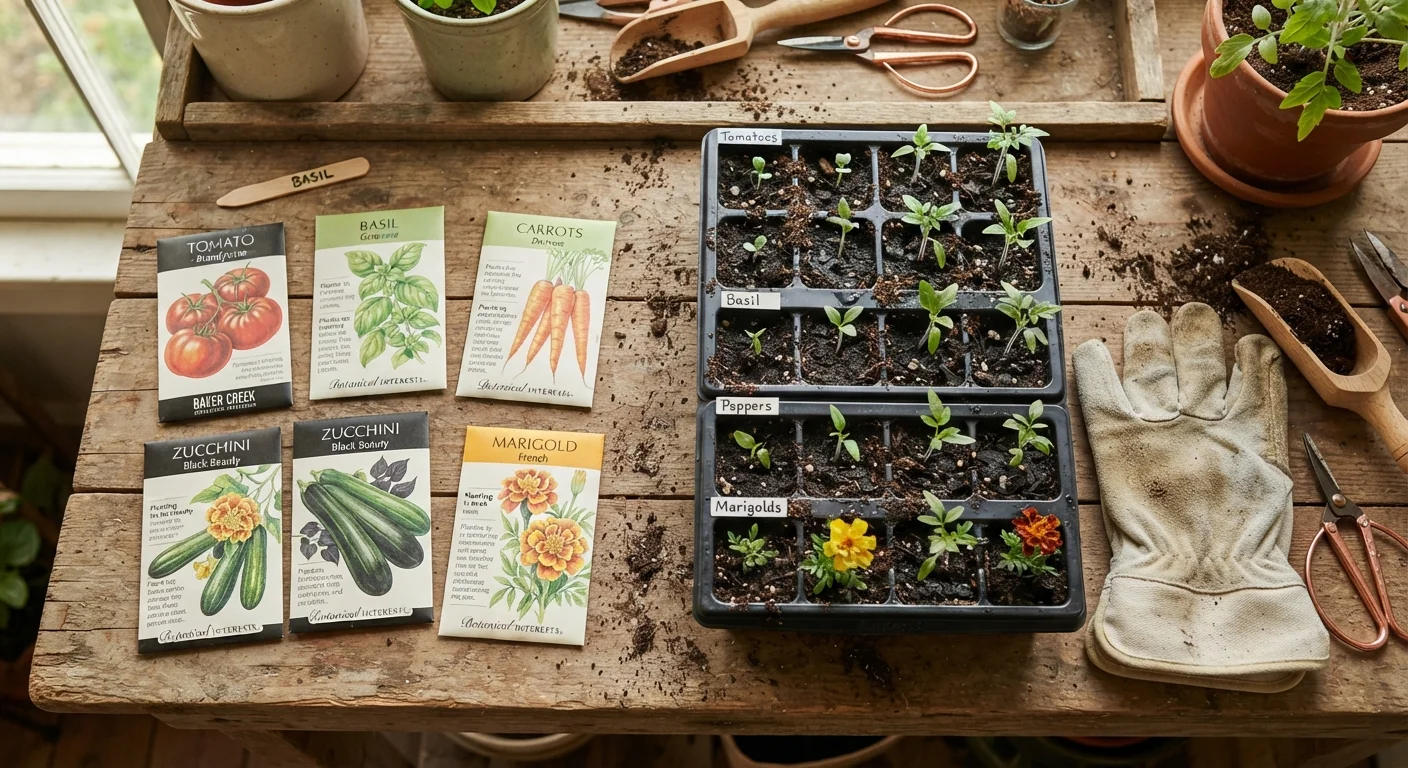
When you decide to grow a vegetable, herb, or flower, you face an immediate fork: start with a seed — a dormant embryo in a packet — or buy a seedling, the young plant already a few inches tall at the nursery. Both paths lead to the same destination, but the journey differs significantly in effort, timing, and skill required.
A seed requires you to manage germination (the process of the seed sprouting and sending up its first shoot), which depends on consistent moisture, warmth, and sometimes light. A seedling, by contrast, has already cleared that hurdle. You're taking over a plant that's already alive and growing, which means fewer early-stage risks but also less time to observe and influence its development.
For a deeper foundation before you decide, see our complete introduction to how gardening works — it covers soil, light, timing, and plant types in one place.
The Case for Starting with Seeds
Seeds offer two clear advantages that matter to beginners and experienced growers alike: cost and variety. A packet containing 50 or more seeds typically costs far less than purchasing an equivalent number of seedlings from a nursery. If you're planning even a modest garden bed, that difference adds up quickly.
Variety is the second compelling argument. Nurseries carry what sells — usually a handful of popular tomato types, a few herb packs, and standard annual flowers. Seed suppliers, however, offer hundreds of varieties of a single crop, including heirlooms, disease-resistant strains, and plants suited to specific climates or flavour preferences.
Some crops must be started from seed because they don't tolerate transplanting. Carrots, parsnips, radishes, beets, and most beans prefer their roots undisturbed from the start. If you plan to grow any of these, seeds aren't just an option — they're the requirement.
The main commitment seeds ask of you is timing. Many crops need to be started indoors 6–10 weeks before your region's last expected frost date. Once you understand that calendar, the process becomes manageable. Our guide to reading a seed packet walks you through every term on the label, including germination days and sowing depth.
| Criterion | Seeds | Seedlings |
|---|---|---|
| Cost per plant | Very low — many per packet | Higher — sold individually |
| Variety selection | Hundreds of options | Limited nursery stock |
| Time to harvest | Longer — includes germination | Shorter — weeks ahead |
| Equipment needed | Trays, lights, heat mat (indoors) | Trowel and compost |
| Root vegetable suitability | Ideal — direct sow required | Not suitable |
| Risk for beginners | Moderate — germination can fail | Lower — plant already established |
| Transplant shock risk | None — grown in place | Present — harden off carefully |
The Case for Starting with Seedlings
Seedlings compress the waiting period and reduce early uncertainty. Instead of monitoring a tray for signs of life over one to three weeks, you begin with a plant that already has leaves, a root system, and momentum. For a first-time gardener, that tangibility makes a real psychological difference — it's easier to stay motivated when you can see immediate progress.
Seedlings also reduce the equipment overhead. Starting seeds indoors properly often requires grow lights, heat mats, seed-starting mix, trays, and humidity domes. Buying seedlings means you can go directly to the garden with just a trowel and some compost.
The main risk with seedlings is transplant shock — the stress a plant experiences when moved from one environment to another. Symptoms include wilting, yellowing, or temporarily stunted growth. This is usually temporary, especially if you harden off your seedlings first: a process of gradually exposing them to outdoor conditions over 7–10 days before planting permanently. Our article on why seedlings fail after transplanting explains exactly what to watch for and how to prevent it.
What 'Hardening Off' Means in Practice
Hardening off is the process of gradually acclimatising an indoor-grown or nursery seedling to outdoor conditions. Start by placing the plant outside in a sheltered, shaded spot for just an hour or two on the first day. Over the following week, increase outdoor exposure incrementally and introduce more direct sun and wind. By day 7–10, the plant is ready for permanent outdoor planting with minimal shock.
If you're not sure which crops are forgiving enough to begin with, see our list of easy crops for first-time growers — many of them work well as either seeds or seedlings.
Making the Choice Work for Your Garden
In practice, most gardeners don't choose one method permanently — they use both, based on the crop. Tomatoes, peppers, and eggplants benefit from an early indoor start (or being bought as seedlings), while beans, squash, and root vegetables do better sown directly as seeds. Herbs like basil and cilantro grow readily from seed in warm soil, while something like rosemary is easier to start from an established plant.
A reasonable approach for a first garden: buy seedlings for two or three crops where timing is tight or the plant is slow to establish, then sow a few easier crops directly from seed. This hybrid approach lets you experience both methods without committing entirely to one.
Before you plant anything, make sure your soil and timing are ready. Our seasonal garden prep checklist covers the steps to take before the first seed or seedling goes in. And if you're still planning your overall growing space, Your First Vegetable Garden is a grounded starting point from plot selection to first harvest.
6–10 weeks
Typical indoor seed-starting lead time before last frost
Most seed packets specify this window based on crop type and regional frost dates — check your packet for the exact range.
7–10 days
Recommended hardening-off period for seedlings
Gradual acclimatisation over this period significantly reduces transplant shock and improves early plant establishment.