Why Crop Choice Matters More Than Effort
One of the most common reasons new gardeners give up isn't lack of effort — it's choosing crops that punish small mistakes. Watermelons, cauliflower, and celery are genuinely difficult even for experienced growers. Starting with forgiving, fast-growing plants changes the whole experience.
The crops below were chosen because they tolerate variable watering, grow quickly enough to show results within weeks, and succeed in a range of conditions — including containers and small plots. Before you dig in, it's worth reading our complete gardening introduction to understand soil, light, and watering basics that underpin every crop on this list.
If you're still deciding between starting from seed or buying young transplants, our seeds vs. seedlings guide walks through the trade-offs in plain terms.
Radishes
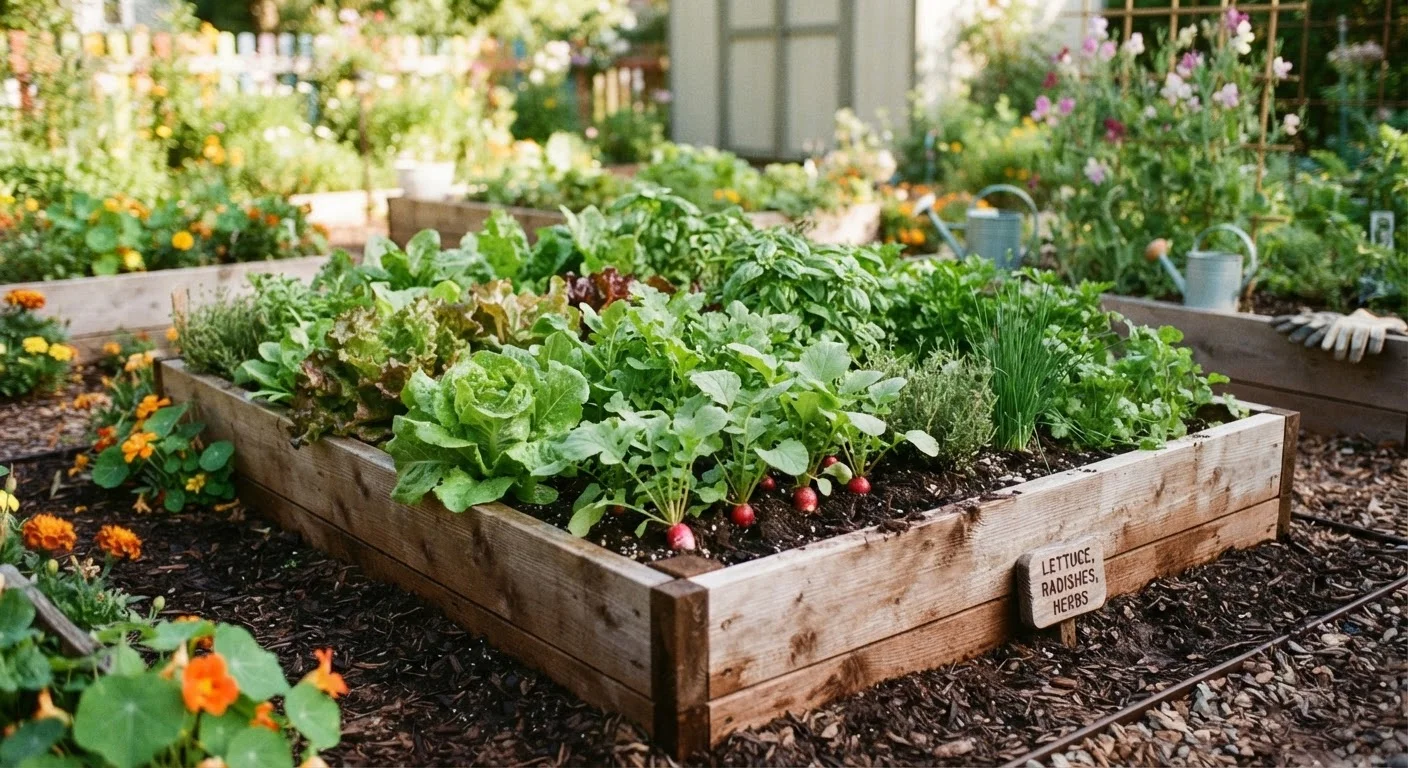
Radishes are arguably the most beginner-proof vegetable in existence. Most varieties are ready to harvest just 22–30 days after sowing, which means you'll see tangible results before you've had time to lose interest or second-guess yourself.
Sow seeds directly into the ground or a container about half an inch deep and two inches apart. They prefer cool weather — spring and early autumn are ideal — and need consistent moisture to prevent them from becoming woody. Thin seedlings promptly so each plant has room to develop a proper root. That's genuinely all there is to it.
Most radish varieties are ready to harvest in under 30 days — a confidence-builder like no other.
Leaf Lettuce
Unlike head lettuce (which needs precise timing and good heat management), loose-leaf lettuce is highly adaptable. You can sow it in partial shade, harvest outer leaves continuously without pulling the whole plant, and grow it successfully in a pot as small as six inches deep.
Scatter seeds thinly across moist soil, barely cover them, and keep the surface from drying out. Germination typically takes five to ten days. Harvest by snipping leaves an inch above the base — the plant will regrow several times, giving you multiple harvests from a single sowing.
Cut-and-come-again lettuce gives multiple harvests from one planting, stretching every packet of seeds.
Green Beans (Bush Variety)
Bush beans don't require staking, grow compactly, and produce a heavy harvest for the space they occupy. They're heat-tolerant, largely pest-resistant, and germinate reliably when soil has warmed above 60°F.
Sow seeds one inch deep, four to six inches apart, after the last frost date in your area. They need about six hours of sun daily and moderate, even watering. From sowing to first harvest is typically 50–60 days. Picking beans regularly (every two to three days once they start producing) encourages the plant to keep flowering and setting new pods.
The more you pick bush beans, the more they produce — regular harvesting is the entire management strategy.
Basil
Basil is the gateway herb for most new gardeners, and for good reason. It grows quickly, smells wonderful, and rewards almost any level of attention. It also pairs naturally in the kitchen with tomatoes, pasta, and salads — so every harvest has an immediate destination.
Basil needs warmth above almost everything else. Don't plant it outdoors until nighttime temperatures stay reliably above 50°F. It does well in containers, needs well-draining soil, and should be watered at the base rather than overhead to avoid mildew. Pinch off flower heads as they appear to keep the plant producing flavorful leaves rather than going to seed early.
Pinching basil flower heads regularly extends leaf production by weeks and intensifies flavor.
Zucchini (Courgette)
Zucchini has a well-earned reputation for being almost too productive. A single healthy plant in good soil can yield more than most households can eat. For a beginner, that abundance is enormously motivating — you'll never wonder whether it worked.
Start seeds indoors two to three weeks before your last frost date, or direct-sow after the frost risk has passed. Plants need full sun and generous spacing (at least two to three feet apart) to allow good airflow, which reduces the risk of powdery mildew — the most common issue with this crop. Harvest fruits when they're six to eight inches long; leaving them to grow larger reduces plant energy and flavor.
Harvest zucchini at six to eight inches for best flavor and to keep the plant productive all season.
Chives
Chives are a perennial herb — meaning they come back year after year — making them one of the best long-term investments a new gardener can make. They're tolerant of poor soil, light drought, and partial shade, and they have almost no serious pest or disease problems.
You can grow chives from seed or divide an existing clump from a neighbor or friend. Once established, simply snip what you need from the top and the plant regrows. Their purple flowers are also edible and attract pollinators, making chives genuinely multi-purpose. They thrive in containers and work well near other herbs and vegetables.
As a perennial, chives return every spring — one planting pays dividends for years.
Building Confidence One Harvest at a Time
The crops above share a common quality: they give feedback quickly. A radish tells you within three weeks whether your soil drainage is working. Lettuce shows you almost immediately whether it's getting enough water. That feedback loop is exactly what beginners need to build real skills rather than guesswork.
Prep Your Plot Before You Plant
The single biggest thing you can do for any of these crops is prepare your soil before sowing. Loose, well-draining soil with good organic matter gives roots room to establish quickly. Check out our seasonal garden prep checklist to make sure your space is ready before the first seed goes in.
Once you're comfortable with one or two of these, you'll naturally start asking about plant combinations — companion planting is a logical next step that improves yields without adding much complexity. For a fuller roadmap from first seed to first harvest, Your First Vegetable Garden is a solid practical guide. And if your space is tight, growing in a small outdoor space covers how to get the most from a balcony or narrow border.