Why Small Spaces Demand a Different Approach
Gardening in a small outdoor space — a balcony, a patio, a narrow strip beside a door — is genuinely different from gardening in an open yard. You're working with a fixed, limited volume of soil, often several feet off the ground, with no surrounding earth to buffer temperature or moisture swings. That means plants depend entirely on you for water, nutrients, and the right conditions.
The good news: small-space gardening is not a compromise. It's a distinct method, and once you understand its rules, it's remarkably productive. The fundamentals of how plants grow — light, water, soil, and nutrition — still apply completely. What changes is how you manage them.
Check Weight Limits Before You Plant
Balconies and rooftop patios have structural load limits. Wet soil, large pots, and multiple containers add up quickly. Before building out a full container garden on an elevated surface, check your building's guidelines or consult a structural professional. This is especially important for apartment balconies, where limits are set by the building's original design.
Core Practices for Small-Space Growing Success
These are the approaches that consistently separate thriving container gardens from struggling ones. Each addresses one of the specific constraints that small spaces create.
Choose containers with adequate depth for the roots of what you plan to grow.
Root space determines how large a plant can grow and how much water and nutrients it can access. Shallow pots stress plants and reduce yields. Most vegetables need at least 12 inches of depth; tomatoes and peppers need closer to 18.
Use a high-quality potting mix rather than garden soil or topsoil in containers.
Garden soil compacts in pots, cutting off oxygen to roots and causing waterlogging. Purpose-made potting mixes are formulated to stay loose, drain properly, and hold moisture without becoming dense. This directly affects plant health and survival.
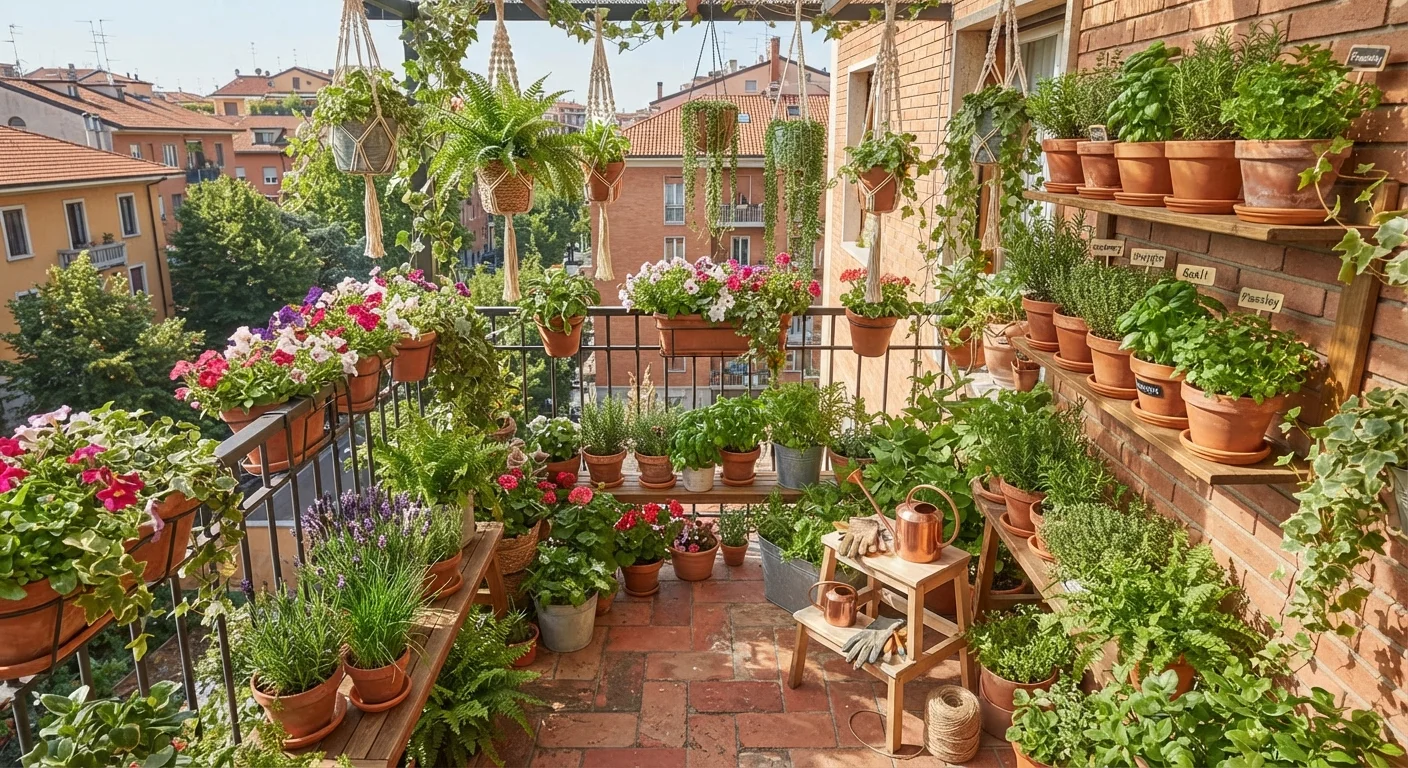
Go vertical using trellises, wall-mounted planters, or tiered shelving.
Horizontal floor space is your scarcest resource in a small outdoor area. Growing upward multiplies your effective planting area without requiring any additional square footage. Vertical structures also improve airflow, which reduces fungal disease.
Select compact or dwarf plant varieties labeled for container growing.
Standard-sized vegetables are bred for open ground with unlimited root space. Compact varieties have been developed specifically to perform well in pots and tight spaces. Using the right variety prevents many common frustrations.
Water more frequently and feed regularly, since containers dry out and deplete nutrients faster than ground beds.
Containers lose moisture quickly — especially dark-colored pots in full sun. Unlike in-ground gardens, container soil has no surrounding earth to draw moisture from. Nutrients also wash out with every watering, so plants need supplemental feeding throughout the season.
Place containers where they'll receive the right amount of daily sunlight for your chosen crops.
Light is the factor most beginners underestimate. Most vegetables need 6–8 hours of direct sun per day. Placing sun-loving crops in partial shade leads to weak growth and poor harvests, regardless of how well everything else is managed.
For a direct comparison of what changes between pots and garden beds, see our article on container gardening versus in-ground beds.
Choosing What to Grow
Crop selection has an outsized impact in small spaces. Choose varieties that match your conditions honestly — not aspirationally. If your space gets limited sun, some crops will reward you far more reliably than others. Herbs, salad greens, radishes, and compact bush beans are among the most forgiving options for beginners working with containers.
You can also use companion planting strategies to pack more value into each container — pairing plants that support each other's growth or deter pests without taking up extra room.
“The single biggest mistake small-space gardeners make is trying to grow too much at once. Start with two or three containers managed really well, then expand. That's how you build both skill and confidence.”
— Extension Horticulture Specialist, Land-grant university cooperative extension program
If you're considering whether a small raised bed might work better than individual pots for your space, our balanced overview of raised bed gardening covers the key tradeoffs.
6–8 hrs
Daily sunlight most vegetables require
According to cooperative extension programs across the US, most fruiting vegetables need a minimum of six hours of direct sun to produce a worthwhile harvest.
18"
Minimum container depth for tomatoes
Container gardening guides consistently recommend at least 18 inches of soil depth to allow tomato root systems enough space for healthy growth and fruit production.
Getting Started: Quick Wins for This Week
You don't need to overhaul your entire setup before your first plant goes in the ground. Three simple actions, done well today, will give you a genuinely strong start.
Once you have a season of container growing under your belt, expanding into enriching your own potting mix is a natural next step — home composting can supply a steady stream of free, nutrient-rich amendment that keeps container soil healthy over time.
Group Pots Together to Retain Moisture
Clustering containers close together creates a more humid microclimate around the plants, slowing evaporation from both soil and leaves. This is especially useful on exposed balconies or in hot climates. It also makes watering faster and helps plants shelter each other from drying winds.