The Core Difference: Roots, Soil, and Control
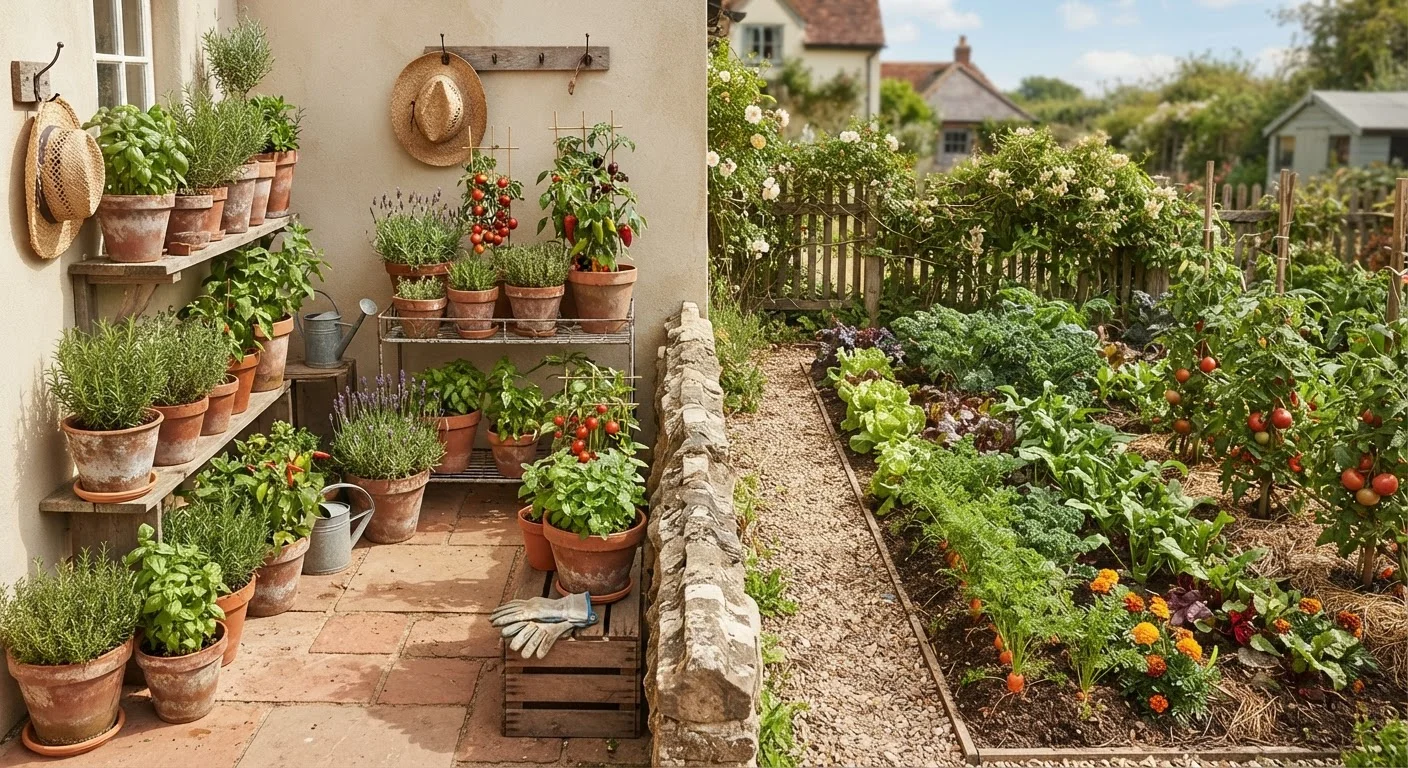
At its heart, the container-versus-in-ground question is really about how much control you want — and how much effort you're willing to exchange for it. In-ground beds connect your plants directly to the native soil beneath your yard. Containers create a completely separate, enclosed growing environment that you build and manage yourself.
That distinction shapes almost every other decision you'll make: what soil to use, how often to water, which plants will perform well, and how much you'll spend getting started. If you're new to gardening, understanding these trade-offs before you plant your first seed will save you a lot of guesswork later. Our complete introduction to gardening is a good companion read if you want the full picture before committing to either approach.
| Criterion | Container Gardening | In-Ground Beds |
|---|---|---|
| Soil control | Full — you fill it yourself | Partial — depends on native soil |
| Watering frequency | Daily in warm weather | Every 2–4 days typically |
| Drainage | Fast; requires drainage holes | Variable; depends on soil type |
| Root space | Limited by pot size | Unrestricted downward growth |
| Startup cost | Higher (pots + growing mix) | Lower (amend existing soil) |
| Portability | Fully portable | Permanent location |
| Best crops | Herbs, lettuce, strawberries | Tomatoes, squash, root veg |
| Fertilizing needs | Frequent — nutrients wash out | Less frequent with healthy soil |
Drainage, Watering, and Soil Quality
Drainage is the area where containers and in-ground beds behave most differently. Pots drain quickly — sometimes too quickly. Most containers need watering daily in warm weather because the limited soil volume heats up and dries out fast. Drainage holes are non-negotiable: without them, roots suffocate in waterlogged mix. In-ground beds hold moisture for much longer because the soil mass is larger and connected to the water table below.
Soil quality is the other major divergence. In-ground gardeners work with whatever native soil exists, which often needs improvement. Heavy clay drains poorly; sandy soil drains too fast; compacted soil blocks roots. You can amend in-ground soil over time by adding compost and organic matter, but it's a gradual process. Our guide on choosing the right soil for your garden explains how to assess and improve what you have.
Container gardeners sidestep native soil entirely by filling pots with a premixed growing medium — typically a combination of compost, perlite (a lightweight volcanic mineral that improves drainage), and other organic material. The trade-off is that nutrients wash out of containers quickly, so you'll need to fertilize more often than you would with an established in-ground bed.
A Note on Potting Mix vs. Garden Soil
Never fill containers with soil scooped directly from the garden. Native garden soil compacts in pots, cutting off air and drainage that roots need. Purpose-made potting or container mix is formulated to stay loose and well-aerated in an enclosed space. It's a small but important distinction that affects plant health from day one.
Which Plants Belong Where
Plant choice is where the setup really matters. Shallow-rooted crops are container naturalists: herbs like basil, chives, and parsley, along with lettuce, radishes, and strawberries, grow happily in pots that are 8–12 inches deep. Their compact root systems don't need much space, and the contained environment actually helps them focus energy into leaves and fruit.
Deep-rooted or sprawling plants are a different story. Tomatoes, squash, cucumbers, and most root vegetables like carrots and parsnips need significantly more root run than most containers can reliably offer. A mature tomato plant, for example, benefits from a container that's at least 15–20 gallons — which is bulky and heavy once filled. In-ground beds absorb these plants naturally, letting roots follow water and nutrients down without restriction.
Mixing both methods is a perfectly valid approach. Many gardeners keep herbs and salad greens in containers near the kitchen door while dedicating an in-ground or raised bed to larger crops. For tips on making the most of compact spaces, see our guide to raising healthy plants in a small outdoor space.
Maintenance, Cost, and Long-Term Commitment
Starting costs tend to be lower for in-ground beds — you're working with soil you already have, and the main investment is amending it and buying seeds or seedlings. Containers require purchasing both the pots and a quality growing mix, which adds up quickly if you're planting on any scale. That said, containers are portable and reusable season after season, so the upfront cost spreads over time.
Day-to-day maintenance differs in predictable ways. Containers demand more frequent watering and feeding, but they're easier to protect from pests, easier to relocate if sun patterns change, and far more accessible for people who find bending or kneeling difficult. In-ground beds ask for less frequent intervention but require weeding, occasional soil testing, and more thorough seasonal prep.
Thinking about enriching either setup organically? Home composting is an excellent, low-cost way to produce nutrient-rich material for both containers and in-ground beds alike. Whatever setup you choose, consistent feeding, adequate sunlight, and attention to drainage will matter far more than the container itself.