Why Gardening Is More Approachable Than You Think
Many first-time gardeners assume success requires special talent or expensive equipment. In reality, plants want to grow — your job is simply to give them the right conditions and stay consistent. Gardening rewards patience and observation far more than expertise.
Whether you have a backyard, a balcony, or just a sunny windowsill, you can grow something meaningful. This guide covers every fundamental concept — soil, light, water, plant selection, tools, and timing — so you can start your first garden with confidence rather than guesswork.
Gardening also connects naturally to other slow, rewarding habits. If you enjoy mindful routines like brewing loose-leaf tea, you'll find the careful attention gardening requires feels similarly satisfying.
Start Smaller Than You Think You Should
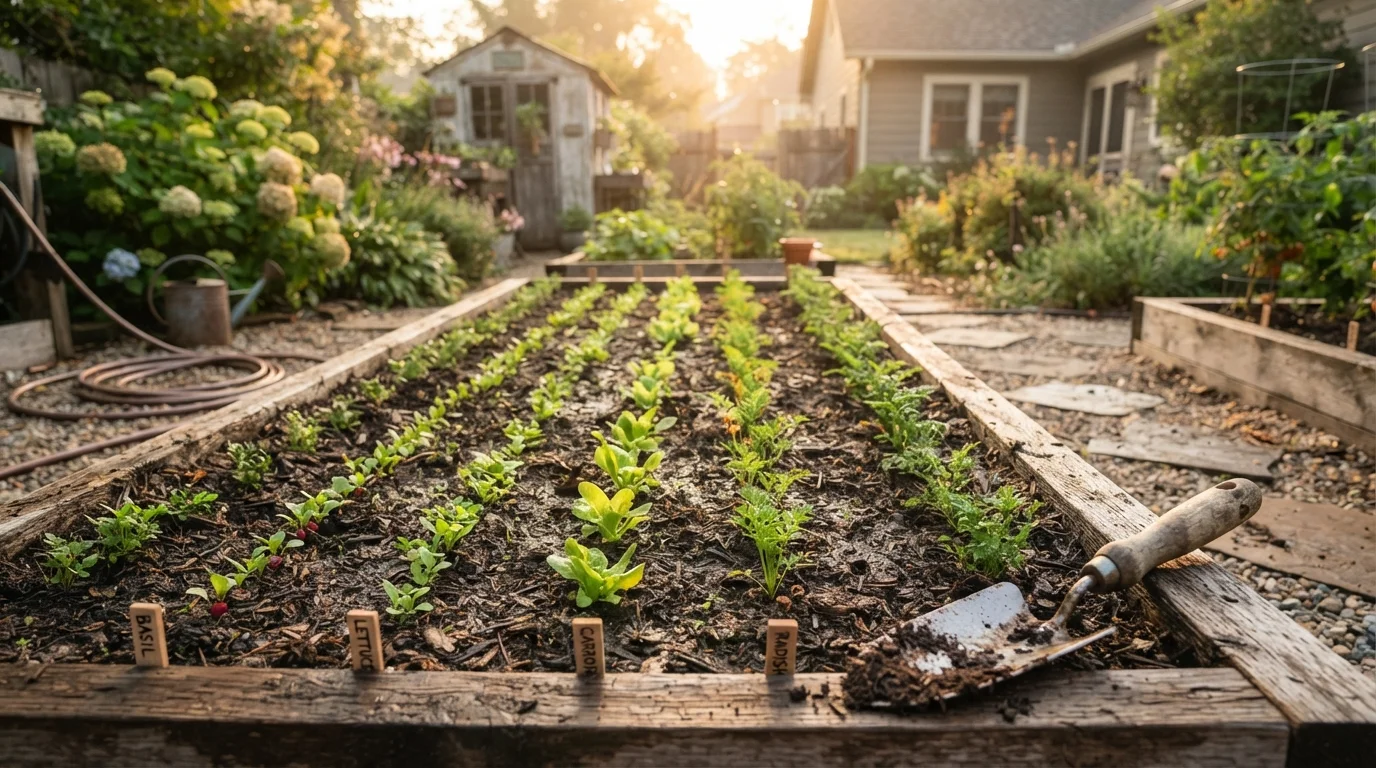
A 4×4-foot raised bed or a few large containers is an ideal first garden. Smaller spaces are easier to manage, quicker to water, and less overwhelming when problems arise. Once you have one successful season under your belt, expanding feels natural rather than daunting.
Understanding Your Soil
Soil is not just dirt — it is a living system of minerals, organic matter, water, air, and microorganisms. Plants draw nearly all their nutrients from it, so getting the soil right is the highest-leverage step a beginner can take.
The three primary soil types are clay (dense, holds water but compacts easily), sandy (drains fast but loses nutrients quickly), and loam (the ideal balance of drainage and nutrient retention). You can identify your type by squeezing a damp handful: clay holds its shape and feels sticky; sandy soil crumbles apart; loam holds shape briefly then breaks cleanly.
Regardless of your starting soil type, adding compost — decomposed organic matter — improves almost any garden bed. Compost loosens clay soils, helps sandy soils retain moisture, and feeds the microbial life that makes nutrients available to plant roots. Work 2–3 inches of compost into the top 6–8 inches of soil before planting.
~77 million
American households that participate in gardening
According to the National Gardening Association, roughly 77 million US households engage in some form of gardening activity.
2–3 inches
Compost depth recommended for garden beds
Cooperative extension programs widely advise incorporating 2–3 inches of compost into the top 6–8 inches of soil before planting.
6–8 hours
Daily direct sunlight most vegetables need
Most edible crops require a minimum of 6 full hours of direct sun per day for healthy growth and adequate yields.
Light, Water, and the Basics of Plant Health
Light and water are the two variables new gardeners most commonly get wrong — usually by overwatering or by underestimating how much sun a spot actually receives.
Sunlight
Observe your garden space over a full day before planting anything. Count how many hours of direct sun (unobstructed rays, not just brightness) that area receives. Most vegetables and flowering plants need 6–8 hours of full sun daily. Herbs like mint and parsley tolerate partial shade (3–6 hours). Shade-tolerant plants — ferns, hostas, impatiens — prefer fewer than 3 hours of direct sun.
Watering
More plants are killed by overwatering than by drought. Before you water, push your finger 1–2 inches into the soil. If it feels moist, wait. If it feels dry, water slowly and deeply so moisture reaches the root zone rather than just wetting the surface. Seedlings and newly transplanted plants need more frequent attention; established plants generally prefer deep, less frequent watering that encourages deep root growth.
Keep a simple garden journal — note what you planted, when you watered, and how plants responded. Patterns emerge quickly and spare you from repeating the same mistakes next season.
Observation is the core skill of experienced gardeners. A brief weekly record gives beginners the feedback loop that experience normally takes years to build.
Water in the morning rather than the evening. Wet foliage overnight creates ideal conditions for fungal diseases like powdery mildew.
Morning watering allows leaves to dry during the day, significantly reducing the risk of common plant diseases without any extra effort or cost.
Choosing What to Grow
The biggest mistake beginners make is growing what looks exciting in a catalog rather than what suits their space, climate, and skill level. Start with plants that are forgiving of inconsistency and quick to show results — early wins build the habits that sustain a garden long-term.
Easy Vegetables and Herbs
- Radishes — ready in as few as 25 days; great for impatient beginners
- Lettuce and salad greens — grow in containers, tolerate light shade, harvest continuously
- Zucchini — vigorous growers that produce abundantly with minimal fuss
- Basil, chives, and mint — useful in the kitchen and surprisingly resilient
Easy Flowers
- Sunflowers — direct-sow seeds, grow fast, require little care
- Marigolds — naturally deter some common garden pests and thrive in heat
- Zinnias — drought-tolerant, colorful, and excellent for pollinators
For a structured plan before your first seeds go in, see the seasonal garden prep checklist — it walks through spacing, timing, and soil readiness in one actionable list.
Check Plant Labels Before You Buy
Every plant sold in a nursery should have a tag listing its sun, water, and spacing requirements. These labels are not decorative — they reflect real growing conditions the plant needs to survive. Buying a plant without reading its label is one of the most common and entirely avoidable beginner mistakes. If a tag is missing, ask a nursery staff member before purchasing.
Essential Tools for Beginners
You do not need a garage full of equipment. A focused set of quality basics handles the vast majority of beginner gardening tasks.
- Hand trowel
- Used for digging small holes, transplanting seedlings, and mixing amendments into soil. This is your most-used tool.
- Garden fork or cultivator
- Loosens compacted soil and breaks up clumps without disturbing deeper root zones.
- Watering can or hose with adjustable nozzle
- A gentle shower setting prevents washing away seeds or damaging tender seedlings.
- Pruning shears (secateurs)
- For harvesting herbs, deadheading flowers (removing spent blooms to encourage new ones), and light trimming.
- Kneeling pad
- Protects your knees and makes extended soil work far more comfortable.
Many of these tasks also fit naturally into a broader home maintenance routine — for more hands-on project ideas, the DIY & Improvement hub covers beginner-friendly projects across the home and garden.
Secondhand Tools Work Just as Well
Garden tools from thrift stores, estate sales, or community tool libraries perform identically to new ones once cleaned and sharpened. A light scrub with steel wool and a thin coat of linseed oil on wooden handles keeps secondhand tools in excellent condition. Starting with used tools reduces cost and waste without compromising results.
Timing Your Garden: Seasons and Planting Windows
Planting at the wrong time is one of the most common reasons beginner gardens fail — not bad soil, not neglect, just seeds in the ground before the conditions were right.
Know Your Hardiness Zone
The USDA Plant Hardiness Zone Map divides the US into regions based on average annual minimum temperatures. Your zone tells you which plants can survive your winters and guides your planting calendar. You can look up your zone for free on the USDA website using your zip code.
Frost Dates Matter
Most planting decisions hinge on two dates: your area's last spring frost date (after which it is generally safe to plant frost-sensitive crops) and your first fall frost date (when the growing season effectively ends for tender plants). Seed packets list whether a plant should be sown before, after, or weeks ahead of these dates — follow those instructions closely.
Cool-Season vs. Warm-Season Plants
Cool-season crops — lettuce, spinach, peas, broccoli — thrive in spring and fall when temperatures are mild (45–65°F). Warm-season crops — tomatoes, peppers, cucumbers, basil — need soil temperatures above 60°F and air temperatures consistently above 50°F at night to grow well.
Understanding these seasonal windows removes a huge amount of uncertainty from your first garden. Regular upkeep habits from your home maintenance routine — like checking outdoor conditions and noting seasonal changes — translate directly into better garden timing over time.
This article provides general gardening information for educational purposes. Local growing conditions, soil types, and climate vary significantly — consult your local cooperative extension office for region-specific guidance.