The Core Idea: How Long Does This Plant Live?
When you browse a nursery or flip through a seed catalog, you'll see the words annual, perennial, and biennial everywhere. These aren't aesthetic categories or skill-level ratings — they simply describe the plant's natural life span. Getting this straight is one of the most practical things a new gardener can do, because it directly shapes your budget, your planning calendar, and the amount of work each season brings.
Think of it this way: before you fall in love with a plant, it helps to know whether it's a one-season guest, a long-term resident, or something in between. That's exactly what these three terms tell you.
For a broader grounding in how plant characteristics appear on product labels, see our guide on reading a seed packet.
Annuals: One Season, All In
An annual plant germinates, grows, flowers, sets seed, and dies — all within a single growing season. Once frost arrives or the season ends, the plant is finished. You'll need to replant the following year.
The trade-off is worth understanding: annuals tend to bloom heavily and continuously because their entire reproductive purpose is compressed into one season. This makes them excellent for filling gaps with color, covering bare patches quickly, or experimenting with varieties you're not sure about yet.
Common annuals include marigolds, zinnias, petunias, basil, and most vegetable crops like tomatoes and cucumbers (which are technically annuals even if you wish they weren't). If you're deciding whether to grow from seed or buy transplants, our article on seeds vs. seedlings walks through the trade-offs in detail.
Perennials: The Long Game
A perennial plant lives for three or more years — often many more. In cold climates, the above-ground part of the plant typically dies back in winter, but the root system survives underground and sends up new growth each spring. In mild climates, many perennials stay evergreen year-round.
Perennials generally require more patience: they may bloom modestly in their first year while establishing roots. By year two or three, they typically come into their own. The payoff is a garden that gets more beautiful with less annual replanting effort.
Divide Perennials to Multiply Your Plants
Every few years, many perennials benefit from being dug up and split into smaller clumps — a process called division. This refreshes the plant's vigor, controls its spread, and gives you free new plants to fill other spots in your garden. Early spring or early fall are generally the best times to divide most perennials.
Classic perennials include coneflowers (Echinacea), daylilies, hostas, lavender, and black-eyed Susans. Because perennials stay put, their placement matters more — factor this into your bed layout before planting. Our seasonal garden prep checklist includes spacing and placement guidance worth reviewing first.
Biennials: The Two-Year Cycle
A biennial splits its life across two growing seasons. In year one, it germinates and produces leafy growth but no flowers — this is the vegetative stage. In year two, it flowers, sets seed, and then dies. After that, it's done.
Biennials are the least common of the three types, and beginners are sometimes caught off guard when a plant they expect to bloom in its first year just sits there looking leafy. That's not failure — that's year one doing its job.
Climate Can Shift a Plant's Category
Some plants sold as annuals in cold-winter regions — such as impatiens or snapdragons — behave as short-lived perennials in frost-free climates because they never experience the killing freeze that ends their season. When in doubt, check a reliable regional gardening resource or your local cooperative extension service for guidance specific to your hardiness zone.
Well-known biennials include foxglove (Digitalis), hollyhock, parsley, and sweet William. Experienced gardeners often plant biennials in two successive years so that one group is always in flower while another is establishing. This staggered approach keeps the display continuous without a gap year.
For more on how plant type affects container versus in-ground decisions, see our comparison of container gardening vs. in-ground beds.
How to Use All Three Together
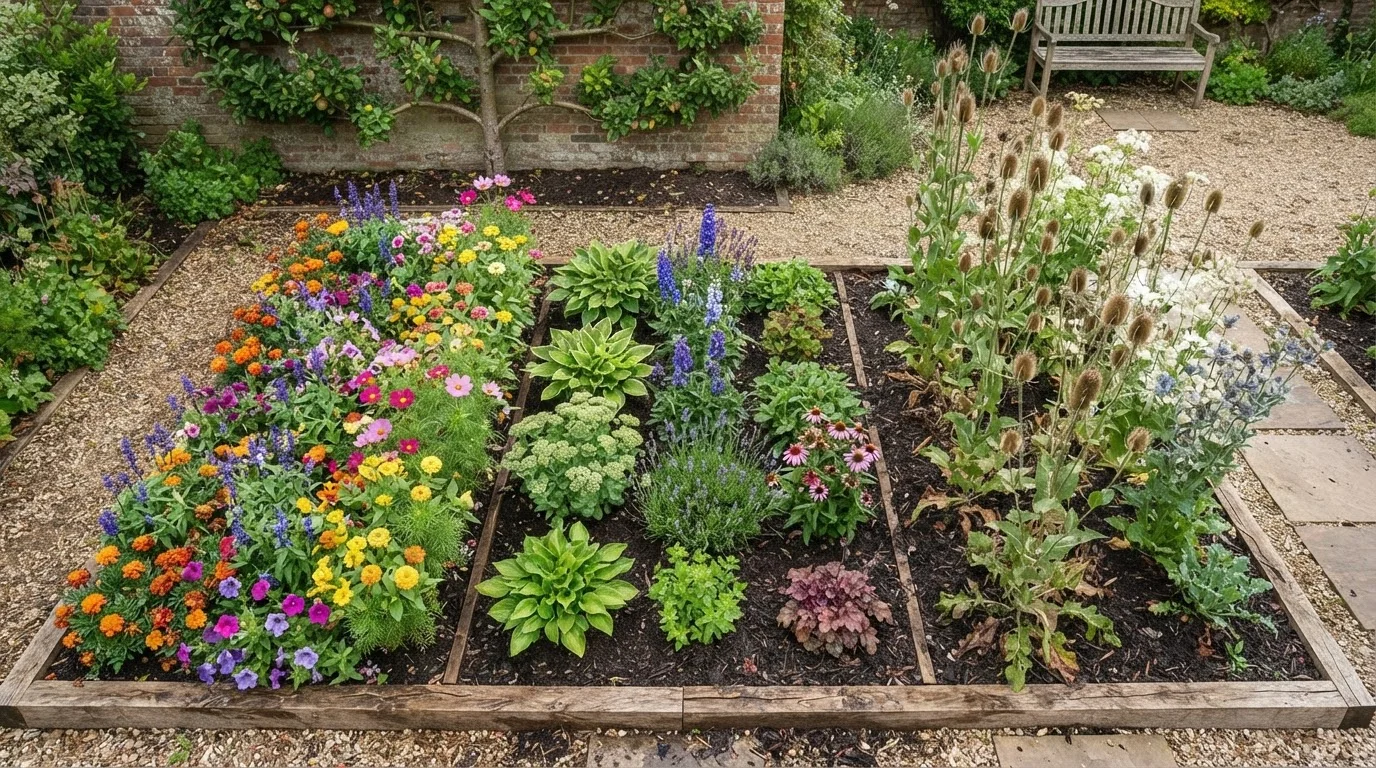
A well-rounded garden typically draws on all three life-cycle types. Perennials provide the backbone — reliable structure that returns each year. Annuals fill in color and variety season by season. Biennials add height, drama, and often striking flower forms that annuals and perennials don't always offer.
3+
Years a perennial can live and rebloom
Many well-sited perennials thrive for a decade or longer without replacement, according to general horticultural guidance from university extension programs.
2
Growing seasons a biennial needs to complete its cycle
Biennials universally require two full growing seasons — one for vegetative establishment, one for flowering and seed set — before the plant dies.
When you're ready to put this into practice, the complete gardening introduction covers how to layer these plant types alongside soil prep, light requirements, and timing into a cohesive first-year plan.