
What Is Emotional Spending?
Emotional spending happens when a purchase is driven primarily by how you feel in the moment — stressed, bored, lonely, anxious, or even elated — rather than by an actual need or a deliberate plan. The feeling comes first; the justification follows afterward.
Common emotional spending triggers include a hard day at work, social comparison (seeing what others have), boredom during idle scrolling, or the brief thrill of something new. The purchase might be small — a coffee you didn't need — or significant — a gadget bought on impulse. Size doesn't define it. The driver does.
Emotional spending isn't always obvious while it's happening. That's what makes it persistent. The cognitive biases and emotional triggers shaping financial decisions often operate below conscious awareness, which is why many people are genuinely surprised when they review their statements. See our look at everyday ways people unknowingly overspend for patterns that show up repeatedly across budgets.
Not All Unplanned Purchases Are Emotional
It's a common misconception that spontaneous equals emotional. You can make an unplanned purchase with full awareness — knowing it fits your budget and reflects something you genuinely value. The distinction isn't about whether it was on a list; it's about whether a feeling was quietly running the decision without your noticing.
What Is Intentional Spending?
Intentional spending means making a purchase with clear awareness of why you're making it and how it fits your broader financial picture. The key word is awareness — not perfection, frugality, or a rigid budget.
An intentional purchase can be spontaneous. If you decide on a whim to buy concert tickets and you're aware that it fits within your discretionary budget and matters to you, that's intentional. What makes it intentional isn't the planning lead time — it's the conscious alignment with what you actually value.
This distinction matters because many people assume that disciplined finances require saying no to anything enjoyable. That misunderstanding leads to unsustainable all-or-nothing approaches. Intentional spending allows for genuine enjoyment; it just asks you to choose that enjoyment rather than drift into it. How short-term and long-term thinking shape financial outcomes is a helpful lens here — intentional spending tends to hold both timeframes in view at once.
How They Compare Side by Side
The contrast between the two comes down to a few concrete dimensions: what initiates the purchase, what role awareness plays, and what happens after.
| Criterion | Emotional Spending | Intentional Spending |
|---|---|---|
| What initiates it | A feeling (stress, boredom, excitement) | A conscious choice or priority |
| Awareness at time of purchase | Low — often automatic | High — deliberate recognition |
| Planning required | None | Not necessarily — but values-aligned |
| Common outcome | Regret or confusion about the purchase | Satisfaction or neutral acceptance |
| Relationship to budget | Often overrides or ignores it | Works within a known framework |
| Can it be enjoyable? | Temporarily, then often guilt | Yes, sustainably so |
One practical test: ask yourself before buying, "Would I still want this tomorrow if I felt differently right now?" If the honest answer is uncertain, that uncertainty is worth paying attention to.
Shifting from Reactive to Deliberate
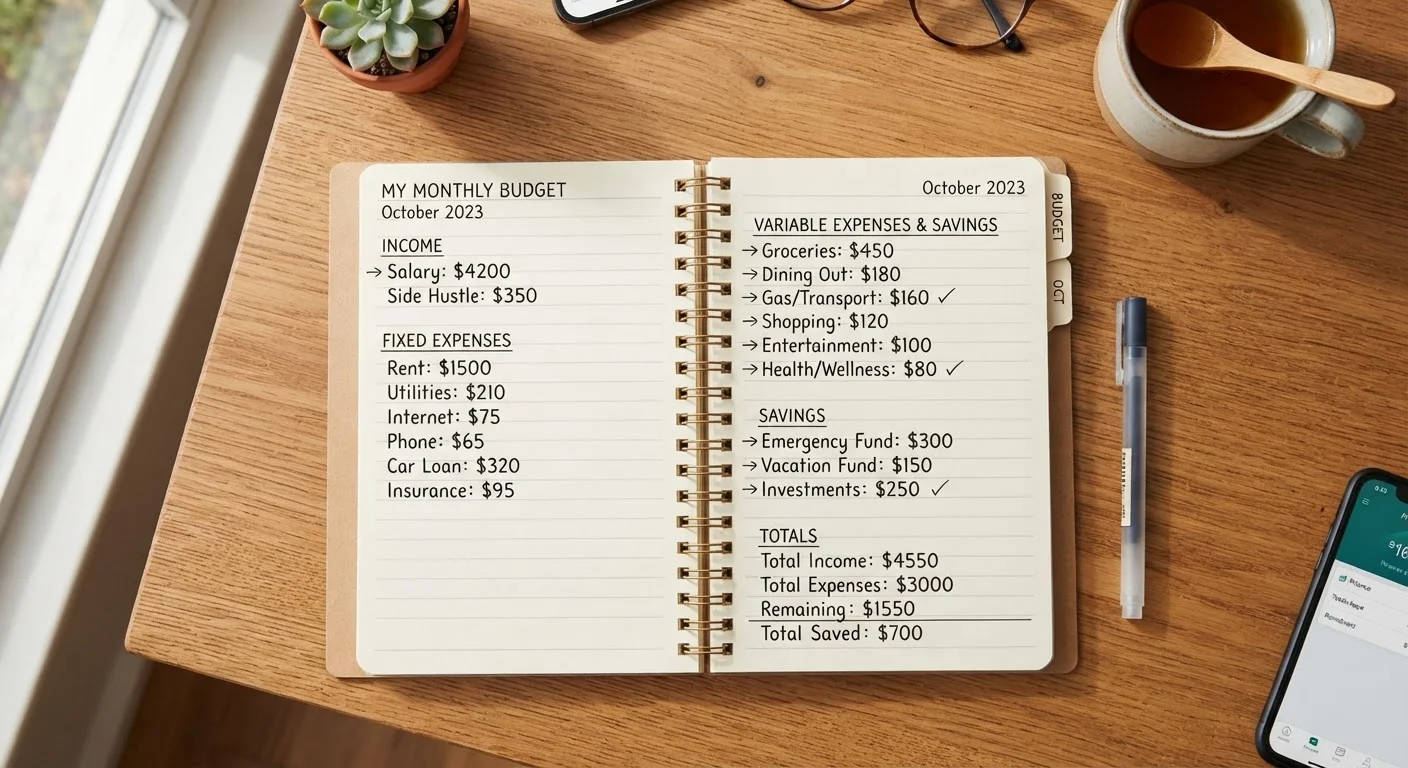
Moving toward more intentional spending doesn't require a personality overhaul. It starts with observation. Writing down every purchase — even briefly — creates enough distance between the urge and the action to surface patterns you'd otherwise miss.
From there, a few habits help:
- Name the feeling first. Before buying, notice what you're feeling. Naming it — "I'm stressed" or "I'm bored" — interrupts the automatic response.
- Build in a pause. A 24-hour wait on non-essential purchases is a widely cited method for reducing impulse buying. It doesn't eliminate spontaneity; it filters out pure reactivity.
- Clarify your actual priorities. Intentional spending needs a reference point. If you haven't articulated what matters to you financially, any purchase can feel equally valid in the moment.
Structuring how money is organised can also help. Whether you prefer envelopes or a spreadsheet, different budgeting approaches suit different people and the right system reduces the mental load of deciding in real time. For a broader foundation, the Budgeting Basics hub covers the core tools in plain language.
~33%
Adults reporting frequent impulse purchases
Various consumer surveys consistently find roughly a third of adults report making purchases driven by mood or impulse on a regular basis, though figures vary by study methodology.
24 hrs
Common wait period to filter impulse buys
A 24-hour pause before non-essential purchases is a widely recommended behavioural finance technique for reducing emotionally-driven spending decisions.
This article is for general informational and educational purposes only and does not constitute personalised financial advice. For guidance specific to your circumstances, consider speaking with a qualified financial professional.