What Each Time Orientation Actually Means
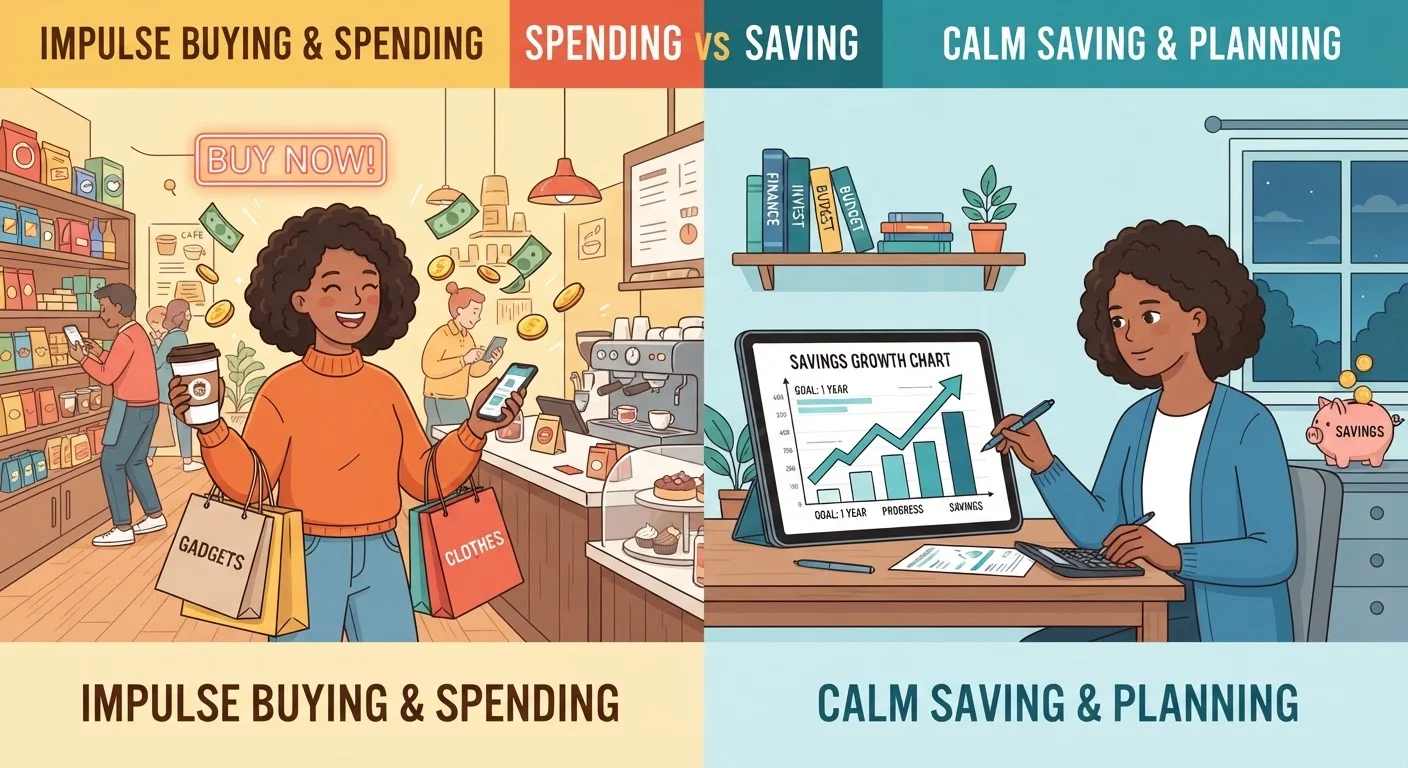
When financial educators talk about short-term thinking, they mean a decision-making style focused on right now — this week's paycheck, today's craving, this month's bills. It's not laziness or carelessness; it's a natural human tendency called present bias, which is the tendency to give more weight to immediate rewards than to future ones.
Long-term thinking, by contrast, means making decisions with a future version of yourself in mind — saving for an emergency fund, paying down debt consistently, or contributing to a retirement account even when it feels abstract. It requires mentally projecting yourself forward and valuing outcomes you can't see or feel yet.
Understanding how these two orientations work — and how they compete — is foundational to building healthier money habits. For a deeper look at the psychological forces at play, see why we spend money the way we do.
How They Play Out Differently in Real Decisions
The contrast between short- and long-term thinking shows up in everyday financial moments, not just major life decisions.
| Short-Term Thinking | Long-Term Thinking | |
|---|---|---|
| Time focus | Days to a few months | Years to decades |
| Typical financial behavior | Spending on present needs/wants | Saving, investing, debt reduction |
| Emotional driver | Immediate comfort or relief | Security, freedom, future options |
| Risk of overuse | Debt accumulation, no safety net | Missing present needs, rigidity |
| Where it helps most | Cash flow management, urgent expenses | Wealth building, retirement planning |
| Feels natural because | Rewards are immediate and tangible | Requires imagining an abstract future |
Notice that neither column is universally right. Buying groceries rather than eating out every night is short-term thinking done well. Investing aggressively in an asset you don't understand because of a long-term narrative is long-term framing used poorly. The quality of the thinking matters, not just the time horizon.
Short-term decisions compound over time just like interest does — a pattern of small, immediate-reward choices can quietly erode financial stability without any single decision feeling dramatic.
Why Long-Term Thinking Is Hard (and Short-Term Feels Easy)
Our brains are wired for immediacy. Neuroscience research suggests that thinking about our future selves activates brain regions similar to thinking about strangers — which helps explain why sacrificing for "future you" can feel oddly unnatural.
This is compounded by several well-documented cognitive biases:
- Hyperbolic discounting: We dramatically undervalue rewards that are far off, even when the math clearly favors waiting.
- Optimism bias: We assume future circumstances will be better, so saving urgently feels less necessary.
- Status quo bias: Inertia keeps us doing what we're doing rather than making the effort to plan.
These aren't character flaws — they're features of human psychology. Recognizing them is the first step toward working around them. Key terms in personal finance psychology explains these concepts in plain language if you want to go deeper.
Try the "Future Self" Check
Before a significant purchase, pause and ask: "Would I be glad I did this in six months?" This simple question doesn't require elaborate planning — it just interrupts automatic short-term bias for a moment. Over time, that pause becomes a habit that meaningfully shifts how you make decisions.
Finding a Workable Balance
The goal isn't to suppress short-term thinking entirely — that's both unrealistic and unnecessary. The goal is to make sure long-term priorities don't get quietly crowded out.
A few approaches that tend to help:
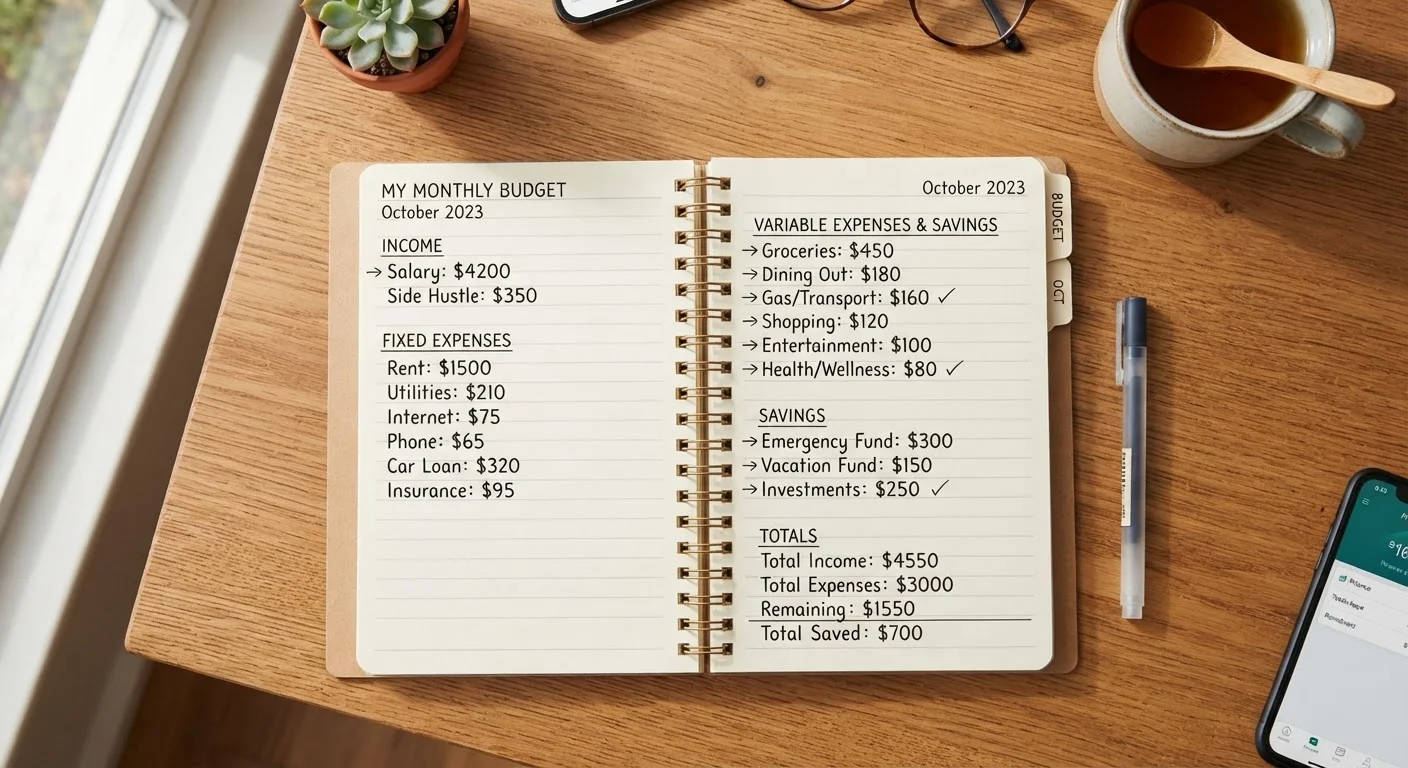
- Automate long-term decisions. When saving or debt payments happen automatically before you see the money, you're removing the moment of choice where short-term bias wins.
- Name your future goals concretely. "Retirement" is vague; "not working past 65 and having enough to cover rent and groceries" is real. Concrete goals are easier to protect.
- Use short-term milestones. Break long-term goals into near-term checkpoints so you get the psychological reward of progress more frequently.
- Budget for present enjoyment deliberately. Allocating money for things you enjoy now — within a plan — is very different from spending without awareness. The budgeting basics hub covers practical ways to structure this.
For readers who find themselves reacting to financial problems rather than anticipating them, shifting from reactive to proactive money management is a useful next step. And if you want to explore how your overall money mindset shapes these patterns, scarcity vs. abundance thinking offers a complementary lens.
This article is for general educational purposes only and does not constitute personalized financial advice. For decisions specific to your circumstances, consider consulting a qualified financial professional.