
Your Brain Wasn't Built for Modern Money Decisions
When you impulsively buy something online at midnight, or find yourself spending more after a hard day at work, that's not a character flaw — it's your brain doing what brains do. Human decision-making evolved in an environment where speed and emotional response were survival advantages. In a modern economy full of marketing, one-click checkout, and social comparison, those same instincts can quietly work against your financial goals.
Researchers in behavioral economics — a field that studies how psychology affects economic choices — have consistently found that people are far less rational with money than they believe themselves to be. Most of us have a gap between what we intend to do financially and what we actually do. The explanation almost always involves emotion, not ignorance.
“The greatest obstacle to financial security is not lack of income — it's the gap between what people know they should do and what they actually do with money.”
— Behavioral Economics Research Consensus, Widely cited finding across academic behavioral finance literature
The Most Common Psychological Triggers Behind Spending
Several well-documented patterns tend to drive spending behavior across different people and situations:
- Stress and emotional relief: Purchasing something can produce a brief dopamine boost — the same brain chemical associated with pleasure and reward. For many people, shopping functions as a short-term coping mechanism for anxiety, boredom, or sadness.
- Social comparison: Seeing what others have — especially through social media — activates a deeply ingrained drive to keep pace. This doesn't make people shallow; it makes them human. But it does mean spending is rarely made in a vacuum.
- Loss aversion: People generally feel the pain of losing money more acutely than the pleasure of gaining the same amount. This is why "limited time" framing in marketing works — the fear of missing out is real and measurable.
- Identity and self-image: Purchases often signal something about who we are or who we want to be. A gym membership, a certain brand of car, or a particular style of clothing can all be ways of expressing or constructing identity.
For a closer look at the mental shortcuts behind these patterns, our article on how cognitive biases distort financial decisions goes deeper into the mechanics.
~95%
Of decisions made by the subconscious mind
Harvard Business School researchers have suggested that roughly 95% of purchasing decisions are made subconsciously, driven by emotion rather than deliberate reasoning.
2x
Pain of loss vs. pleasure of equivalent gain
Behavioral economists Daniel Kahneman and Amos Tversky found that losses typically feel about twice as painful as gains of the same size feel pleasurable — a concept called loss aversion.
How Your Money History Shapes Today's Habits
The way money was handled in your household growing up leaves a lasting imprint. If money was a source of anxiety, secrecy, or conflict, you may carry those associations into adulthood without realizing it. If spending was used as a reward or comfort, you may repeat that pattern instinctively under pressure.
Psychologists sometimes call this your money story — the set of beliefs and emotional associations you developed early on. These aren't permanent, but they do require deliberate reflection to surface and examine. Our piece on why your money story matters walks through how to identify yours.
Try a 24-Hour Pause on Non-Essential Purchases
When you feel the urge to buy something unplanned, wait 24 hours before completing the purchase. This simple delay interrupts the emotional impulse and gives your more deliberate thinking a chance to weigh in. Many people find the desire fades significantly — or they decide the purchase is genuinely worthwhile after reflection.
From Awareness to Action
Understanding why you spend the way you do is genuinely useful — but awareness alone rarely changes behavior. What tends to work is pairing psychological insight with practical structure. A few straightforward approaches:
- Track every purchase for a month. Not to judge yourself, but to see patterns clearly. Our article on the case for writing down every purchase explains why this habit surprises most people who try it.
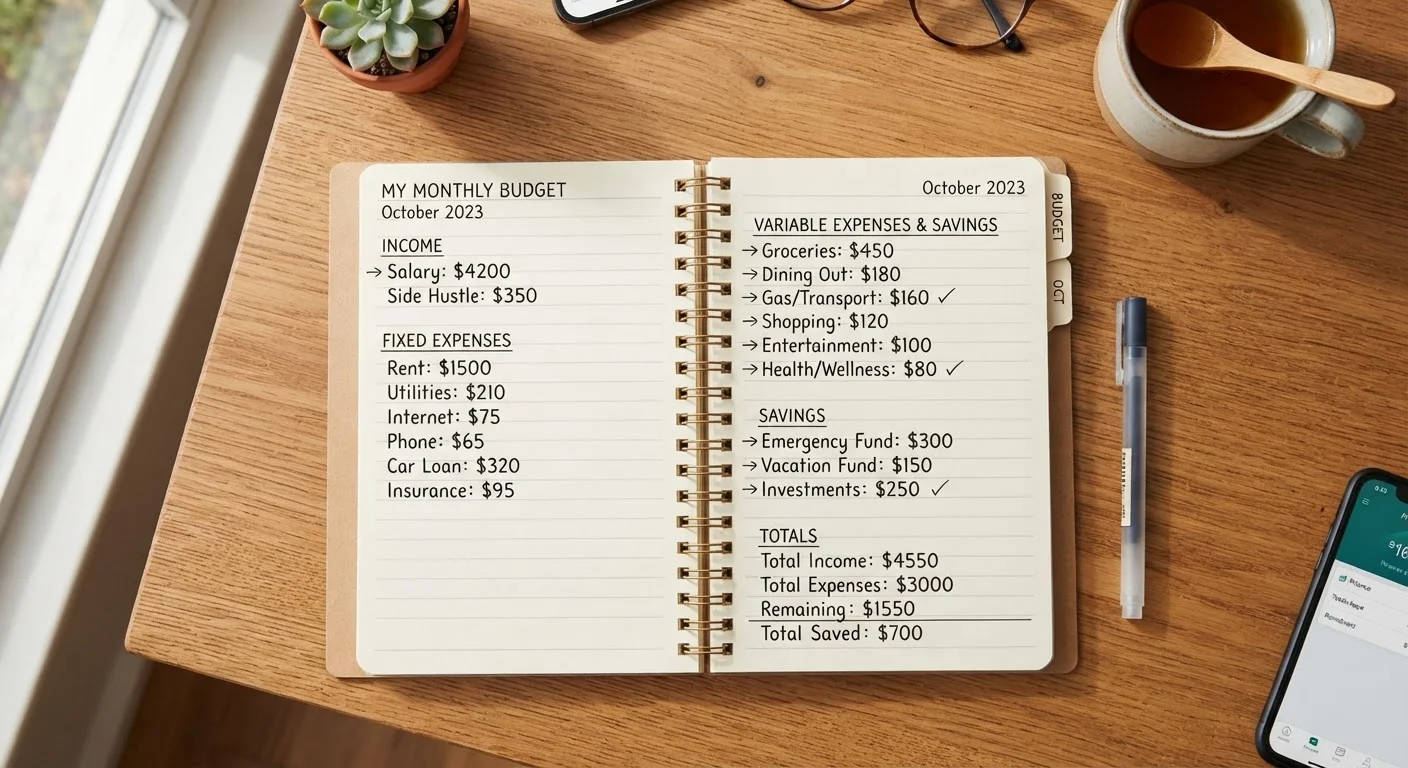
- Create a simple budget framework. When spending decisions have a structure around them, the emotional brain has less room to operate unchecked. Budgeting basics is a practical starting point.
- Identify your specific triggers. Is it stress? Boredom? Scrolling social media? Knowing your personal on-ramps to reactive spending lets you build in a pause before acting.
If you recognize habits that seem to work against your financial stability, signs your money habits may be working against you offers honest, non-judgmental signals worth reviewing.
This article is for general informational and educational purposes only. It is not financial advice. For guidance specific to your situation, consider speaking with a qualified financial professional.