
Why These Myths Matter
Budgeting myths aren't harmless misunderstandings — they're the reason many people never start managing their money with intention, or quit after a rough first month. When the idea of budgeting feels like deprivation, complexity, or punishment, the natural response is to avoid it entirely.
The good news: most of these beliefs fall apart quickly when you look at how budgeting actually works in practice. Below are five of the most common misconceptions, corrected plainly.
Myth
Budgeting means I can't spend money on things I enjoy.
Fact
A budget allocates money for enjoyment on purpose — it doesn't eliminate spending, it organizes it.
This is probably the most widespread budgeting myth, and it stops a lot of people before they even start. The assumption is that a budget is essentially a list of things you're no longer allowed to do. In reality, a budget is just a plan for where your money goes — and that plan absolutely can include dining out, hobbies, subscriptions, or whatever matters to you.
When you budget deliberately, you're not cutting fun spending — you're making sure there's actually money set aside for it rather than wondering where it went at the end of the month.
Myth
I don't earn enough to need a budget.
Fact
Lower incomes make budgeting more important, not less — every dollar has more work to do.
It's easy to think budgeting is a tool for people with surplus income to manage their excess. But the opposite tends to be true. When money is tight, knowing exactly where it goes — and making intentional choices about priorities — has an immediate, practical impact on whether bills get paid and whether any savings are possible.
Budgeting doesn't require a minimum income. It requires knowing what comes in and what goes out. That's useful at any income level. See the glossary of budgeting terms if some of the language feels unfamiliar.
Myth
If I go over budget once, the whole thing has failed.
Fact
Overspending in one category is feedback, not failure — budgets are meant to be revised.
A budget isn't a contract you break permanently the moment you exceed a line item. It's a living document. Consistently going over in the same category usually means that category was set too low to begin with, not that you're bad at budgeting.
Most people need two or three months of real tracking before their numbers reflect how they actually live. For more on why budgets commonly fall apart early — and how to prevent it — see why budgets fall apart in the first month.
Myth
Budgeting is too complicated and time-consuming.
Fact
Many effective budgeting methods take less than 30 minutes a month to maintain.
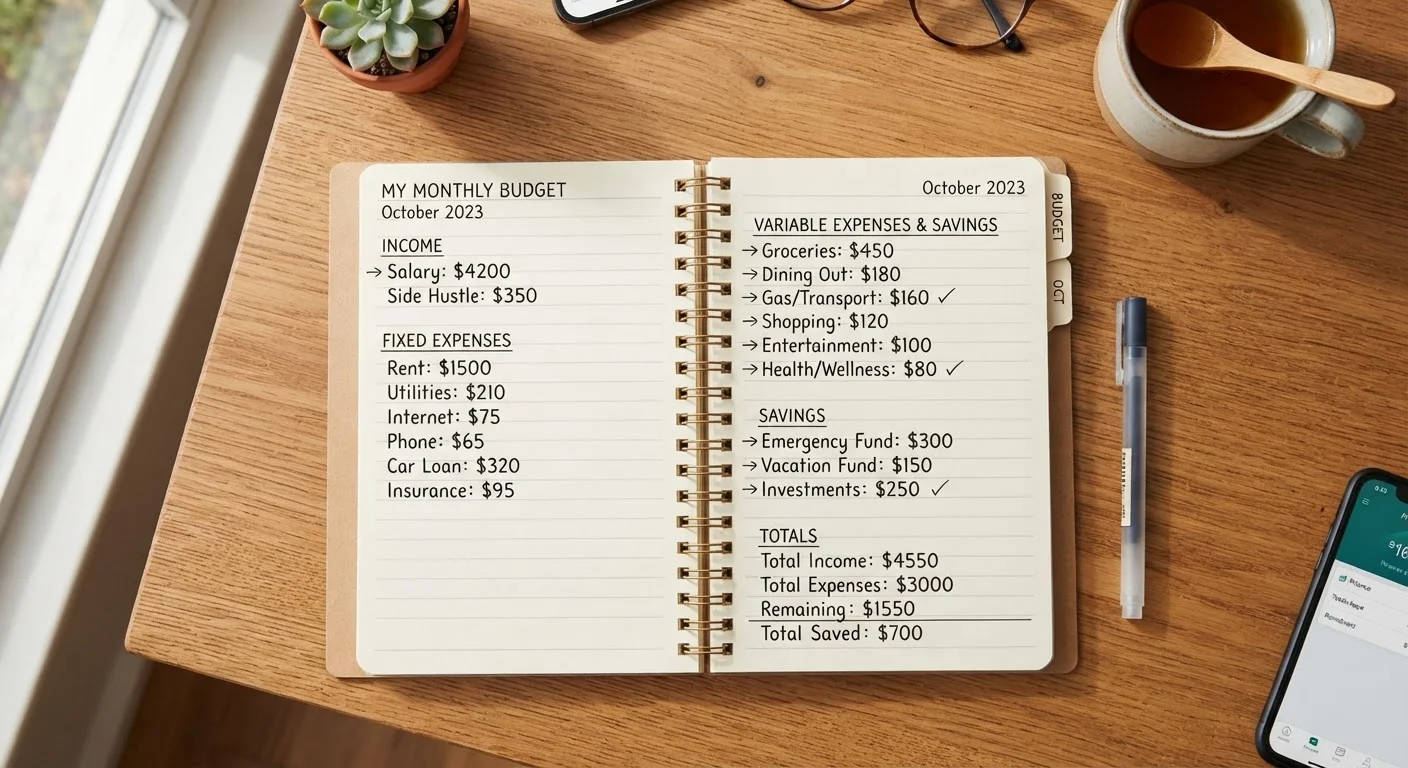
The image of someone hunched over a spreadsheet for hours every week puts a lot of people off. But budgeting can be as simple as tracking a few spending categories and checking in once a week. Some people use nothing more than a notes app or a single sheet of paper.
The goal is awareness, not accounting-level precision. Approaches like the 50/30/20 rule divide your income into just three broad buckets. Popular budgeting methods compared gives a clear rundown of options so you can find one that suits how much time and detail you're comfortable with.
Myth
Budgeting will just stress me out more about money.
Fact
Research consistently links having a spending plan to lower financial anxiety, not higher.
Uncertainty is a significant driver of financial stress. Not knowing whether you'll be able to cover an unexpected expense, or feeling like money just disappears, creates ongoing low-level anxiety. A budget replaces that uncertainty with information.
That doesn't mean budgeting feels comfortable immediately — confronting real numbers can be uncomfortable at first. But most people report that knowing their actual situation, even when it's imperfect, feels better than not knowing. The money mindset hub has more on how beliefs and emotions shape financial behavior.
This article is for general informational purposes only and does not constitute personalized financial advice. For guidance tailored to your situation, consider speaking with a qualified financial professional.
Getting Started Without Overthinking It
Perfectionism Can Derail Your Budget
One of the most common reasons people quit budgeting early is expecting a flawless first attempt. Overspending in one category doesn't mean your budget has failed — it means you have information to work with. Treat your first few months as a learning phase, not a pass-or-fail test.
Once the myths are out of the way, starting a budget becomes a lot less intimidating. The core task is simple: list what comes in each month, list what goes out, and decide whether that matches your priorities. Everything beyond that is just refinement.
If you're unsure which method to try, zero-based budgeting vs. the 50/30/20 rule walks through two widely used frameworks side by side. For the longer view on turning budgeting into a habit rather than a one-time exercise, money habits that make budgeting easier over time is a practical next step.
Budgeting Is Not a One-Size-Fits-All System
No single budgeting method works perfectly for everyone. What matters is finding an approach that fits your income pattern, lifestyle, and goals — then sticking with it long enough to see results. If a method feels unworkable after a genuine try, adjust it rather than abandoning the practice altogether.
~1 in 3
U.S. adults without a household budget
Surveys conducted by NFCC and similar organizations consistently find a significant share of American adults don't use a formal budget or spending plan.
2–3 months
Typical adjustment period for a new budget
Personal finance educators commonly note it takes several months of real data before budget categories accurately reflect a household's actual spending patterns.
It's also worth examining whether any deeper beliefs about money — not just about budgeting — are shaping your behavior. Money beliefs that hold people back explores where those patterns often come from and how to question them.