Why a Monthly Budget Is Worth Building
A budget is simply a plan for your money — written down before you spend it, rather than reviewed after the damage is done. Most people who feel financially stressed aren't necessarily earning too little; they're spending without a clear picture of where things are going. A monthly budget fixes that by giving you a map.
The good news: building one doesn't require financial expertise, special software, or hours of your time. It requires your actual income figure, two or three months of spending data, and a willingness to be honest about the numbers. For a broader foundation, our complete beginner's budgeting resource covers the full picture from scratch.
What you will need
What You'll Need Before You Start
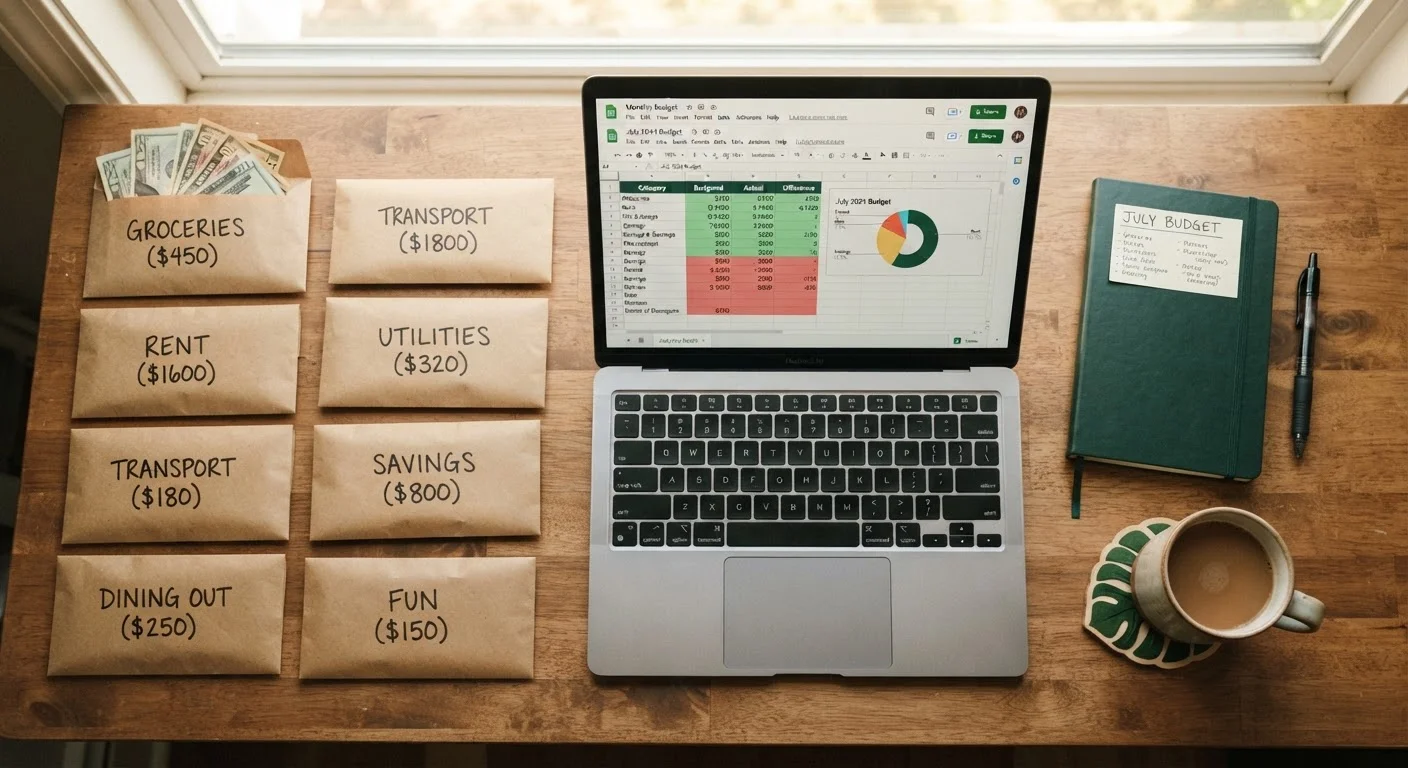
Gather your tools before sitting down to build your budget. The format — paper, spreadsheet, or app — matters far less than actually starting. If you're unsure which approach fits your style, this comparison of envelope vs. spreadsheet budgeting walks through the tradeoffs.
Bank or credit card statements
Used to identify your actual spending patterns across categories before setting limits.
Spreadsheet app (e.g. Google Sheets or Excel)
Provides a flexible, adjustable grid to lay out income, categories, and limits side by side.
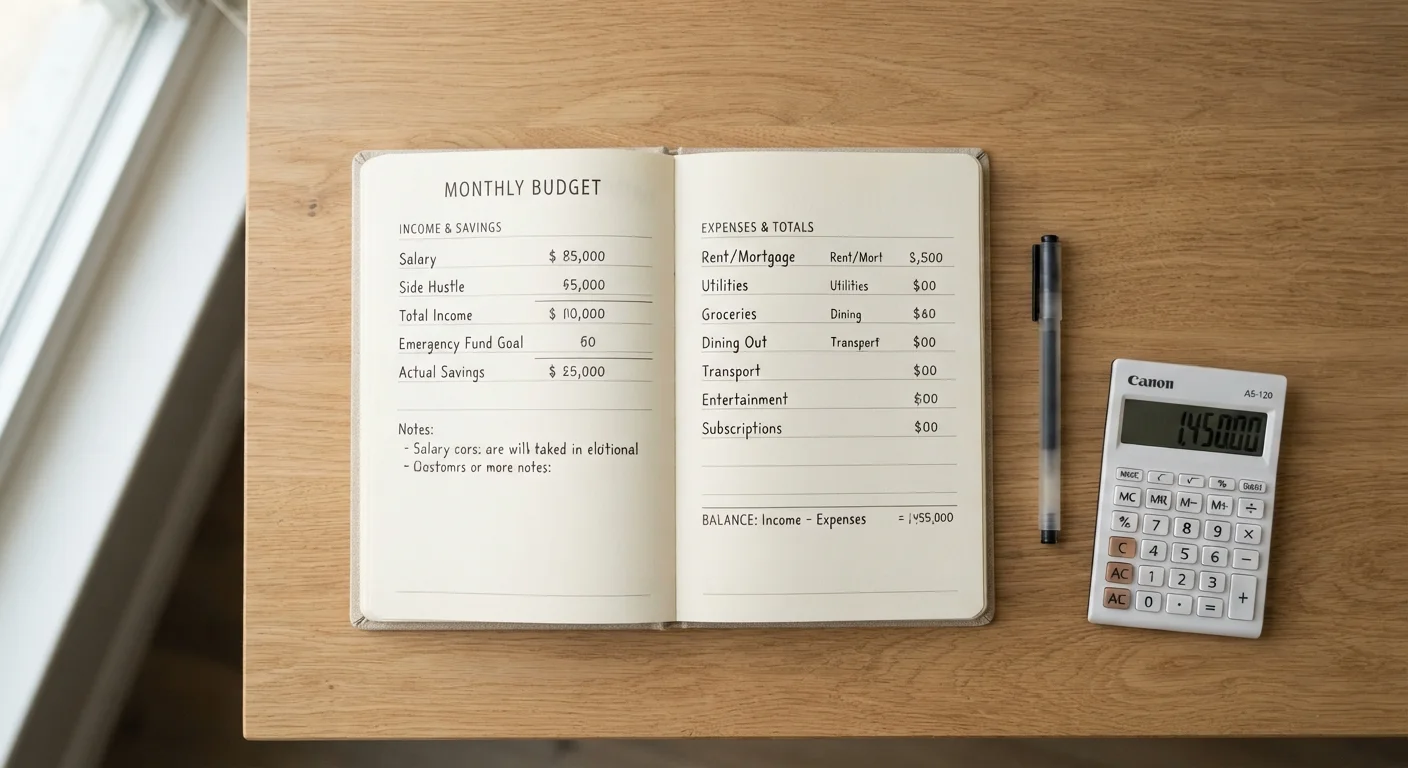
Notebook and pen
A low-tech alternative for drafting your budget if you prefer writing by hand.
Free budgeting app
Automates transaction imports and category tracking, reducing manual data entry each month.
How to Build Your Monthly Budget
Follow these six steps in order. Each one builds on the last. The whole process should take under an hour the first time — and gets faster each month after that.
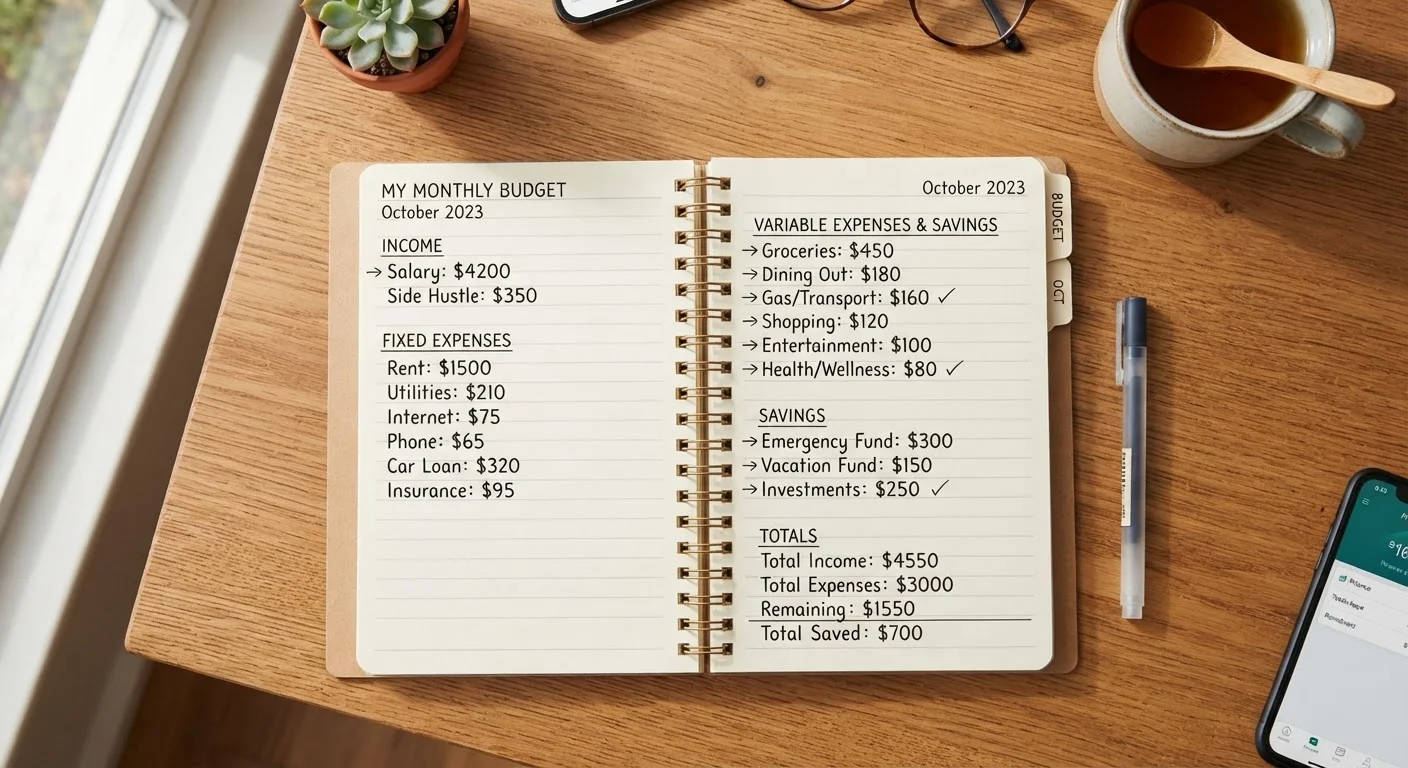
Calculate your real monthly take-home income
Write down every source of income you reliably receive each month — wages, freelance pay, side work, or regular transfers. Use your take-home (net) amount — the money that actually lands in your bank account after taxes and any paycheck deductions. Gross salary (pre-tax) will make your budget look bigger than it really is.
If your income varies month to month, use a conservative average based on your last two or three months. It's better to underestimate slightly and have money left over than to overpromise yourself.
List every spending category
Before assigning any dollar amounts, write out everything you spend money on. Group expenses into two buckets:
- Fixed expenses — amounts that stay the same each month: rent or mortgage, loan payments, subscriptions, insurance premiums.
- Variable expenses — amounts that shift: groceries, gas, dining out, clothing, entertainment, personal care.
Also add a savings line as its own category — not an afterthought. Treating savings like a bill makes it far more likely to actually happen.
Assign a realistic limit to each category
Now put a dollar figure next to each category. A common starting framework is the 50/30/20 rule: roughly 50% of take-home income toward needs (fixed essentials), 30% toward wants (flexible spending), and 20% toward savings and debt repayment. This isn't a rigid law — it's a reference point.
Your actual numbers should reflect your real costs. If rent alone takes 40% of your income, adjust the other categories accordingly. What matters is that your total spending plan does not exceed your total take-home income.
Check that income minus expenses equals zero (or positive)
Add up all your planned expenses and savings. Subtract that total from your take-home income. The goal is to account for every dollar — ideally arriving at zero (every dollar has a job) or a small positive number (extra goes to savings or a buffer fund).
If your total expenses exceed your income, you need to reduce spending somewhere — usually starting with variable categories. If you have money left unassigned, direct it intentionally: extra savings, an emergency fund, or debt repayment.
Track your spending throughout the month
A budget written once and ignored is just a document. Throughout the month, record what you actually spend in each category — daily or every few days works well. Compare it against your planned limits.
You don't need to obsess over every dollar, but checking in two or three times per month catches overspending before it becomes a problem. Most free budgeting apps can pull transactions automatically if manual entry feels like too much friction.
Review and adjust at month-end
At the end of each month, compare your planned amounts to what you actually spent. Which categories ran over? Which came in under? Use this information to set more accurate limits for the following month.
The first budget is rarely accurate — that's expected. Each monthly review makes it more realistic. See our monthly budget review checklist for a structured way to run through this process quickly.
Start Simple, Then Refine
Your first budget doesn't need to be detailed or perfect. Six broad categories and honest numbers will serve you better than a highly complex system you abandon after two weeks. Complexity can come later once the habit is established.
Don't Forget Irregular Expenses
Car registration, annual insurance renewals, holiday spending, and medical co-pays don't show up every month — but they will show up. If you ignore them in your budget, they'll feel like emergencies when they arrive. Build a monthly 'irregular expenses' line and set a small amount aside for them consistently.
Common Pitfalls and How to Avoid Them
Most first budgets run into a few predictable problems. Knowing them in advance helps you sidestep them.
- Using gross income instead of net income — always budget from your take-home amount.
- Setting limits based on hope rather than history — your statements show the truth; start there.
- Skipping savings as a line item — savings doesn't happen automatically unless you plan for it. Consider it a bill you pay yourself. Our guide on building your first emergency fund is a useful next step once your budget is in place.
- Quitting after one bad month — one overspend doesn't mean the budget failed. It means you have better data for next month.
For a deeper look at why budgets stall early, this article on why budgets fall apart in the first month explains the most common causes and how to address them. Once your budget is running, these everyday money habits help turn it into something that feels natural rather than forced.
This Is General Education, Not Personalised Advice
This article provides general financial information to help you understand budgeting concepts. It is not personalised financial advice. Your individual circumstances — income, debt, family situation, and goals — are unique. For guidance tailored to your situation, consider speaking with a qualified financial adviser or counsellor.
This article is for general informational and educational purposes only. It does not constitute personalised financial, tax, or legal advice. For guidance suited to your individual circumstances, consult a qualified financial professional.