
What an Emergency Fund Actually Is
An emergency fund is a dedicated pool of money set aside for genuine, unexpected financial shocks — a sudden medical bill, a car breakdown, an unexpected job loss, or an urgent home repair. It is not a savings account for planned expenses like holidays or annual subscriptions. Its entire purpose is to keep an unplanned event from turning into a debt crisis.
Without one, most people reach for a credit card or a loan when something goes wrong. That can start a cycle of debt that's hard to escape. An emergency fund acts as a buffer between your everyday life and financial chaos.
For a broader look at how savings, credit, and debt all fit together, see our financial starting point overview.
This Is Education, Not Personal Advice
This article provides general financial education for informational purposes only. It is not personalised financial advice. Everyone's financial situation is different. For guidance tailored to your circumstances, consult a qualified, licensed financial adviser.
What You'll Need Before You Start
You don't need a lot to get started — just a clear picture of your basic monthly costs and a place to put the money. Run through the checklist below before moving to the steps.
What you will need
Dedicated savings account
Holds your emergency fund separately from your everyday spending money.
Basic budget or spending record
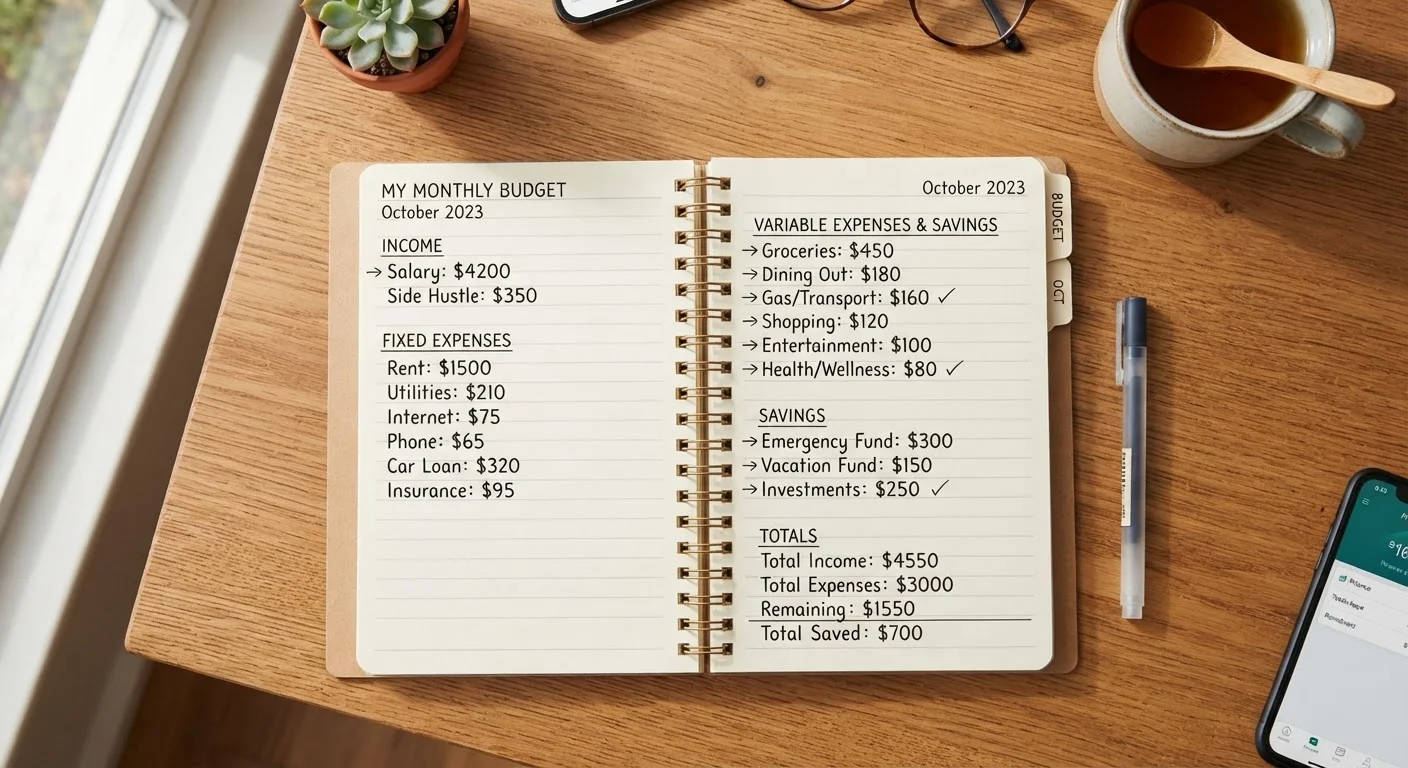
Helps you identify how much you can realistically set aside each month.
Automatic transfer or standing order
Moves a fixed amount to your emergency savings on payday without requiring manual action.
How to Build Your Emergency Fund, Step by Step
Follow these steps in order. The first two are planning steps that take only a few minutes; the rest set up the system that does the work for you.
Calculate your essential monthly expenses
Add up only the expenses you absolutely cannot skip: rent or mortgage, utilities, groceries, transportation, minimum debt payments, and basic insurance. Leave out dining out, subscriptions, and other discretionary spending. This total is your baseline — the amount you'd need each month if income stopped suddenly.
Set a realistic savings target
Multiply your essential monthly expenses by three to get a minimum target, and by six for a more comfortable cushion. For example, if your essentials total $1,500 a month, your target range is $4,500 to $9,000. Don't let that number intimidate you — you won't save it overnight, and that's completely normal.
Open a separate savings account
Open a savings account that is distinct from your everyday checking account. Keeping the money physically separate makes it psychologically easier to leave it alone. Look for an account with no monthly maintenance fees and easy access in a genuine emergency — you don't want barriers when you actually need the funds.
Decide on a monthly contribution amount
Look at your budget and find an amount you can move to savings every month without straining your other obligations. Even $20 or $30 a month counts. The key is consistency, not size. If your budget is tight, look for one or two small expenses you can temporarily reduce — a streaming service, takeout meals — to free up a little more room.
Automate your contributions
Set up an automatic transfer from your checking account to your new savings account on or just after your payday. Treating this transfer like a fixed bill — one that happens whether or not you remember — removes the temptation to spend the money first. Even a small automated amount builds the habit reliably over time.
Review and increase your contributions over time
Every few months, revisit how much you're saving. If you receive a raise, pay off a debt, or cut an expense, direct some of that freed-up cash toward your emergency fund. Small increases — even an extra $10 a month — compound meaningfully over a year or two.
Separate Account, Separate Mindset
Opening a dedicated savings account — one you don't use for regular spending — makes it much easier to leave the money alone. Naming the account something like 'Emergency Only' reinforces its purpose every time you log in.
Don't Raid Your Fund for Non-Emergencies
A vacation, a sale on electronics, or a planned car repair that you knew about months ago don't qualify as emergencies. Dipping into your fund for predictable expenses defeats its purpose. If you do use it for a genuine emergency, prioritise rebuilding it as soon as possible.
Staying on Track Once You've Started
The hardest part of building an emergency fund is not starting — it's keeping the money there. Life will occasionally present tempting reasons to dip into it. The clearest rule to apply: if you could have predicted or planned for the expense more than a week in advance, it probably doesn't qualify.
It also helps to check in on your overall budget regularly. Our monthly budget walkthrough covers how to review your spending habits at the end of each month — a habit that naturally surfaces opportunities to save more. For a wider view of budgeting methods and how they support your savings goals, the Budgeting Basics hub is a good next stop.
This article is for general informational and educational purposes only and does not constitute personalised financial advice. Please consult a qualified financial professional for guidance specific to your situation.