What Budgeting Actually Means
A budget is a written plan for how you intend to use your money during a set period — usually one month. That's it. It isn't a punishment, a sign that you're struggling, or a complicated financial document. It's a decision made before you spend, rather than a surprise discovered afterward.
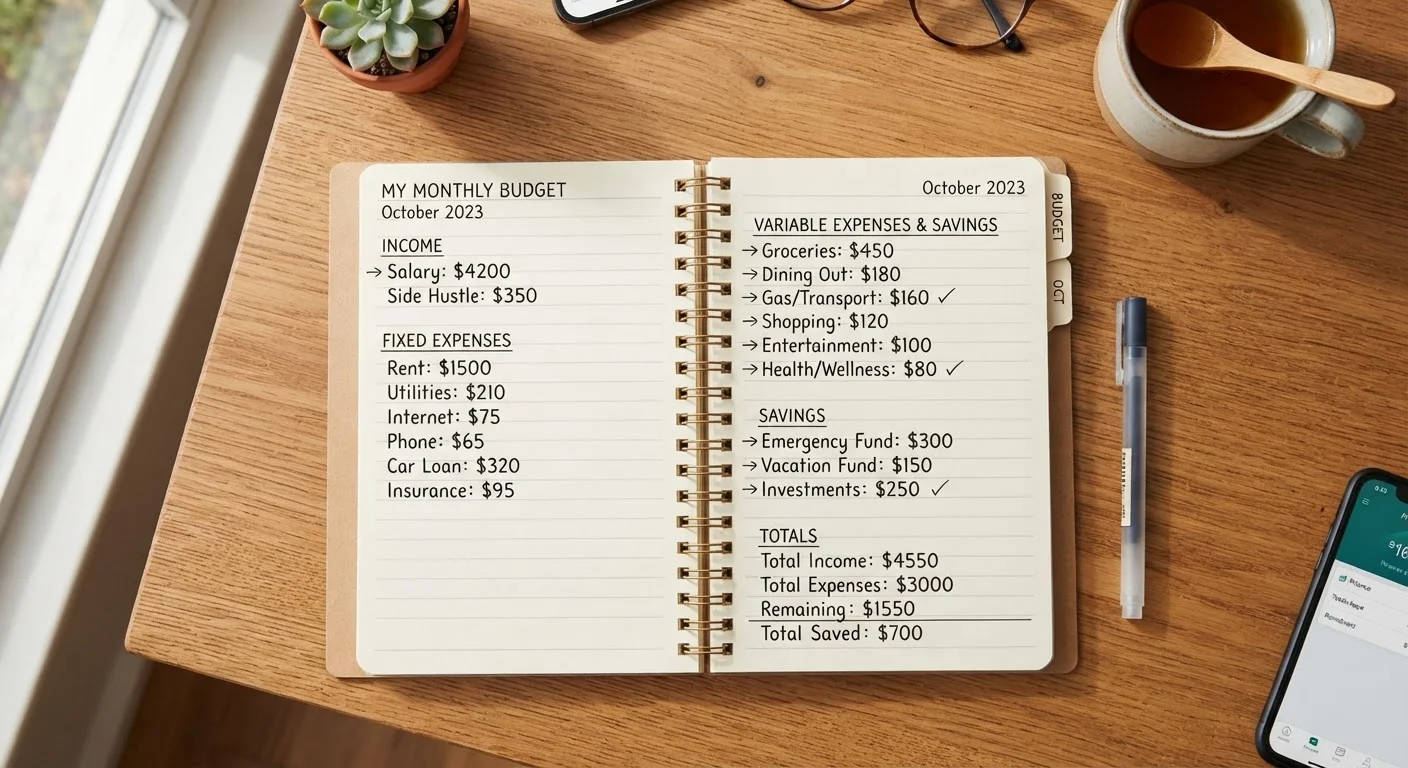
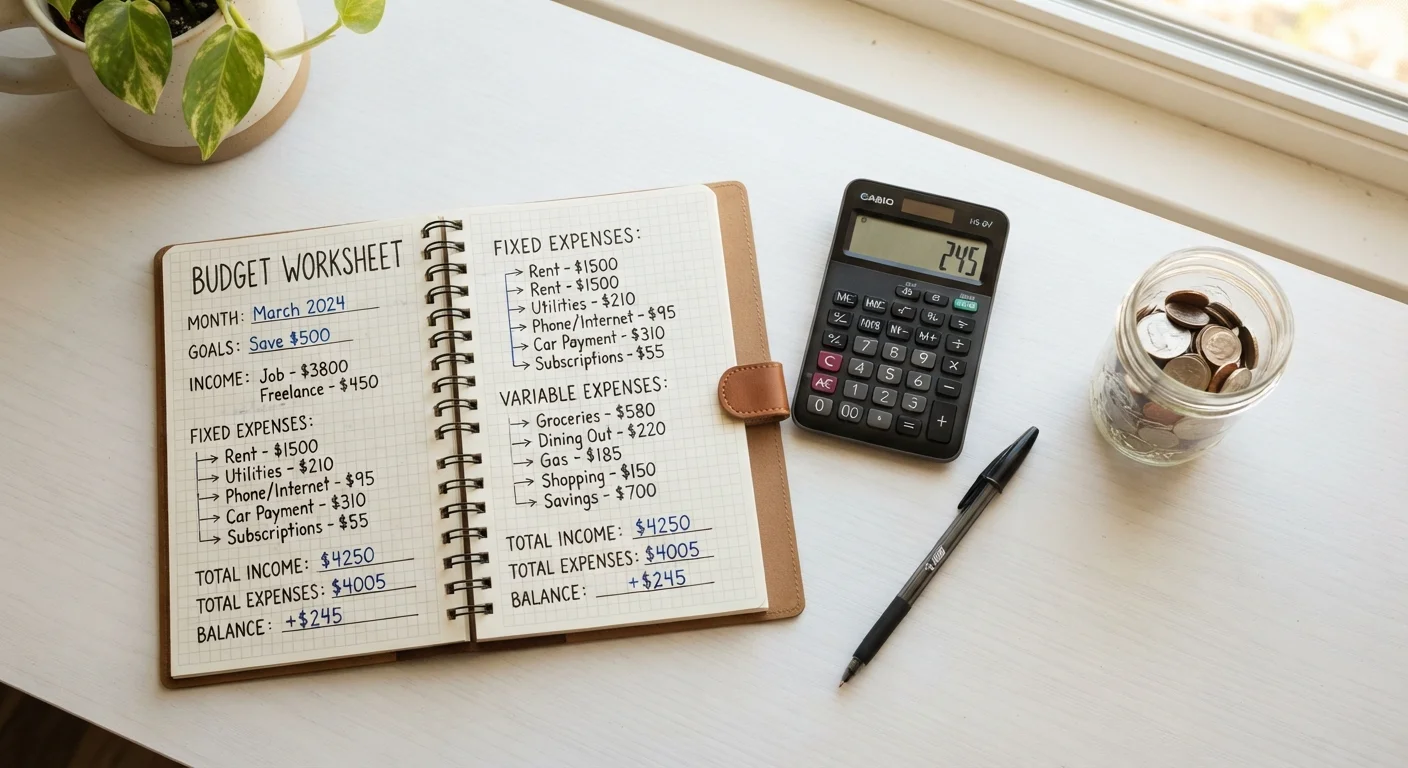
At its core, every budget does three things: it lists your income (money coming in), your expenses (money going out), and the difference between them. When expenses are lower than income, you have room to save or pay down debt. When they're higher, you're spending more than you earn — and that gap needs addressing.
Understanding your broader financial picture — including savings and credit — matters alongside budgeting. See how savings, credit, and debt connect for a fuller starting-point overview.
Start with what you already spend
Before setting limits, look back at two or three months of actual bank and card statements. Real spending history gives you a realistic baseline far more useful than estimates made from memory.
Common Budgeting Methods Explained
No single budgeting method works for everyone. Here are four widely used approaches, each with a different structure:
- 50/30/20 rule: Divide after-tax income into three buckets — 50% for needs (rent, groceries, utilities), 30% for wants (dining out, subscriptions), and 20% for savings or debt repayment. Simple and flexible, it's a good starting point for beginners.
- Zero-based budgeting: Assign every dollar of income a job until the balance reaches zero. If you earn $3,000, every dollar is allocated — bills, groceries, savings, even small fun money — before the month begins. Requires more effort but leaves nothing unaccounted for.
- Envelope method: Withdraw cash and divide it into labeled envelopes for each spending category. When an envelope is empty, spending in that category stops. Works well for people who overspend on variable costs like food or entertainment.
- Pay-yourself-first: Move a set amount into savings immediately when income arrives, then build spending around what remains. Prioritizes saving without relying on willpower at month's end.
The best method is the one you'll stick with. Many people start with the 50/30/20 rule and adjust from there.
~33%
U.S. adults with a written monthly budget
Surveys by organizations including Gallup have consistently found that fewer than half of American adults maintain a formal household budget.
$1,000
Common emergency savings benchmark
Financial educators frequently cite $1,000 as a starter emergency fund target — enough to cover many common unexpected expenses without disrupting a budget entirely.
How to Build Your First Budget
Building a budget from scratch takes less time than most people expect. A focused walk-through helps: follow a step-by-step monthly budget guide to move from blank page to working plan.
In brief, the process looks like this:
- Add up your monthly income. Use your take-home pay (after taxes and deductions), not your gross salary.
- List fixed expenses. These are costs that stay roughly the same each month — rent, loan payments, insurance premiums.
- Estimate variable expenses. Groceries, gas, and dining out fluctuate. Look at two or three recent months to find an average.
- Check the math. Subtract total expenses from total income. A positive result means you have money to allocate toward savings or debt. A negative result means cuts are needed.
- Set category limits. Give each spending area a monthly ceiling based on what you can realistically afford.
Use Take-Home Pay, Not Gross Salary
Always base your budget on the money that actually lands in your account after taxes and deductions. Building a plan around gross (pre-tax) income is one of the most common beginner mistakes and leads to consistent shortfalls from day one.
Tracking Spending Day to Day
Writing a budget and actually following it are two different skills. Tracking is the bridge between them. Without it, a budget is just a document.
Tracking means recording every purchase — or at minimum reviewing your bank and card statements regularly. Doing this weekly rather than monthly catches problems early, before a small overspend becomes a large one.
Common tools include:
- A simple notebook or spreadsheet
- Your bank's built-in spending categories
- Budgeting apps that pull in transaction data automatically
Choose whatever you'll open consistently. A basic spreadsheet you check every few days beats a sophisticated app you never log into.
Review your budget on the same day each week — even for just five minutes. Consistency in timing makes the habit stick faster than relying on motivation.
Behavioral research consistently shows that habit formation is driven more by routine triggers than by intention. A fixed review day removes decision fatigue from the process.
Give yourself a small 'no questions asked' category for personal spending. When every dollar is accounted for rigidly, people feel deprived and abandon the budget entirely.
Budgets that allow no flexibility tend to fail because they don't account for normal human behavior. A modest personal allowance reduces the all-or-nothing thinking that undermines consistency.
When Life Disrupts the Plan
Irregular months happen to everyone — a car repair, a medical bill, a holiday, a change in income. Most people abandon their budget when this occurs. A more useful response is to revise it.
When an unexpected expense arrives, adjust other categories to compensate rather than ignoring the budget entirely. Move money from the wants bucket to cover the need. If the expense is large enough that no adjustment covers it, an emergency fund is designed exactly for this moment. If you haven't started one yet, learn how to build a starter emergency fund.
Budgeting also gets easier with consistent habits over time. The practices that make it feel less effortful are worth building deliberately — explore the money habits that support long-term budgeting.
Don't mistake one bad month for failure
Missing a budget target in a single month doesn't mean the whole system is broken. Treating a setback as permanent is the most common reason people stop. Adjust the numbers, learn from what happened, and keep going.
Connecting Budgeting to Bigger Goals
A budget without a goal is just math. When it's tied to something you actually want — paying off a credit card, saving for a move, building a cushion — it gains purpose and becomes far easier to maintain.
Start by naming one financial goal and attaching it to a budget category. If you want to save $1,200 over a year, that's $100 a month. Give that line a name and protect it. Over time, the budget becomes the tool that closes the gap between where you are and where you want to be.
For a broader look at the financial mindset that supports these decisions, visit the Money Mindset hub.
Building a Monthly Budget: Step-by-Step
A structured walkthrough for creating a realistic monthly budget, covering income, expense categories, and end-of-month review habits.
Money Habits That Make Budgeting Easier
Practical everyday habits that make staying on a budget feel more natural and less like a chore over time.
Building Your First Emergency Fund
A beginner-friendly walkthrough explaining what an emergency fund is, how large it should be, and how to start from scratch.
This article is for general informational and educational purposes only and does not constitute personalized financial advice. For guidance specific to your situation, consider consulting a qualified financial professional.