How Each Method Actually Works
Before comparing the two, it helps to understand what each method is really asking you to do.
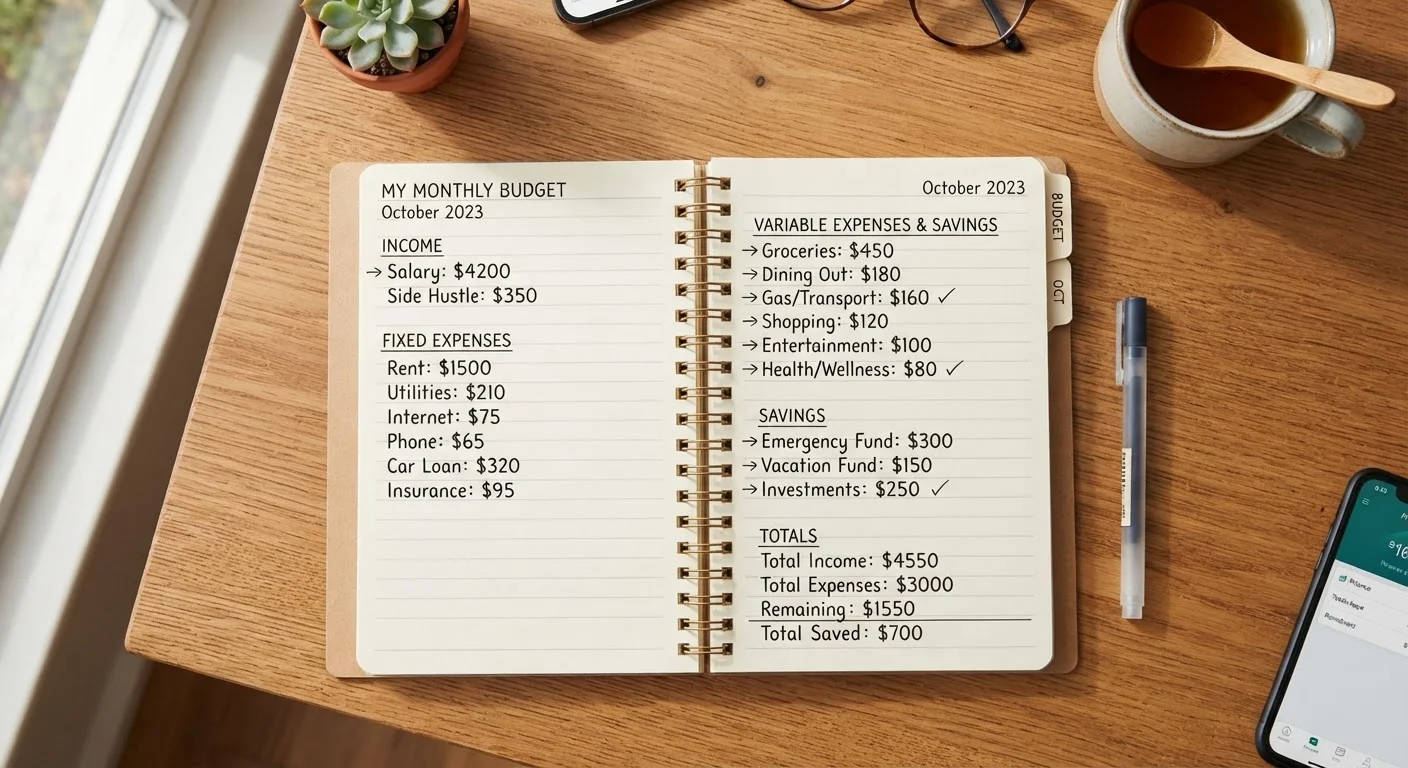
Zero-based budgeting starts with your total monthly income and requires you to assign every dollar to a specific category — rent, groceries, subscriptions, savings, debt payments — until you reach zero. That doesn't mean spending everything. Savings and debt payoff count as assignments too. The goal is that income minus all your planned allocations equals exactly zero, so no dollar is left unaccounted for.
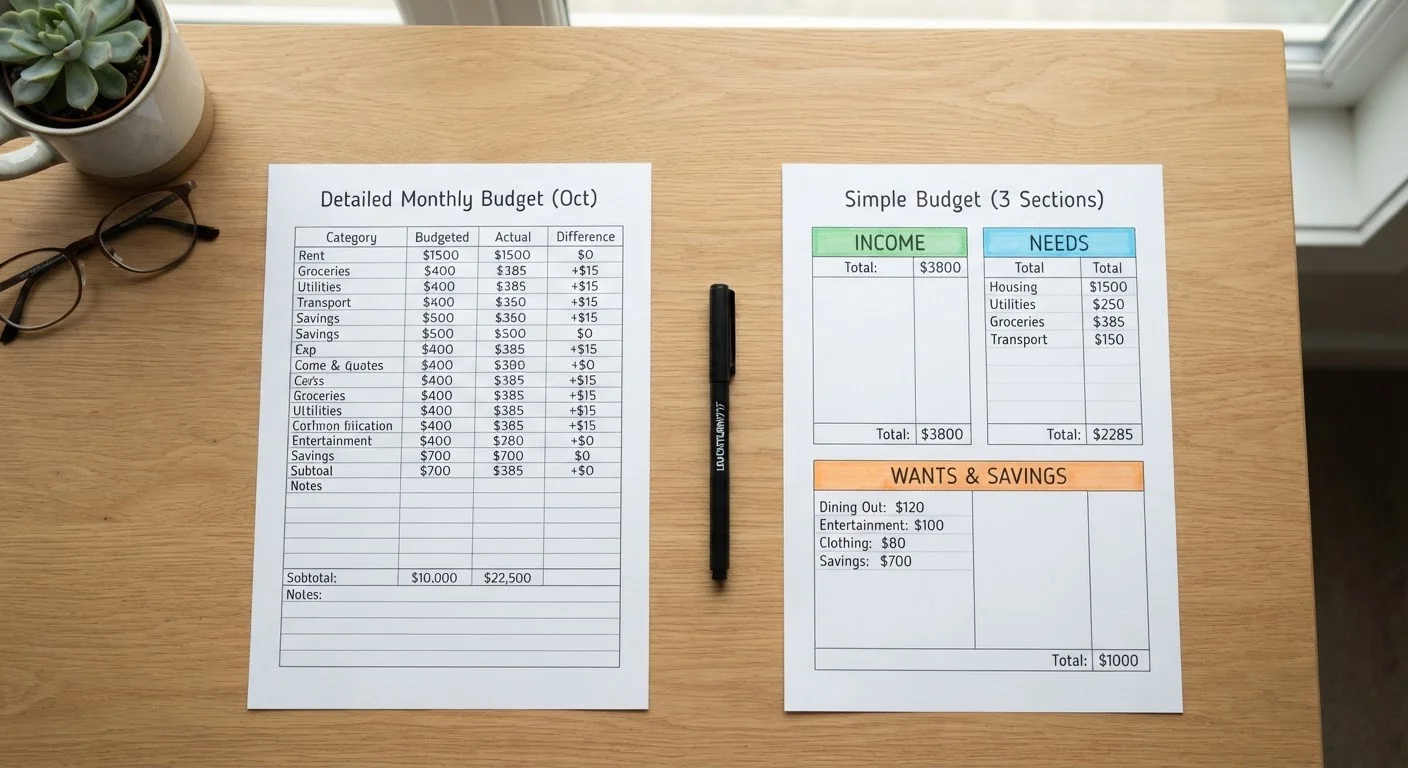
The 50/30/20 rule takes a different approach. You divide your take-home pay into three broad percentages: 50% toward needs (rent, utilities, food, transportation), 30% toward wants (dining out, entertainment, hobbies), and 20% toward savings and debt repayment. The appeal is simplicity — three categories instead of twenty.
If you've never built a budget from scratch before, our beginner's budget walkthrough covers the foundational steps that apply to both methods.
| Criterion | Zero-Based Budgeting | 50/30/20 Rule |
|---|---|---|
| Setup time | 30–60 min per month | Under 15 min per month |
| Number of categories | Many specific line items | Three broad buckets |
| Works with irregular income | Yes, rebuilt each month | Less straightforward |
| Best for beginners | Steeper learning curve | Very beginner-friendly |
| Level of spending control | Very granular | Broad guidelines |
| Flexibility | High — rebuilt each month | Moderate — fixed percentages |
The Real Differences: Time, Flexibility, and Fit
The most practical difference between these two methods is the time they demand. Zero-based budgeting typically takes 30–60 minutes at the start of each month to build out all your categories and confirm the numbers add up. The 50/30/20 rule can be reviewed in minutes once you know your income and rough spending habits.
Flexibility looks different too. Zero-based budgeting is highly adaptable — if one month brings an unexpected car repair, you rebuild the plan around it. The 50/30/20 rule is more rigid in structure but easier to follow when life is predictable.
~32%
U.S. adults with a detailed written budget
Gallup surveys have consistently found that only about a third of American adults maintain a detailed household budget.
3x
Categories in the 50/30/20 rule vs. typical zero-based budget
A standard zero-based budget commonly uses 15–25 spending categories compared to the 50/30/20 rule's three, reflecting the difference in setup complexity.
Personality also plays a role. Some people find detailed category tracking satisfying and motivating. Others find it tedious and abandon it within weeks. Neither reaction is wrong — it's just useful information about which method is more likely to stick for you.
For a broader look at how these two approaches stack up against other common frameworks, see our comparison of popular budgeting methods.
Common Pitfalls and How to Avoid Them
Both methods have predictable failure points worth knowing in advance.
With zero-based budgeting, the most common mistake is forgetting irregular expenses — things like annual subscriptions, car registration, or holiday gifts. If these don't appear in your monthly plan, they become surprise derailments. The fix: create a dedicated category for irregular expenses and contribute a small amount each month, even when those costs aren't due yet.
With the 50/30/20 rule, the slip is usually misclassifying expenses. A gym membership might be a want for one person and a genuine health need for another. There's no universal answer, but being honest with yourself about which category something truly belongs in matters — otherwise the percentages become meaningless.
Hybrids Are Perfectly Fine
Some people start with the 50/30/20 rule to build the habit, then layer in more detailed categories over time. Others use zero-based budgeting for most expenses but keep a flexible 'miscellaneous' bucket. There's no rule that says you must follow one method exactly as described. What matters is that the system you use reflects your real income, real expenses, and real goals.
Both methods also share a common weakness: they only work if you actually track what you spend. A plan on paper means nothing if you aren't checking it against real spending at least a few times a month. Our step-by-step monthly budget guide explains how to set up a realistic review habit.
If you've been held back by the idea that budgeting means cutting out everything you enjoy, common budgeting myths worth debunking may shift your perspective before you even pick a method.
This article is for general informational and educational purposes only. It is not personalised financial advice. For guidance specific to your financial situation, consider speaking with a qualified financial professional.