Why the Method Matters
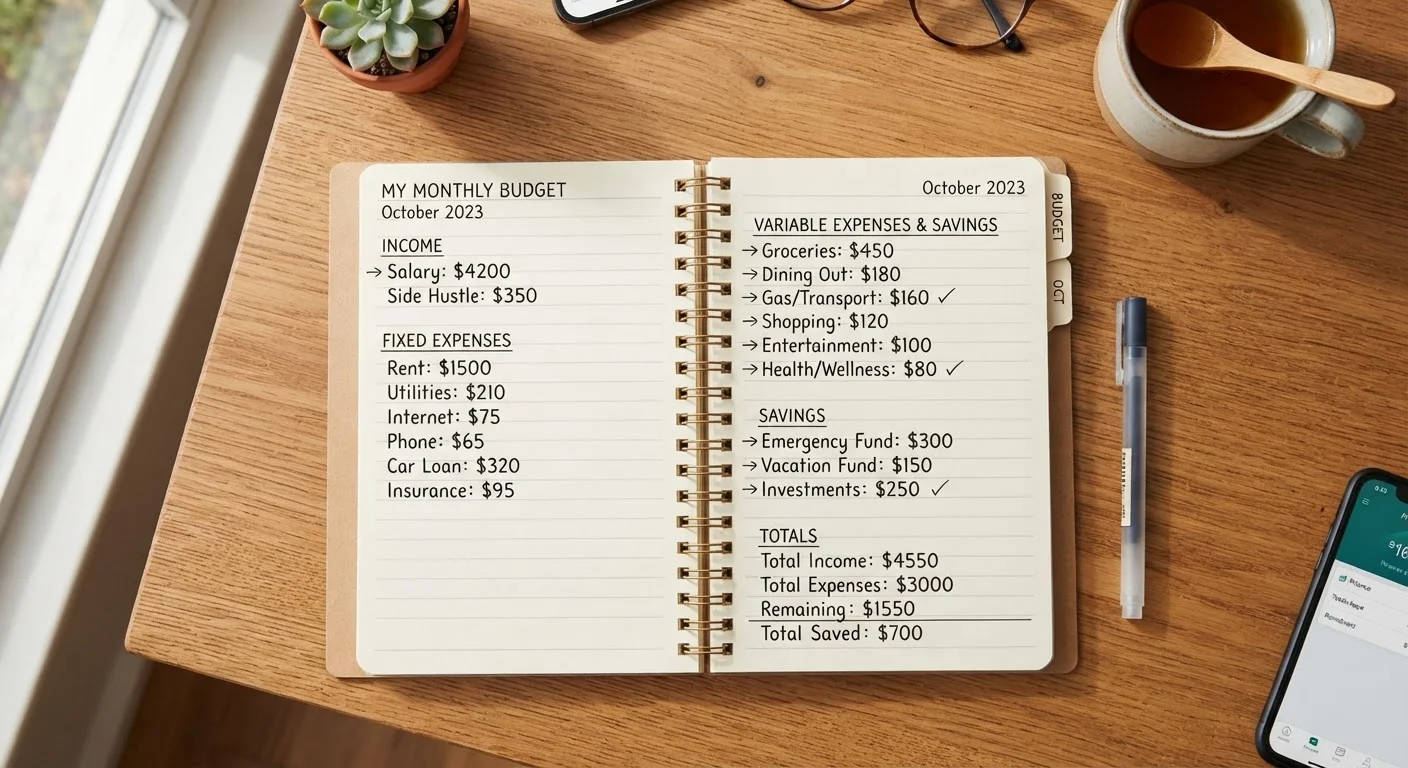
A budget is simply a plan for your money — but how you build that plan affects whether you'll keep using it. Some approaches take five minutes a month; others ask you to track every single transaction. Neither is wrong. The question is which one matches your income pattern, your personality, and how much time you're willing to spend.
Before diving in, one important note: all of the methods below work with your net income — the money that actually hits your bank account after taxes and other payroll deductions. If you're not sure about terms like net income or discretionary spending, the budgeting glossary for beginners defines them in plain English.
This article is general financial education, not personalised advice. For guidance specific to your situation, consider speaking with a qualified financial professional.
The Four Main Methods at a Glance
Here's how the most widely used budgeting frameworks compare across the criteria that matter most to everyday budgeters.
| 50/30/20 Rule | Zero-Based Budgeting | Pay-Yourself-First | Envelope Budgeting | |
|---|---|---|---|---|
| Setup time | Low | High | Very low | Medium |
| Ongoing tracking effort | Minimal | Weekly or more | Minimal | Daily or per purchase |
| Best income type | Steady salary | Any, including irregular | Steady salary | Any income type |
| Category detail | Broad (3 buckets) | Granular (every dollar) | Broad (save first) | Per-category limits |
| Overspending control | Moderate | Strong | Weak to moderate | Strong |
| Flexibility | High | Low to medium | High | Low |
| Good for beginners? | Yes | Not ideal initially | Yes | Yes, with effort |
The sections below unpack what each method actually involves in practice.
The 50/30/20 Rule
This method splits your after-tax income into three broad buckets: 50% toward needs (rent, groceries, utilities, minimum debt payments), 30% toward wants (dining out, subscriptions, entertainment), and 20% toward savings and extra debt repayment.
Its main strength is simplicity. You don't need to track individual purchases — just check periodically that your spending is roughly in the right proportions. That makes it a natural starting point for anyone who's making their first budget.
The trade-off: in high-cost-of-living areas, 50% often isn't enough for needs, and the broad categories can mask problem spending within them. For a deeper look at how it stacks up against zero-based budgeting, see Zero-Based Budgeting vs. the 50/30/20 Rule.
Start With One Month as a Trial
Instead of committing to a method indefinitely, try it for exactly one month and then review. Look at what felt manageable and what created friction. A budgeting method you actually use — even imperfectly — beats a theoretically perfect one you abandon. The step-by-step monthly budget guide can help you structure that first month.
Zero-Based Budgeting
Zero-based budgeting (ZBB) starts from scratch each month. You list your income, then assign every dollar to a specific category — housing, food, transport, savings, fun money — until the balance reaches zero. Zero doesn't mean you spend everything; it means every dollar has a named purpose, including savings.
ZBB gives you a precise picture of where your money goes and makes it harder for small leaks (unused subscriptions, impulse buys) to hide. The downside is time: it typically requires weekly check-ins and careful transaction logging. It tends to work best for people who've already identified a spending problem they want to solve, or who have irregular expenses that broad categories can't handle.
1 in 3
U.S. adults without a formal budget
Surveys by the National Foundation for Credit Counseling have consistently found that a significant share of American adults do not follow a written or formal budget.
~30%
Average share of income spent on wants
The 50/30/20 rule's "wants" allocation of 30% is frequently cited by financial educators as a reasonable general benchmark for discretionary spending.
Pay-Yourself-First
Pay-yourself-first flips the usual order: you transfer a set amount to savings before you pay any bills or spend anything. Whatever remains is yours to use however you like, without detailed tracking.
The appeal is psychological. By automating the savings transfer on payday, you remove the decision entirely — you can't spend money that's already moved. This approach suits people who struggle with willpower around spending but are less concerned about optimising every category. The risk is that if your "leftover" spending isn't enough to cover bills, the method breaks down quickly without some basic awareness of fixed costs.
This connects closely to broader money mindset habits — building systems that reduce reliance on motivation alone.
Envelope Budgeting
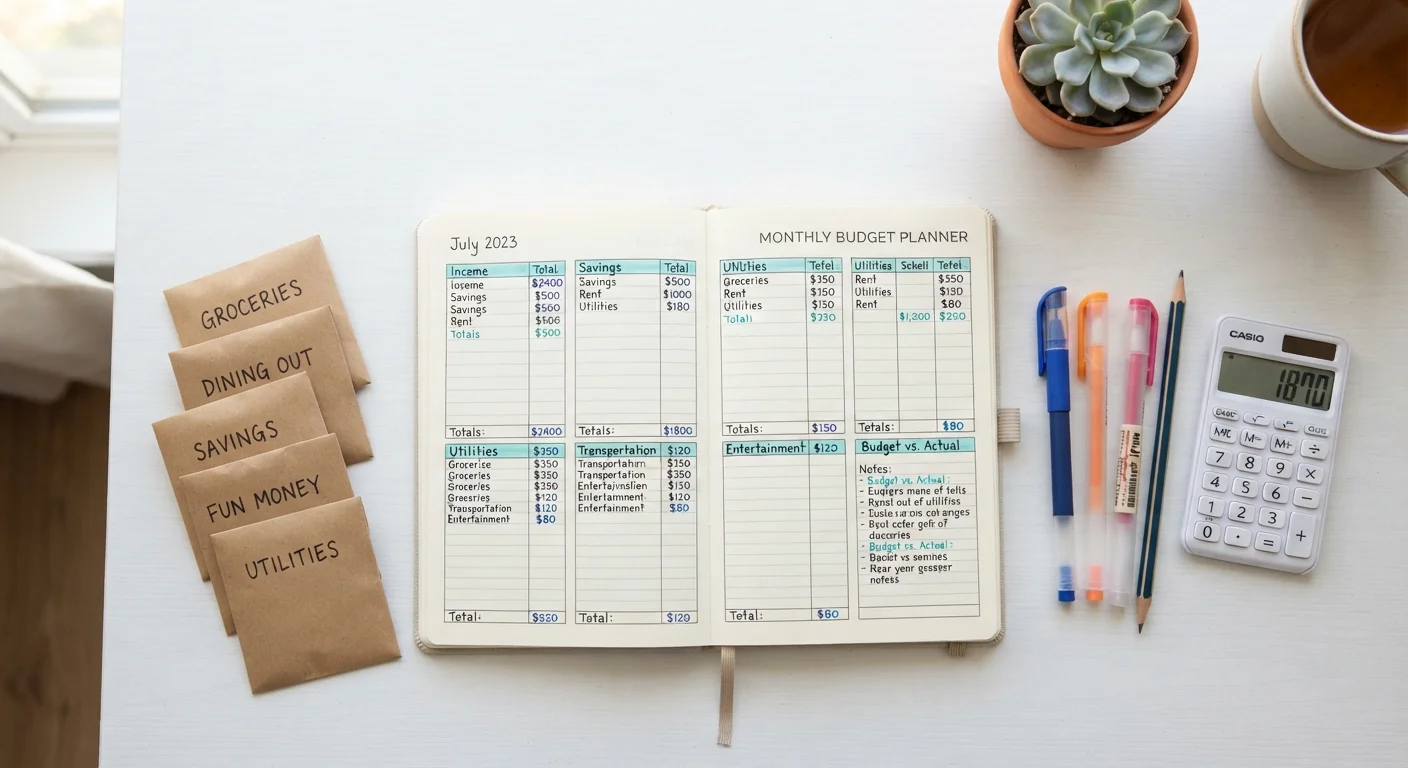
Envelope budgeting assigns a fixed cash limit to each spending category for the month. Traditionally done with physical envelopes of cash, many people now use digital versions — separate sub-accounts or app-based "envelopes" — that work the same way. When an envelope is empty, spending in that category stops until next month.
The hard stop is the point. It's one of the most effective methods for people who consistently overspend in specific areas (food delivery, clothing, entertainment) because there's no gray area about whether money is available. For a side-by-side look at physical versus digital approaches, see Envelope Budgeting vs. Spreadsheet Budgeting.
Once you've chosen a method and used it for a month, a structured review helps you refine it. The monthly budget review checklist walks through exactly what to check before the next month begins.
Switching Methods Too Often Backfires
It's tempting to jump to a new method whenever the current one feels hard. But most budgeting friction in the first few weeks is normal — not a sign the method is wrong for you. Give any new approach at least four to six weeks before deciding it isn't working. Constant switching prevents you from building the habit and gathering enough data to make the method useful.