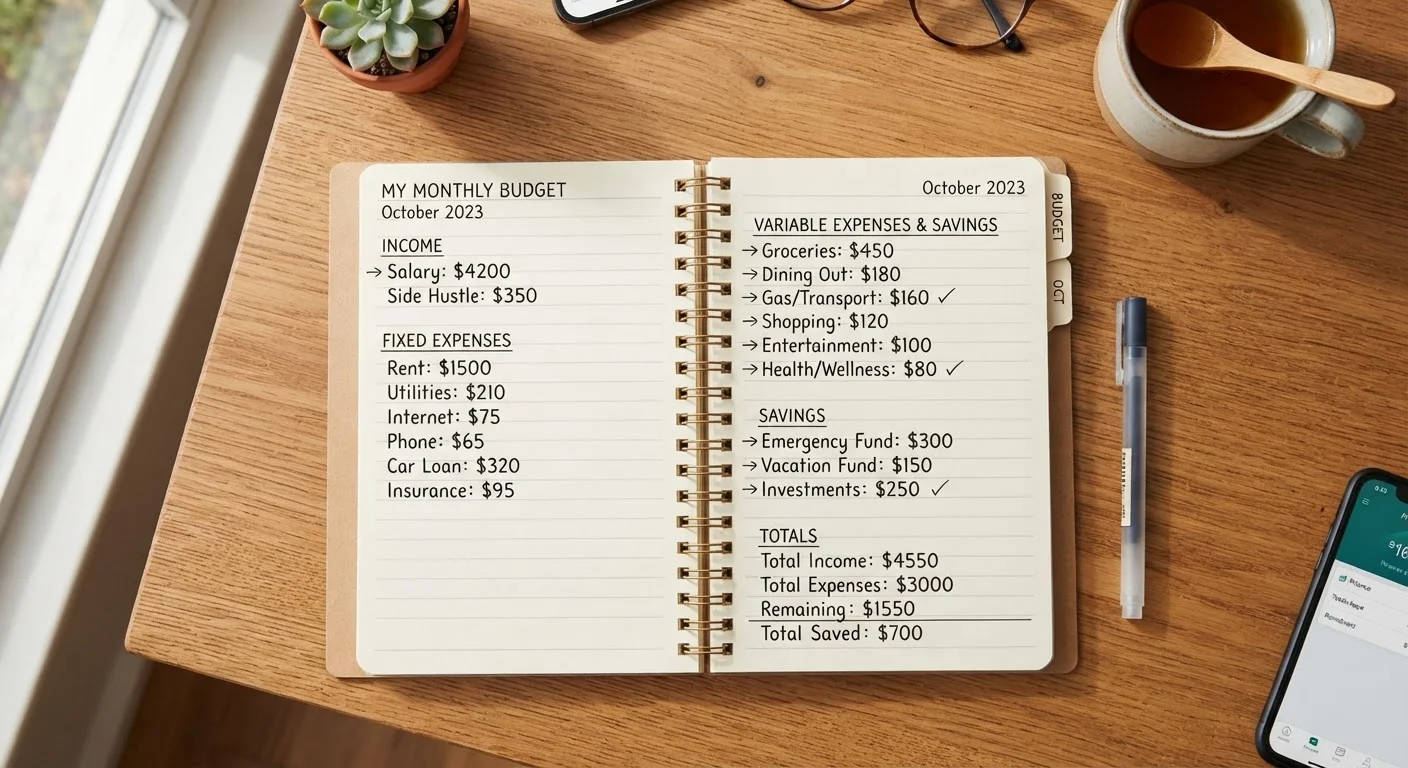

Why a Monthly Review Matters
A budget isn't something you set once and forget. Life changes — your income shifts, unexpected expenses pop up, and spending habits drift. A monthly review is the check-in that keeps your plan grounded in reality rather than wishful thinking.
Think of it less like a report card and more like a navigation update. You're not judging yourself — you're looking at where you actually are so you can make smart decisions about where to go next. If you're still building your first budget, see our step-by-step guide to building a monthly budget before diving into this checklist.
The tools you need are minimal. Grab your bank or credit card statements, your budget (whatever format you use), and about half an hour of quiet time.
Bank and credit card statements
Provides the actual transaction record you'll compare against your budget.
Your budget document (spreadsheet, app, or notebook)
The plan you're measuring reality against — in whatever format you already use.
Calculator or phone
Useful for quickly adding up category totals if your tool doesn't do it automatically.
A simple note-taking tool
For recording observations, patterns, and intentions as you work through the review.
The Monthly Budget Review Checklist
Work through these groups in order. The first two sections deal with what already happened this month. The last two prepare you for next month. Skipping a section is fine occasionally — but try to hit every item at least once a quarter.
Gather Your Records
Review Your Spending
Check Your Savings and Debt Progress
Plan Next Month's Budget
Don't Skip the Irregular Expenses Step
One-time or seasonal costs — like an annual insurance premium, a holiday trip, or a car registration fee — can blow up a monthly budget if you don't plan for them in advance. During your review, always look at least one month ahead for any predictable larger expenses so you can set aside money gradually rather than scrambling when the bill arrives.
This checklist is for general educational purposes and is not personalised financial advice. For guidance specific to your situation, consider speaking with a qualified financial adviser.
What to Do With What You Find
A review is only useful if you act on it. If you overspent in a category, don't just note it — decide whether to tighten next month's limit, move money from a lower-priority category, or adjust your goal timeline. If you underspent, consider whether that money should go to savings or cover a known upcoming expense.
Different budgeting methods handle these adjustments differently. Our overview of popular budgeting methods can help you decide whether your current approach still fits your life. And if staying on track month to month feels like a grind, these everyday money habits can make the process feel more natural over time.
Over several months, your review notes become a pattern. You'll start to see which categories consistently run over, which goals are realistic, and where your values and your spending actually line up — which is the real point of budgeting in the first place. For more on your financial mindset and everyday money decisions, visit our Money Mindset hub.
Consistency Beats Perfection
A review done imperfectly every month is far more valuable than a thorough review done twice a year. If you're short on time, even a 15-minute scan of your spending totals is better than skipping entirely. The habit of showing up consistently is what builds lasting financial awareness — not getting every number exactly right.