What These Two Mindsets Actually Mean
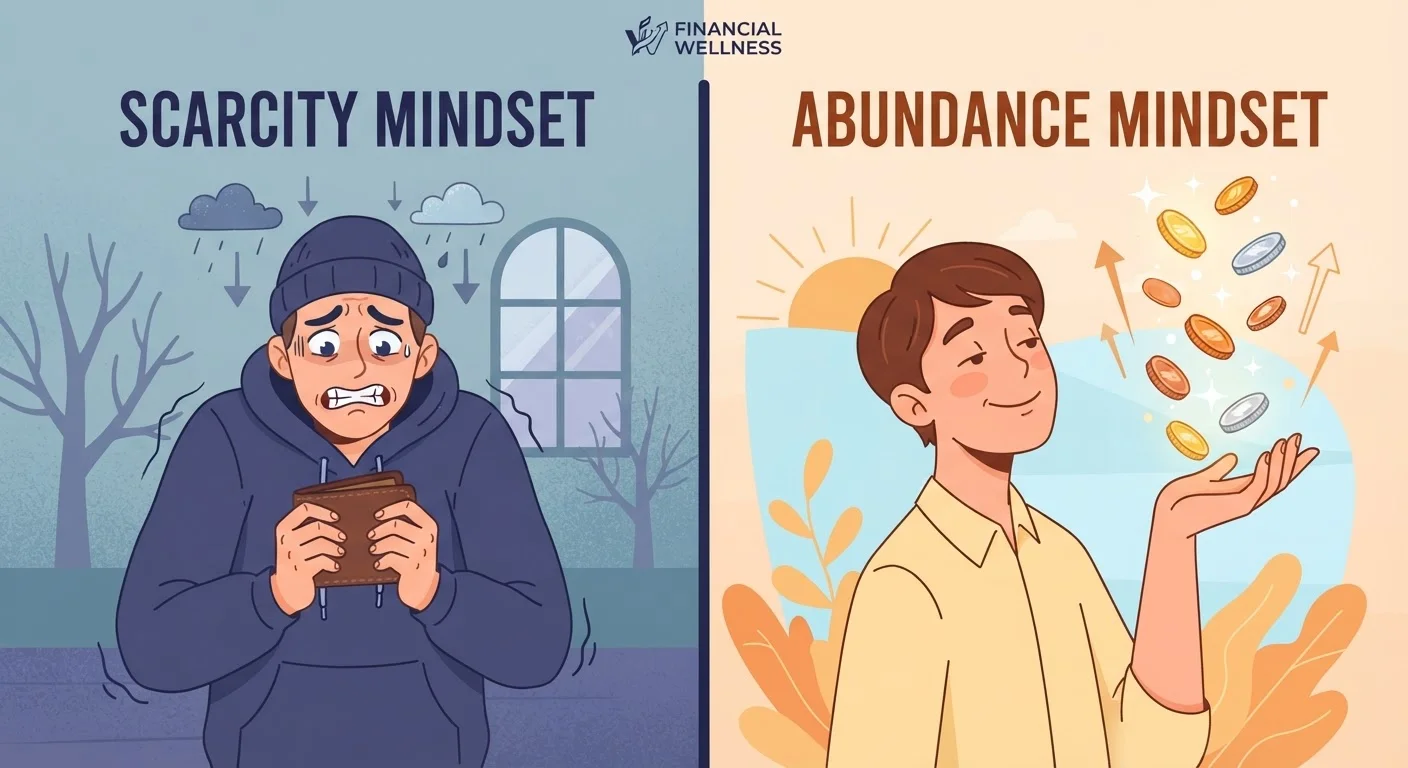
A scarcity mindset is the mental habit of experiencing money — or any resource — as fundamentally limited and always at risk of running out. When you operate from scarcity, financial decisions feel urgent and high-stakes even in ordinary moments. The focus narrows to immediate threats: paying this bill, avoiding that expense. Long-term thinking becomes harder to access.
An abundance mindset, by contrast, is the belief that resources — including money, knowledge, and opportunity — are not fixed. People with this orientation tend to see financial setbacks as temporary and solvable rather than permanent. That doesn't mean they ignore real constraints; it means they approach those constraints with problem-solving rather than paralysis.
These aren't simply personality types you're born with. Both mindsets are shaped by lived experience, including genuine financial hardship. Understanding the difference is foundational to any real conversation about financial wellbeing. If you're new to thinking this way, our introduction to money mindset covers the basics clearly.
How Each Mindset Shows Up in Daily Financial Life
The clearest way to see the difference is in everyday behaviour. A scarcity mindset often produces what researchers call tunnelling — the mental bandwidth consumed by financial stress leaves less capacity for planning, creativity, or delayed gratification. Someone tunnelling might avoid opening their bank statements, make impulsive purchases for short-term relief, or resist investing in skills that would pay off later because the upfront cost feels impossible.
An abundance mindset produces different defaults. Someone operating from abundance is more likely to automate small savings contributions, seek financial education, and view a setback — a job loss, an unexpected bill — as a problem to solve rather than proof that things will never improve.
| Criterion | Scarcity Mindset | Abundance Mindset |
|---|---|---|
| Core belief about money | There is never enough | Resources can grow with effort |
| Response to financial setback | Panic, freeze, or avoid | Problem-solve and adapt |
| Attitude toward saving | Feels impossible or pointless | Seen as achievable and worthwhile |
| Financial planning horizon | Focused on immediate survival | Balances present and future goals |
| Relationship to financial learning | Avoidance or overwhelm | Curiosity and openness |
| Effect on decision quality | Narrow focus, impulsive choices | Broader perspective, deliberate choices |
It's worth noting that scarcity thinking isn't irrational. Research, including work by economists Sendhil Mullainathan and Eldar Shafir, suggests that genuine financial scarcity creates real cognitive constraints — not just bad attitudes. Recognising this matters: the goal isn't to shame scarcity thinking but to understand it clearly.
This mindset divide connects closely to how we handle time horizons in finance. Our piece on short-term vs. long-term financial thinking explores that overlap in depth.
Can You Actually Change Your Money Mindset?
The short answer: yes, gradually and with real effort — but not by simply thinking positive thoughts. Shifting from scarcity to a more abundance-oriented approach involves changing concrete habits, not just attitudes.
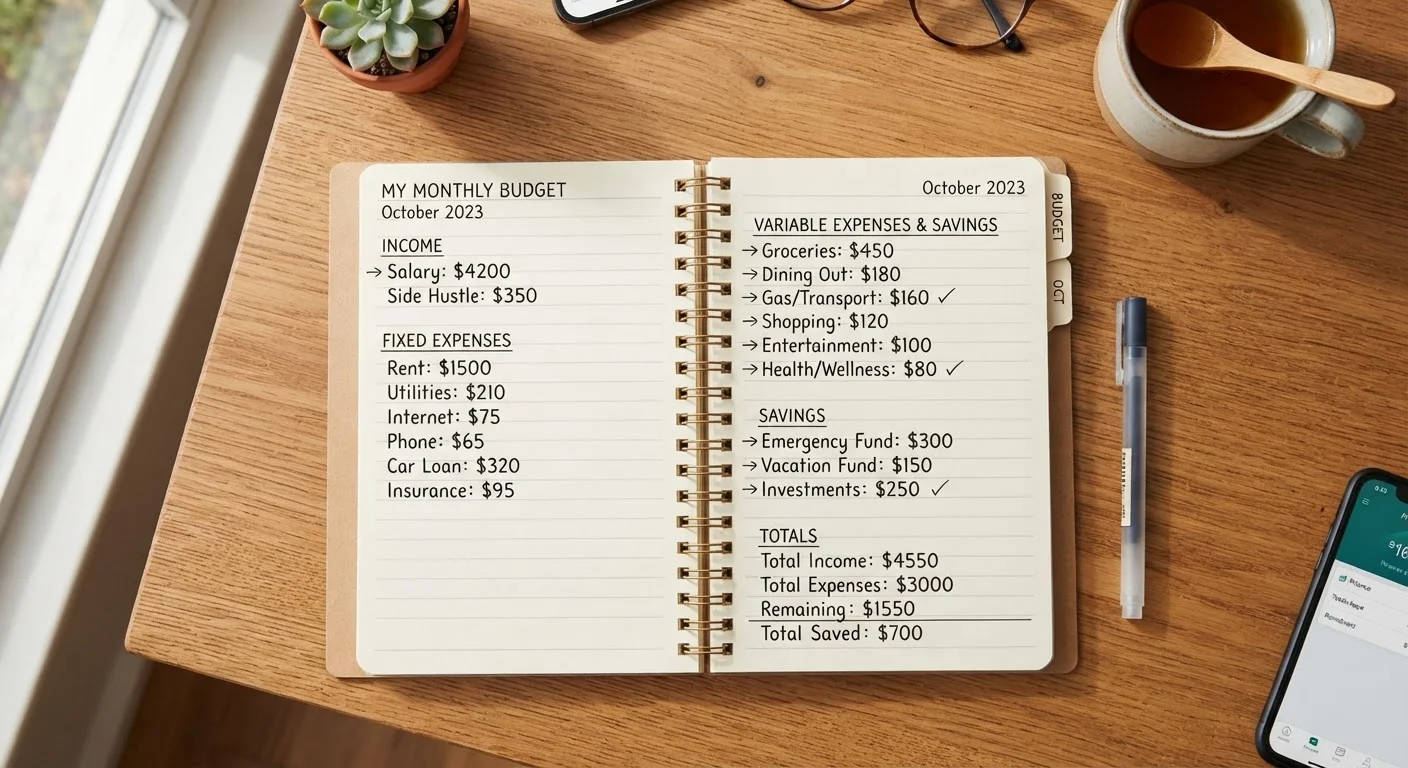
Practically, that might look like: tracking your spending (not to punish yourself, but to reduce uncertainty), building a basic budget so money decisions feel less chaotic, and deliberately noticing when financial anxiety is producing avoidance rather than action.
Mindset Shift Isn't the Same as Ignoring Reality
An abundance mindset doesn't mean pretending financial limits don't exist. Real constraints — low income, high debt, unexpected costs — are genuine and deserve practical solutions. The mindset shift is about how you respond emotionally and behaviourally to those constraints, not whether you acknowledge them. Optimism without action isn't useful; structured optimism that drives small, consistent steps forward is.
Social comparison also plays a significant role. A scarcity mindset is often reinforced by measuring your finances against others' visible lifestyles — a habit that tends to backfire. Our article on why comparing your finances to others usually backfires explains the psychology behind this.
For a comprehensive roadmap that goes beyond mindset labels into real behavioural change, The Complete Guide to Building a Healthier Money Mindset is a natural next step.
This article is for general informational and educational purposes only and does not constitute personalised financial advice. For guidance specific to your situation, consider consulting a qualified financial professional.