
What Is a Money Mindset?
Your money mindset is the set of beliefs, attitudes, and assumptions you carry about money — and it quietly influences nearly every financial choice you make. Not just big decisions like buying a car or choosing a savings account, but small everyday ones too: whether you check your bank balance regularly, how you feel when a bill arrives, whether you believe you're capable of saving at all.
A mindset isn't the same as knowledge. You could understand intellectually that saving is important while still avoiding it because some part of you believes there's no point or that you'll always be broke. That gap between knowing and doing is where mindset lives.
Money mindset
The collection of beliefs and attitudes you hold about money that shape how you earn, spend, save, and feel about finances — often operating below conscious awareness.
Money story
The personal narrative you've formed about what money means, usually built from childhood experiences and family or cultural messages about wealth and scarcity.
Limiting belief
A belief that holds you back from taking positive action — for example, 'I'm just not a money person' — even when it isn't objectively true.
Financial avoidance
A pattern of steering clear of money-related tasks — like checking accounts or opening bills — usually to avoid the anxiety those tasks bring up.
Values-aligned goals
Financial goals that reflect what genuinely matters to you personally, rather than goals set because they seem like the 'right' things to want.
The encouraging news: a mindset is not a fixed personality trait. It's a learned set of patterns — which means it can be examined, questioned, and, over time, shifted. This guide is your starting point for understanding what that process looks like.
Where Your Money Beliefs Come From
Before you ever earned your first dollar, you were already absorbing messages about money. Children pick up financial beliefs from watching caregivers — how they talked (or didn't talk) about bills, whether money felt scarce or safe, what emotions showed up around payday. Cultural background, community norms, and even offhand comments from adults all contribute.
Researchers who study financial psychology sometimes call this your money story — the personal narrative you've built around what money means and what it says about you. Learn more about how early experiences shape adult habits in our article on why knowing your money story matters.
Common examples of beliefs formed this way include: money is the root of all problems, wanting more is greedy, or conversely, my worth depends on what I earn. None of these are objective truths — they're interpretations shaped by specific experiences. Identifying them is the first step toward evaluating whether they're actually serving you.
Your Money Story Is Not Your Destiny
Recognizing that your beliefs came from somewhere specific — rather than being universal truths — is genuinely liberating. It means you're not broken and you're not starting from scratch; you're simply updating an old script with new, more accurate information. That process takes time, but awareness is the real starting point.
How Your Mindset Shapes Real Financial Habits
Money mindset isn't abstract — it shows up in concrete, day-to-day behavior. Here are some common ways it plays out:
- Avoidance: Believing that checking your finances will only cause stress, so you don't. The bills pile up unexamined.
- Impulsive spending: Using purchases to manage difficult emotions like boredom, anxiety, or low self-worth.
- Undersaving: Assuming the future is too uncertain to bother planning for — a belief often rooted in past instability.
- Guilt around spending: Feeling shame even when a purchase is reasonable and affordable, leading to secrecy or denial.
Notice that most of these are reactions rather than plans. Many people move through financial life responding to whatever lands in front of them rather than working toward any goal. That pattern — managing money crisis by crisis — is explored in depth in our guide on shifting from a reactive to a proactive relationship with money.
Financial stress also has a documented relationship with overall wellbeing. If you're interested in the broader connection between money and mental health, our mental wellness resources offer accessible context.
First Steps Toward a Healthier Money Mindset
Changing deeply held beliefs isn't something that happens overnight — and it rarely comes from sheer willpower. Here are practical starting points that don't require perfection:
- Name what you believe. Write down three to five things you genuinely believe about money. Don't filter for what sounds sensible — write what's actually true for you. Seeing beliefs in writing makes them easier to examine.
- Trace where a belief came from. For each belief, ask yourself: where did I learn this? Is it still accurate, or is it a holdover from a different time in my life?
- Separate your worth from your wallet. Your financial situation at any given moment is not a measure of your value as a person. This is one of the most common and most damaging conflations people make.
- Start small with practical habits. Mindset and behavior reinforce each other. Something as simple as reviewing your spending once a week can gradually build confidence and shift how you see yourself in relation to money.
Consistency Beats Intensity Every Time
A five-minute weekly spending review done consistently will do more for your financial awareness than an annual deep-dive followed by months of avoidance. Small, regular habits compound — both in your bank account and in the way you think about money. Start with something you can realistically maintain.
This article is general educational information, not personalized financial advice. For guidance specific to your circumstances, consider speaking with a qualified financial professional.
Where to Go From Here
Understanding your money mindset is genuinely foundational — it's the layer underneath every budgeting method, saving strategy, or financial goal you'll ever pursue. But it's also just the beginning.
Once you've started to notice your own patterns, the natural next step is to explore what a healthier relationship with money can look like in practice. Our complete guide to building a healthier money mindset walks through behavioral patterns, values-based goal setting, and practical tools in much more depth.
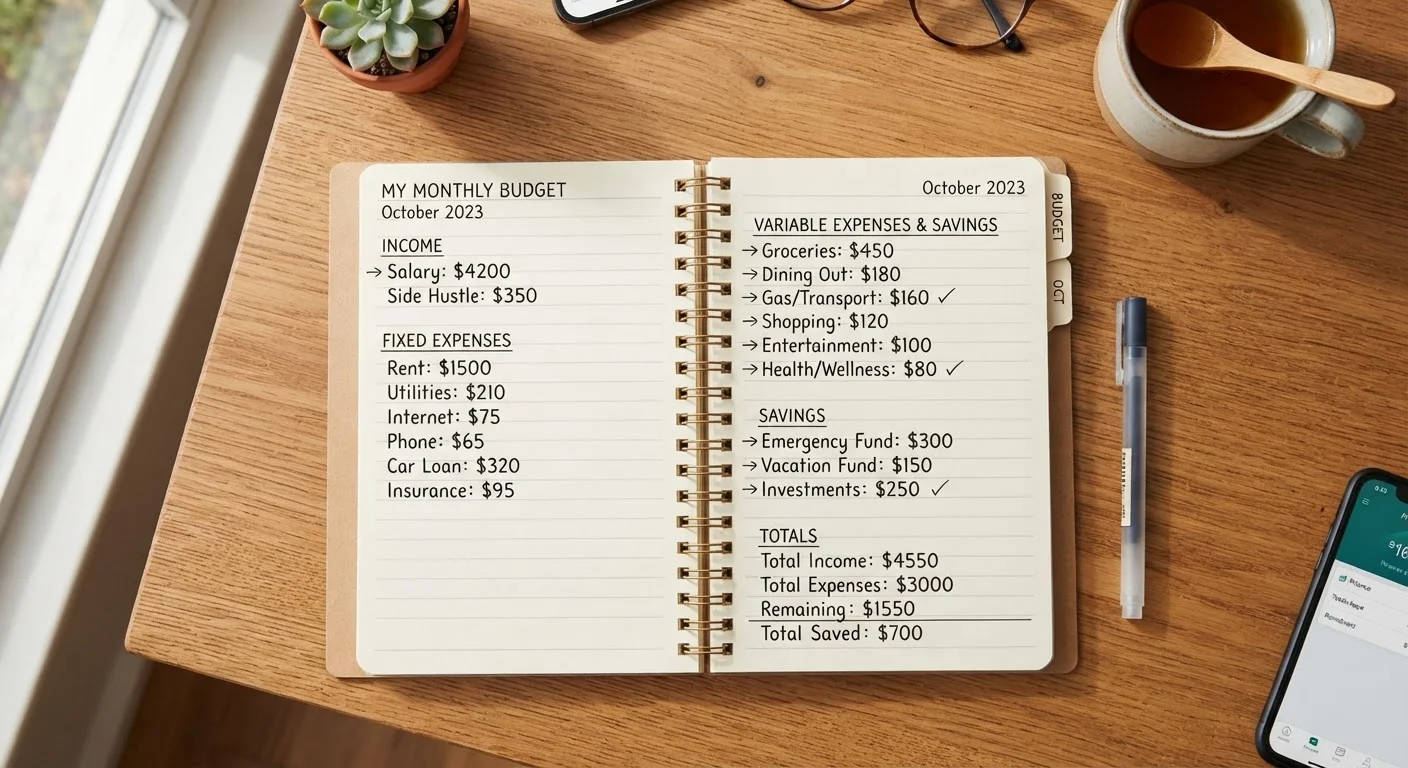
When you're ready to put mindset into action, building a budget is usually the clearest starting point. If you've never made one before, our first budget walkthrough for beginners takes you through each step in plain language. For a broader overview of the whole budgeting topic, the Budgeting Basics hub is a good place to browse.
Financial change is rarely a straight line. But starting with an honest look at what you believe — and why — puts you in a much stronger position than jumping straight to tactics without that foundation.
This article is for general informational and educational purposes only. It does not constitute personalized financial, legal, or investment advice. Please consult a qualified financial professional for guidance tailored to your individual situation.