
Why So Many People Manage Money Reactively
Most of us were never formally taught how to manage money — we absorbed habits from the households and communities we grew up in. If money in those environments was a source of stress, secrecy, or crisis, it's natural to have developed avoidant or reactive patterns as an adult. This isn't a moral failure; it's a learned behavior.
Reactive money management typically looks like: checking your balance only when something goes wrong, scrambling to cover an unexpected expense with no cushion, or feeling anxious about finances without a clear picture of why. The underlying dynamic is that money feels unpredictable and slightly threatening — so you engage with it only when forced to.
Understanding where this pattern comes from can be a genuinely useful first step. If you want to explore that further, our piece on why your money story shapes your financial habits goes deeper on this idea. And if stress or anxiety around money is affecting your day-to-day wellbeing, it's worth also looking at mental wellness resources for broader support.
What you will need
What Proactive Money Management Actually Looks Like
Proactive money management doesn't require a high income, a financial degree, or complex spreadsheets. At its core, it means making decisions before problems arrive — giving yourself enough visibility into your finances that surprises become rare rather than routine.
The shift is partly psychological and partly practical. Psychologically, it means moving from avoidance to regular, low-stakes engagement with your money. Practically, it means having a rough plan for where your income goes each month, some awareness of upcoming irregular costs, and a habit of checking in consistently.
Notebook or notes app
Used to record your current money patterns and write out spending categories.
Bank or credit union statements
Help you see where money has actually been going over the past one to three months.
Simple spreadsheet or budgeting app
Provides structure for tracking income and planned expenses going forward.
For a broader look at the mindset side of this shift, The Complete Guide to Building a Healthier Money Mindset covers the full landscape from behavior patterns to values-based goals.
Follow These Steps to Start Shifting Your Approach
The five steps below are designed to be practical and low-pressure. You don't need to complete them all at once — working through one or two thoughtfully will do more than rushing through all five. Start where feels most manageable.
Recognize your current money pattern
Before anything can change, you need an honest look at how you currently relate to money. Ask yourself: Do you check your bank balance only when something feels wrong? Do unexpected bills regularly catch you off guard? Do you avoid opening financial statements?
These are signs of a reactive pattern — not character flaws. Most people learn money habits from their environment, not from formal education. Noting your honest answers without judgment is the starting point.
Understand what's driving the reactivity
Reactive money behavior often has roots in deeper habits, beliefs, or early experiences. Avoidance, fear of seeing bad numbers, or a sense that planning doesn't matter can all contribute. This is sometimes called your "money story" — the set of beliefs and associations you've built up around money over time.
Exploring that story isn't about blame; it's about awareness. When you understand why you react the way you do, it becomes easier to interrupt the pattern deliberately.
Map what money actually comes in and goes out
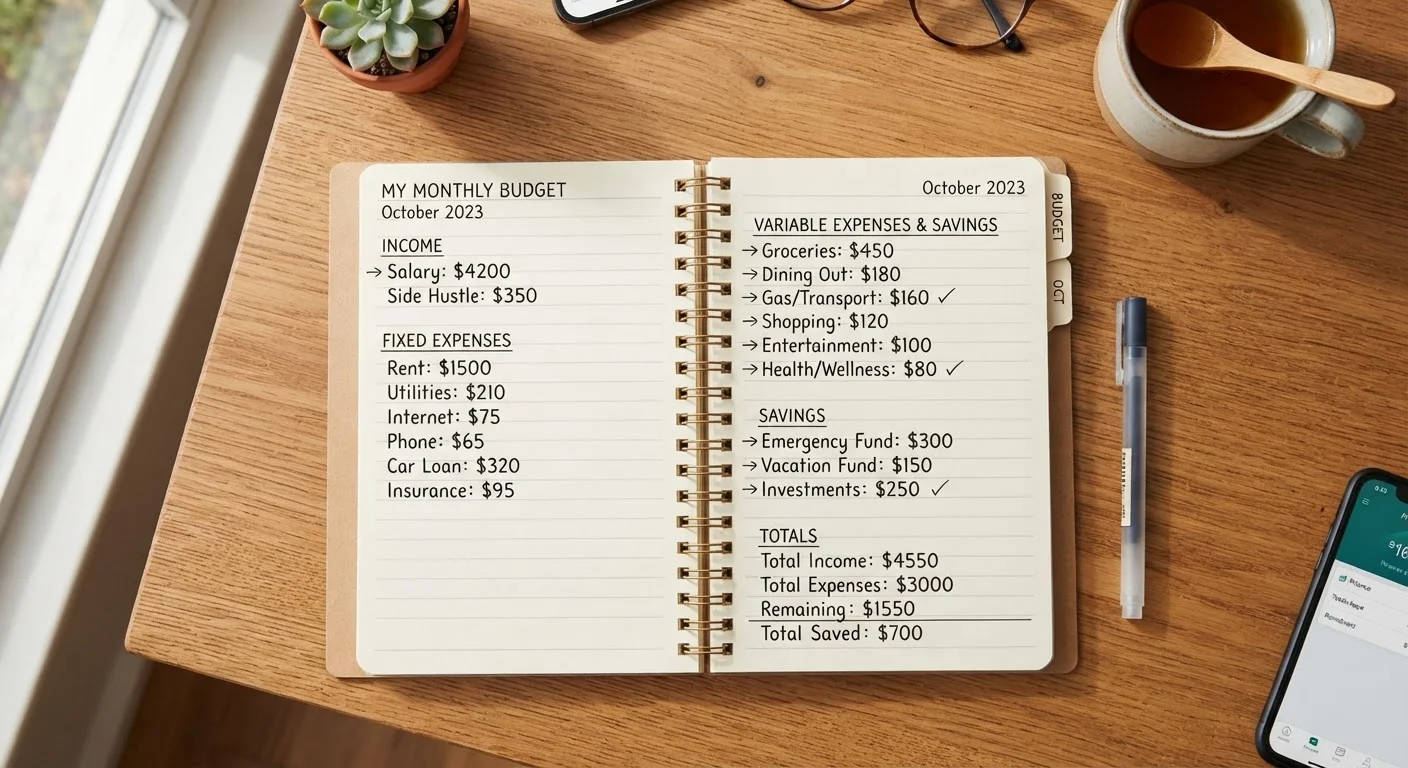
Pull up one to three months of bank or credit card statements. Write down your average monthly income after taxes. Then list every recurring expense you can find — rent or mortgage, utilities, subscriptions, groceries, transportation, minimum debt payments.
You're not creating a budget yet. You're simply building a factual picture of your current financial reality. Most people find this exercise genuinely surprising — both in how much goes to certain categories and how predictable many costs actually are.
Identify one area to plan ahead in
Proactive money management doesn't require overhauling your entire financial life at once. Pick one category where reactivity is costing you — maybe irregular bills that always feel like surprises (car registration, annual subscriptions, medical co-pays) or grocery spending that routinely goes over what you expected.
Commit to setting aside a small, consistent amount each month for that one area. This is how a reactive habit gets replaced: one intentional decision at a time.
Schedule a regular money check-in
The single most effective habit that separates proactive from reactive money management is a scheduled, recurring review. This doesn't need to be long — 15 to 20 minutes once a week is enough to check spending, confirm upcoming bills, and make any small adjustments.
Put it on your calendar like an appointment. The regularity matters more than the length. Over time, this practice transforms money from something that happens to you into something you stay ahead of.
Progress Counts More Than Perfection
You don't need to nail every step on the first attempt. Proactive money management is a practice, not a destination. Even checking your bank balance once a week unprompted is a meaningful improvement over reactive avoidance. Small, consistent actions compound into lasting habits over time.
Once these foundations feel stable, the natural next move is building out a full budgeting routine. Our Budgeting Basics hub is a good starting point, and Money Habits That Make Budgeting Easier Over Time covers the everyday practices that help a budget actually stick.
Avoid Overhauling Everything at Once
It's tempting to fix every financial problem simultaneously once awareness kicks in. Resist this impulse. Taking on too much change at once tends to lead to burnout and abandonment. Pick one habit, stabilize it, and build from there. Sustainable change is nearly always gradual.
This article is for general informational and educational purposes only and does not constitute personalised financial advice. For guidance specific to your circumstances, consider speaking with a qualified financial professional.