
Why Small Spending Leaks Are So Hard to See
Most people who overspend aren't making one big, obvious mistake. They're making dozens of small ones — none of which feel like a problem in the moment. A $4 coffee, a streaming service on autopay, a delivery fee here and there. Individually, these feel harmless. Added up over a month, they can quietly consume hundreds of dollars that were never accounted for in any budget.
The reason these patterns are so hard to catch is that they feel routine. Routine spending doesn't trigger the same mental alarm bells as a large, deliberate purchase. Understanding which habits tend to silently drain budgets is a useful first step toward getting a clearer picture of where your money actually goes. For a deeper look at how certain financial habits quietly erode stability, it helps to start with the most common culprits.
Forgotten or unused subscriptions
Subscription charges are designed to be easy to ignore. They're automatic, often monthly, and small enough that they don't prompt a second look. The problem is that most households carry several — streaming platforms, apps, cloud storage, gym memberships, meal kit services — and not all of them get regular use.
A $12 subscription that goes unused for six months is $72 spent on nothing. Multiply that across three or four forgotten services and the total becomes significant. The fix is straightforward: do a periodic audit of your bank or credit card statements and flag any recurring charge you can't immediately justify.
Automatic billing is what makes unused subscriptions one of the easiest ways to lose money without noticing.
Convenience and delivery fees
Ordering food or groceries through a delivery app feels like a time-saver, and sometimes it genuinely is. But the full cost is often higher than people register. Delivery fees, service fees, tips, and surge pricing can add 30–50% to the base cost of an order — costs that are easy to overlook because they're broken out in small line items rather than shown as a single total.
The same principle applies to convenience stores, airport shops, and grab-and-go food. Paying a premium for proximity is sometimes worth it, but doing it habitually without tracking it means you may be spending far more on "convenience" than you'd consciously choose to.
Delivery fees and service charges can quietly add 30–50% to what feels like a modest food order.
Mental price rounding
When people think about what they spend, they tend to round down. A $6.80 coffee becomes "about five dollars" in memory. A $14.50 lunch feels like "roughly ten." Over time, this mental rounding creates a significant gap between what people believe they spend and what they actually spend.
This isn't dishonesty — it's how memory tends to work with numbers. But it means that informal estimates of monthly spending are almost always lower than the real figure. Actual tracking, even briefly, almost always reveals this gap. This connects directly to patterns explored at understanding everyday money decisions.
Mental rounding makes spending feel smaller than it is — a gap that adds up significantly over time.
Impulse buying triggered by environment
Retail environments — both physical and online — are designed to encourage unplanned purchases. End-cap displays, checkout-line items, "frequently bought together" suggestions, and limited-time prompts all nudge people toward spending they hadn't planned. These aren't random; they're deliberate design choices.
Impulse purchases often feel like small wins in the moment — a treat, a deal, something useful. But they add up, especially online where the friction of spending is minimal. One practical check: if you didn't go in planning to buy something, give yourself a brief pause before completing the purchase. That small delay is often enough to separate genuine need from a passing impulse.
Retail environments are deliberately designed to trigger unplanned spending — awareness is the first defense.
Paying for overlap without realising it
Many households pay for the same thing twice without knowing it. Two streaming services that carry most of the same content. A gym membership and a fitness app. Cloud storage from multiple providers. This kind of overlap is common because subscriptions and services accumulate gradually — each one made sense at the time it was added.
The result is duplicate spending that delivers no extra value. A simple way to identify this is to list everything you're currently paying for in a given category and ask honestly whether each one serves a distinct purpose you actually use.
Paying for overlapping services is one of the quietest forms of wasted spending — it accumulates gradually.
Interest charges treated as normal
When a credit card balance is carried month to month, interest charges appear on the statement every cycle. Over time, many people begin to treat these charges as a fixed cost — just part of the bill — rather than recognising them as money paid for nothing in return.
Interest is worth taking seriously because it compounds: the longer a balance sits, the more it costs. Understanding how this affects your financial picture over time is covered in more detail at how savings accounts, credit scores, and debt basics work. Additionally, certain credit habits quietly erode your score in ways that compound the problem further.
Treating monthly interest charges as a normal fixed cost means accepting a recurring loss with no benefit.
What You Can Do About It
None of these spending patterns are shameful or unusual — they're common precisely because they feel natural. The goal isn't to feel bad about past habits; it's to develop enough awareness to make deliberate choices going forward.
Start with a two-week spending log
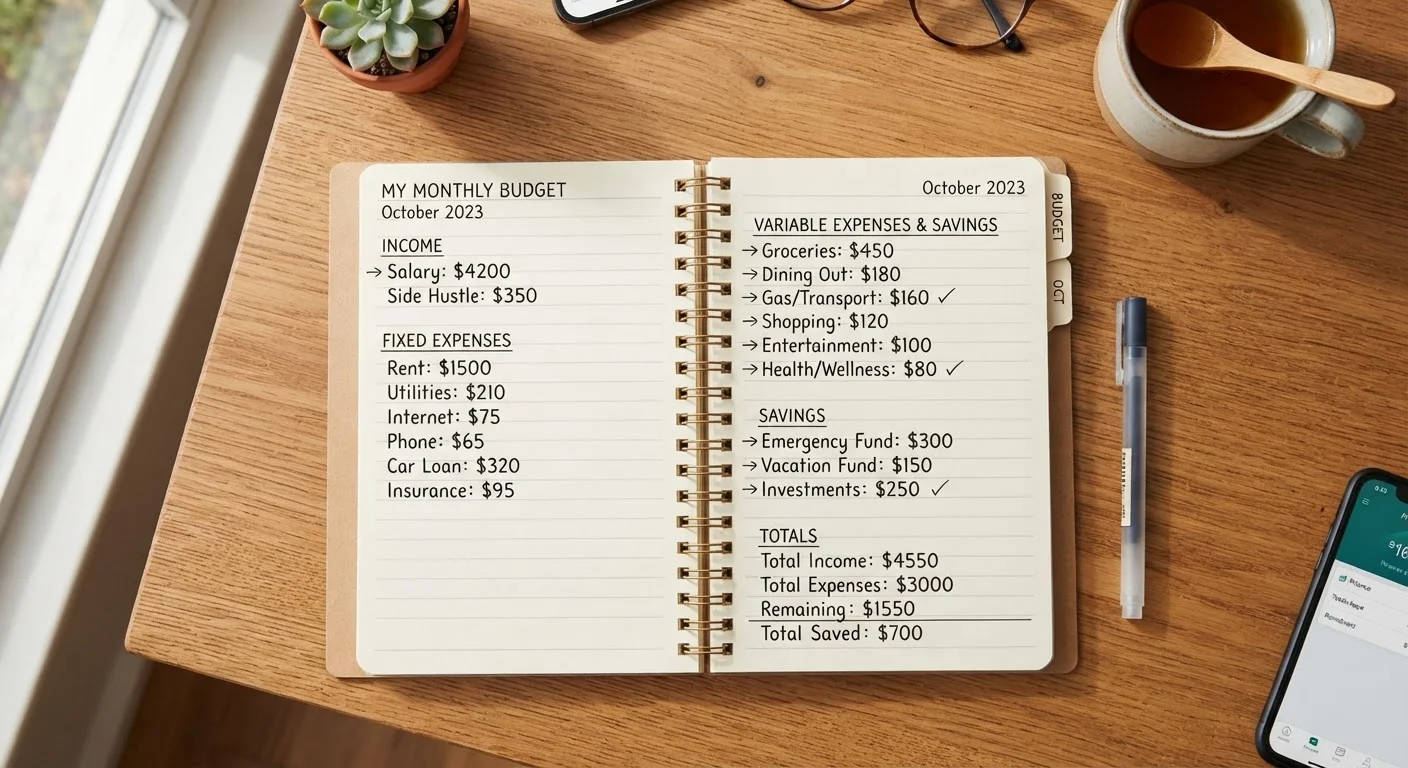
You don't need a complicated system to start spotting overspending. Simply save every receipt — physical or digital — for two weeks and total them by category at the end. Most people find at least one category that surprises them. That surprise is the most useful data you'll get from any budgeting exercise.
One of the most straightforward ways to start is by writing down every purchase for a few weeks, no matter how small. It sounds tedious, but the results tend to surprise people. As explored in the case for writing down every purchase, even a brief tracking habit can reveal patterns that are otherwise invisible. From there, building on money habits that make budgeting feel natural helps turn awareness into lasting change.
This article is for general informational purposes only and does not constitute personalised financial or budgeting advice. Consider speaking with a qualified financial professional about your specific circumstances.