What Ventilation Actually Does in Your Home
Every time you cook, shower, breathe, or even dry laundry indoors, you release moisture and gases into the air. Without a way out, that air becomes progressively more humid and laden with pollutants such as carbon dioxide, volatile organic compounds (VOCs — chemicals released by paints, furnishings, and cleaning products), and allergens.
Ventilation gives that air an exit route. At the same time, it draws in drier, fresher air from outside. This exchange protects two things: the health of the people inside, and the physical structure of the building itself.
There are three broad types of home ventilation:
- Natural ventilation — air moves through gaps, trickle vents (small adjustable slots built into window frames), and open windows driven by wind pressure and temperature differences.
- Intermittent mechanical ventilation — extractor fans in bathrooms and kitchens that switch on when needed to remove moisture at the source.
- Continuous mechanical ventilation — whole-house systems such as MVHR that run constantly, exchanging air while retaining warmth.
Most homes use a combination of the first two. Understanding which type you have helps you assess whether it is adequate. For a broader overview of keeping your home in good order, see our beginner's guide to home maintenance.
Ventilation and Energy Efficiency Can Coexist
There is a common worry that ventilating a home properly means wasting heat and raising energy bills. In practice, trickle vents and correctly sized extractor fans move very small volumes of air and have minimal impact on heating costs. The cost of treating mould, repairing moisture-damaged plaster, or addressing poor indoor air quality far outweighs the marginal heating effect of controlled background ventilation.
Why Ventilation Matters More Than Many Homeowners Realise
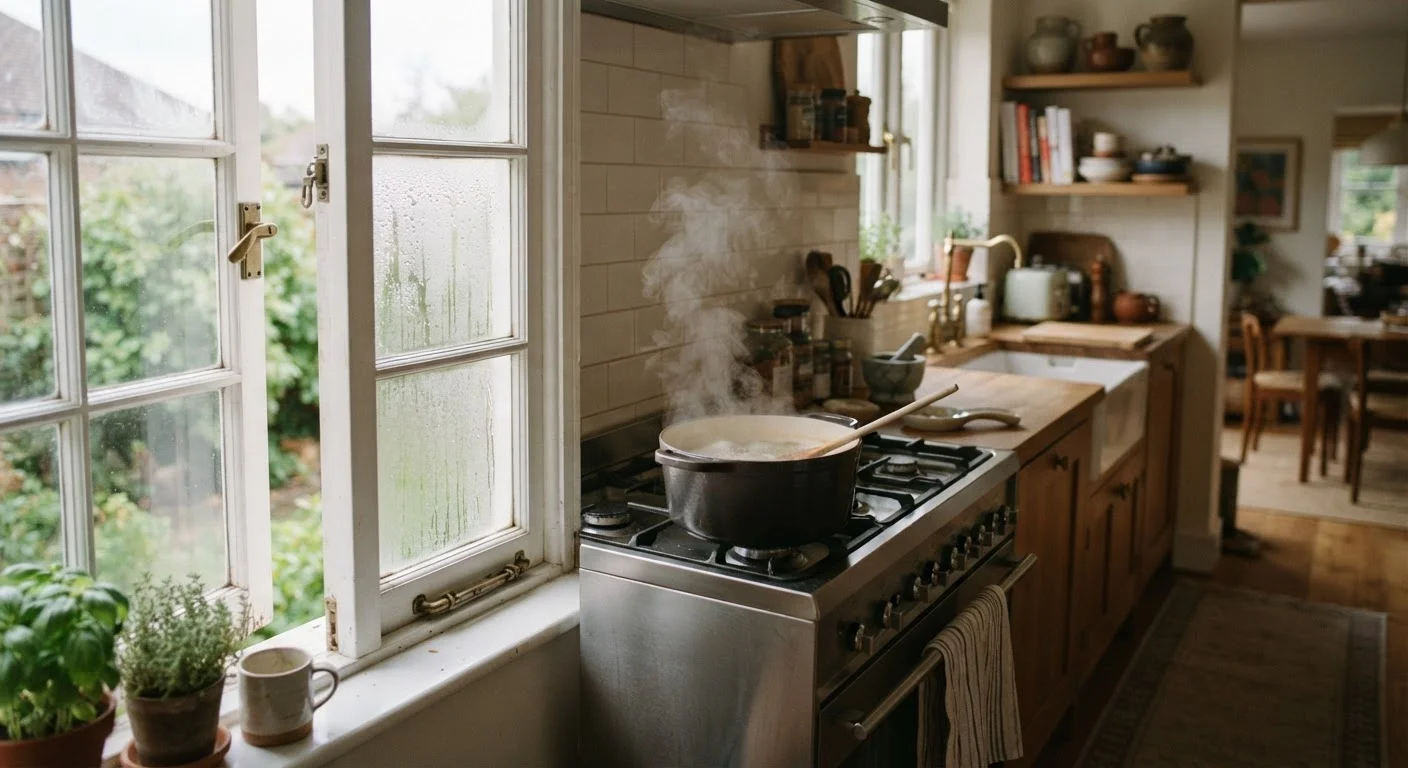
Poor ventilation is one of the most common — and most underestimated — causes of avoidable home damage. When moist air cannot escape, it condenses on cooler surfaces: window glass, external walls, and cold corners behind furniture. Over time, that persistent moisture creates ideal conditions for mould growth.
Mould is more than a cosmetic issue. It can damage plaster, timber, and soft furnishings, and some mould species are associated with respiratory irritation. Addressing poor ventilation early is far less costly than treating established mould or repairing moisture-damaged structure.
90%
Time people spend indoors on average
The U.S. Environmental Protection Agency notes that Americans spend approximately 90% of their time indoors, where pollutant concentrations can be two to five times higher than outdoors.
2–5×
Indoor vs. outdoor pollutant concentration
According to the U.S. EPA, indoor air can contain concentrations of certain pollutants two to five times — and occasionally more than 100 times — higher than outdoor levels when ventilation is inadequate.
There is also a common misconception worth addressing: draught-proofing and ventilation are not the same thing, and doing one does not substitute for the other. Sealing gaps around doors and windows reduces unwanted, uncontrolled air leakage — which is good for energy efficiency. But a tightly sealed home still needs controlled ventilation to function safely. If you have recently weatherstripped your doors and windows (see our guide on draught-proofing from the inside out), make sure trickle vents and extractor fans are still in working order.
Warning Signs That Your Ventilation Is Not Working
You do not need specialist equipment to spot the early indicators of inadequate ventilation. Work through the following checks room by room:
- Condensation on windows most mornings — a small amount after a cold night is normal, but water running down the glass daily points to excess indoor moisture that is not escaping.
- Black spotting in corners or on ceilings — particularly in bathrooms, behind wardrobes, or in the corners of external walls. This is surface mould caused by trapped moisture.
- A persistent musty smell — even after cleaning, a stale or earthy odour indicates airborne moisture or mould presence.
- Paint bubbling or wallpaper peeling away from walls — moisture trapped behind the surface forces coverings to detach.
- Extractor fans that feel warm but push no air — a blocked or failing fan motor runs but moves no air, leaving moisture to settle.
- Trickle vents that are closed or painted over — this is common in older homes and removes background ventilation entirely.
If you are also seeing staining on walls that does not match the condensation pattern, it may be a separate damp issue. Our article on why damp and condensation are not the same thing explains how to tell them apart.
Quick Fan Test You Can Do Right Now
To check whether your bathroom or kitchen extractor fan is drawing air effectively, switch it on and hold a single sheet of toilet paper about an inch from the grille. If the paper is pulled toward the grille and held in place, the fan is working. If it drops away, the fan may be blocked with dust — a careful wipe of the grille cover can often restore airflow immediately.
Simple Steps to Improve Ventilation Starting Today
Many ventilation improvements require no tools and cost nothing. Begin with these straightforward actions:
- Open trickle vents on windows — slide or rotate the small slot at the top of double-glazed window frames to the open position. Leave them open year-round unless advised otherwise.
- Run kitchen and bathroom extractor fans during and for 15–20 minutes after cooking or showering. Many people switch fans off immediately, but the moisture lingers long after the activity ends.
- Leave internal doors ajar when rooms are not in use to allow air to circulate through the home rather than stagnating.
- Pull furniture slightly away from external walls — a gap of a few inches allows air to circulate behind wardrobes and sofas, preventing cold, still pockets where condensation forms.
- Dry laundry outside or in a well-ventilated utility room where possible. Drying clothes indoors on radiators is one of the single largest contributors to excess indoor humidity.
If these steps do not resolve visible condensation or mould within a few weeks, the underlying ventilation system may need inspection or upgrading. This falls into the category of easily overlooked home tasks that are simple to address early but expensive to ignore.
For persistent or structural issues — particularly anything involving ducting, roof vents, or gas appliance flues — always consult a qualified professional. Do not attempt to modify ducted systems or appliance ventilation without expert assessment.