The Core Difference: Where the Moisture Comes From
When you spot a dark patch on a wall or water streaks beneath a window, it is tempting to call it all "damp" and assume the house has a problem. But damp and condensation are two genuinely different conditions with different origins — and treating one as if it were the other is one of the most common and costly home maintenance mistakes beginners make.
Damp — specifically rising damp or penetrating damp — means water is physically entering your home from an external source. Rising damp occurs when groundwater travels upward through porous masonry. Penetrating damp occurs when rain or external moisture breaks through walls, roofs, or window frames. In both cases, the water source is outside the building fabric.
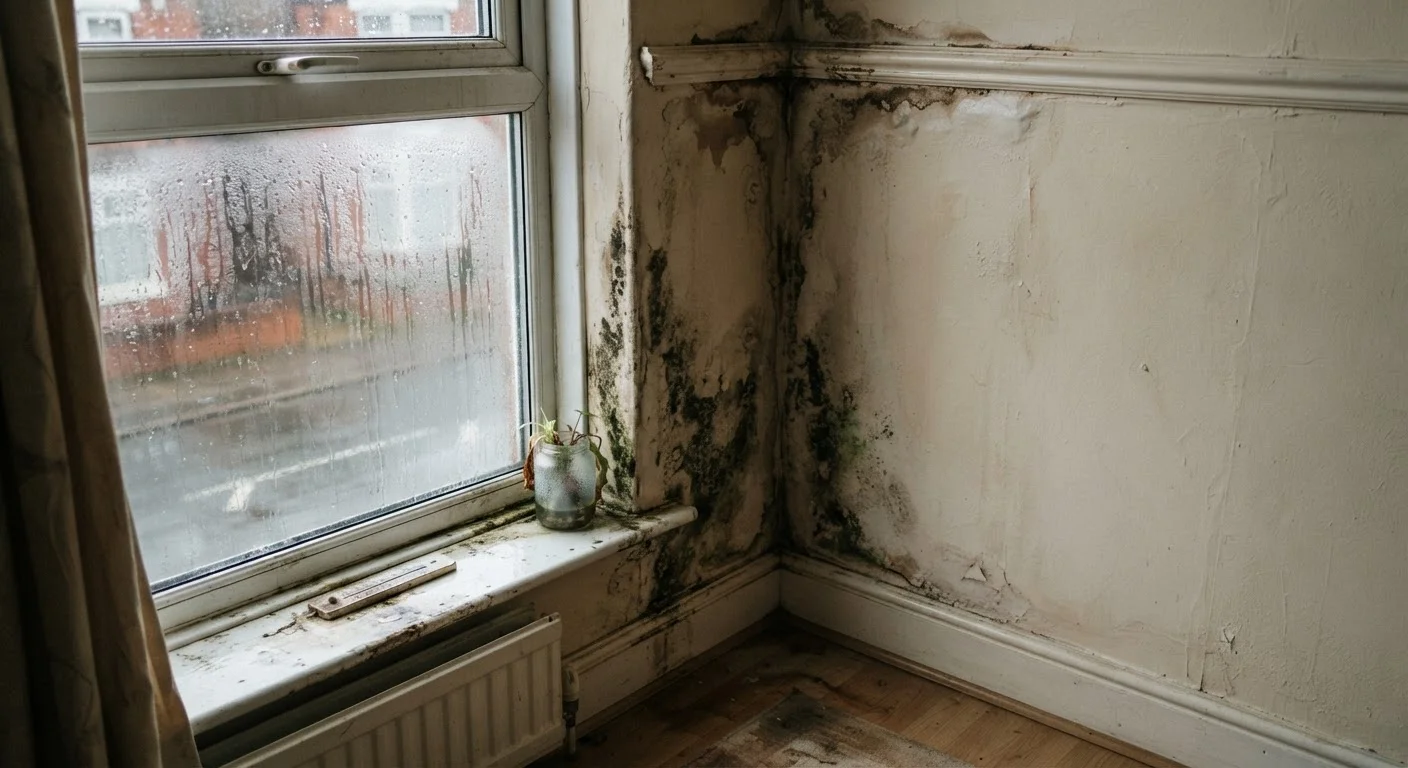
Condensation, on the other hand, is entirely self-generated. Every time someone showers, boils a kettle, dries laundry indoors, or even breathes, water vapour enters the air. When that warm, moisture-laden air meets a cold surface — a window, an external wall, or a cold corner — the vapour cools and turns back into liquid water. That's condensation.
Understanding this distinction matters because, as our guide on common home maintenance myths explains, applying the wrong remedy — such as a damp-proof treatment on what is actually a condensation problem — will have no effect at all.
| Criterion | Structural Damp | Condensation |
|---|---|---|
| Source of moisture | External — ground or rain water | Internal — daily household activity |
| Typical location | Low walls, around roof/windows | Windows, cold corners, ceilings |
| Seasonal pattern | Often worse after rain or in spring | Worse in winter when surfaces are coldest |
| Visual clues | Tide marks, efflorescence, soft plaster | Water droplets, streaky glass, patchy mould |
| Primary remedy | Structural repair by a professional | Improved ventilation and humidity control |
| DIY-friendly? | Rarely — professional assessment needed | Often — lifestyle changes help significantly |
How to Read the Signs in Your Home
Look carefully at where and how moisture appears — the patterns are usually quite telling.
Signs that point to structural damp
- A horizontal tide mark or staining low on a ground-floor wall, often up to about a metre high
- Staining that appears or worsens after heavy rainfall, particularly near the roofline or around windows
- Plaster that feels soft, crumbles, or shows white salt deposits (called efflorescence) — these are mineral salts being drawn out by rising moisture
- A persistent damp smell that doesn't clear even in summer or after good weather
Signs that point to condensation
- Water droplets or streaks on glass, mirrors, and cold external walls — especially in winter
- Mould that appears first in corners, on ceilings, or on the edges of window frames where air circulation is poorest
- Moisture that is noticeably worse after cooking, showering, or when many people are in the room
- Problems that improve when you open windows or run an extractor fan
Black Mould Doesn't Tell the Whole Story
Many homeowners assume black mould automatically signals a structural damp problem, but mould thrives on condensation just as readily. Mould needs moisture, warmth, and a surface — both damp and condensation can provide all three. Before treating mould, identify the moisture source first. Applying anti-mould paint without fixing the underlying cause is unlikely to provide a lasting solution.
One important caveat: black mould can appear with both conditions. Its presence alone does not confirm which moisture problem you have. Focus on the location, pattern, and timing of the moisture, not just the mould.
If you are uncertain, a qualified building surveyor can use a moisture meter and thermal imaging to identify the source accurately. This is strongly recommended before undertaking any significant repair work.
Addressing Each Problem Correctly
Once you have a clearer idea of which issue you're dealing with, the response is very different.
Managing condensation yourself
Because condensation is driven by indoor humidity, the solutions focus on reducing moisture in the air and improving airflow. Our article on home ventilation basics covers this in depth, but the core steps are:
- Use extractor fans in kitchens and bathrooms — and leave them running for 15–20 minutes after you finish
- Ventilate the whole home briefly each day by opening windows, even in winter
- Avoid drying laundry on radiators indoors wherever possible
- Keep a small gap between furniture and external walls to allow air to circulate
Responding to structural damp
Rising and penetrating damp generally require professional intervention. Depending on the cause, this might involve repairing or replacing a damp-proof course (a barrier built into the wall to stop moisture rising), re-pointing brickwork, fixing roof flashing, or sealing cracked render. These are not suitable DIY projects for beginners, and some may require permits or licensed tradespeople depending on your local building codes — always check local requirements before proceeding.
Importantly, do not paint over or re-plaster a damp wall before the source is fixed. As our guide to rushed repairs that cause bigger problems explains, covering up moisture without addressing the cause simply delays — and usually worsens — the damage.
1 in 5
UK homes affected by dampness
According to the English Housing Survey, approximately one in five homes has reported some form of damp — making it one of the most common housing defects.
~4 pints
Daily moisture from a family of four
A typical household of four people can generate around four pints of water vapour per day through breathing, cooking, and bathing, according to general building science estimates.