The maintenance gap: why the quiet jobs get skipped
Home maintenance divides neatly into two categories: the jobs you can't ignore because something has visibly broken, and the jobs that quietly protect your home until they don't. The second category is where most preventable damage originates. A smoke alarm with a dead battery looks identical to one that works. A clogged air filter is invisible behind a panel. A corroding boiler component hides inside a sealed unit.
This article focuses on the tasks that consistently fall through the cracks — not because they're hard, but because they're out of sight and involve no immediate consequences when skipped. Most take under 30 minutes. All of them matter more than they appear to. If you're new to home upkeep, our beginner's guide to home maintenance is a good companion read alongside this list.
Link these tasks to your seasonal routine
The easiest way to remember forgotten maintenance is to attach it to something you already do. Changing clocks for daylight saving time, for example, is a widely used prompt to test smoke alarm batteries. Pairing filter changes with the start of each season works well too. Our seasonal home maintenance calendar gives you a month-by-month framework to build these habits into.
Test and replace smoke and carbon monoxide alarm batteries
Smoke alarms and carbon monoxide detectors are only useful when they work. Yet many homeowners discover flat batteries only when the low-battery chirp starts at 2 a.m. — or worse, when an emergency occurs. Most alarms use a 9-volt or AA battery and should be tested monthly by pressing the test button until the alarm sounds. If the sound is weak or absent, replace the battery immediately.
Carbon monoxide detectors — which alert you to the colorless, odorless gas produced by faulty gas appliances — typically need replacing entirely every five to seven years. Check the manufacture date printed on the back of the unit. Alarms that are past their service life should be replaced even if they appear to be working.
A flat battery in a smoke alarm offers exactly the same protection as no alarm at all.
Change your HVAC or furnace air filter
A clogged air filter forces your heating and cooling system to work harder, raising energy use, reducing airflow, and shortening the system's lifespan. Dust, pet hair, and pollen build up faster than most people expect — standard 1-inch filters typically need replacing every one to three months, while thicker filters may last up to six months.
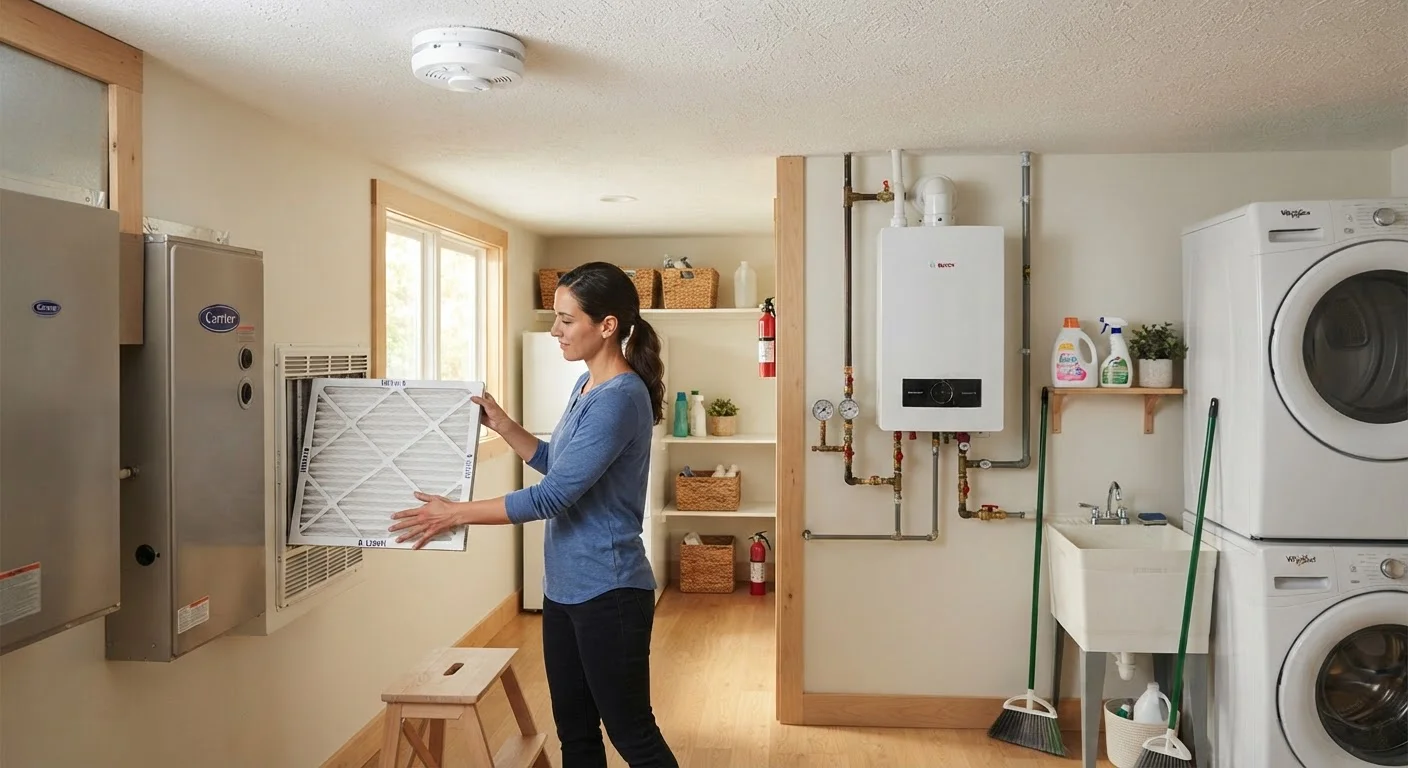
To check yours, locate the filter slot on your furnace or air handler, slide the filter out, and hold it up to the light. If you can't see light passing through it clearly, it's time for a new one. Note the dimensions printed on the filter's cardboard frame before buying a replacement. This is one of the simplest and cheapest maintenance tasks available to homeowners, yet surveys consistently find it among the most skipped.
A clogged filter can reduce HVAC efficiency by up to 15% and accelerate system wear.
Have your boiler serviced annually
Your boiler runs quietly in the background for most of the year, so it's easy to assume it's fine until it isn't — often on the coldest day of winter. Annual servicing by a qualified heating engineer checks for combustion efficiency, gas pressure, heat exchanger condition, and safety valve operation. In many regions, gas work must be carried out by a registered professional; in the US, this typically means a licensed HVAC technician or plumber certified for gas systems.
Beyond safety, regular servicing tends to extend equipment life and catch small faults before they become expensive repairs. See our guide to keeping your boiler running well for a full explanation of what annual servicing involves and what warning signs to watch for.
An unserviced boiler may develop faults that are both dangerous and far costlier to fix than a routine check.
Clear bathroom and kitchen drain traps
Slow drains are rarely a plumbing emergency — until a full blockage floods a cabinet or backs up into the sink during a dinner party. Hair, soap residue, and food debris accumulate in the curved trap section just beneath every drain. Clearing it takes about five minutes and requires no special tools beyond a drain cover removal and a drain snake or bent wire hanger.
For bathroom sinks and tubs, remove the stopper or drain cover and pull out any hair buildup using needle-nose pliers or a plastic drain cleaning tool. For kitchen sinks, avoid pouring fats or oils down the drain at all — they solidify as they cool and are one of the primary causes of stubborn blockages. Running hot water after washing greasy cookware helps, but it isn't a complete solution.
Most blocked drains can be prevented entirely with a monthly two-minute hair and debris check.
Inspect and reseal caulk around wet areas
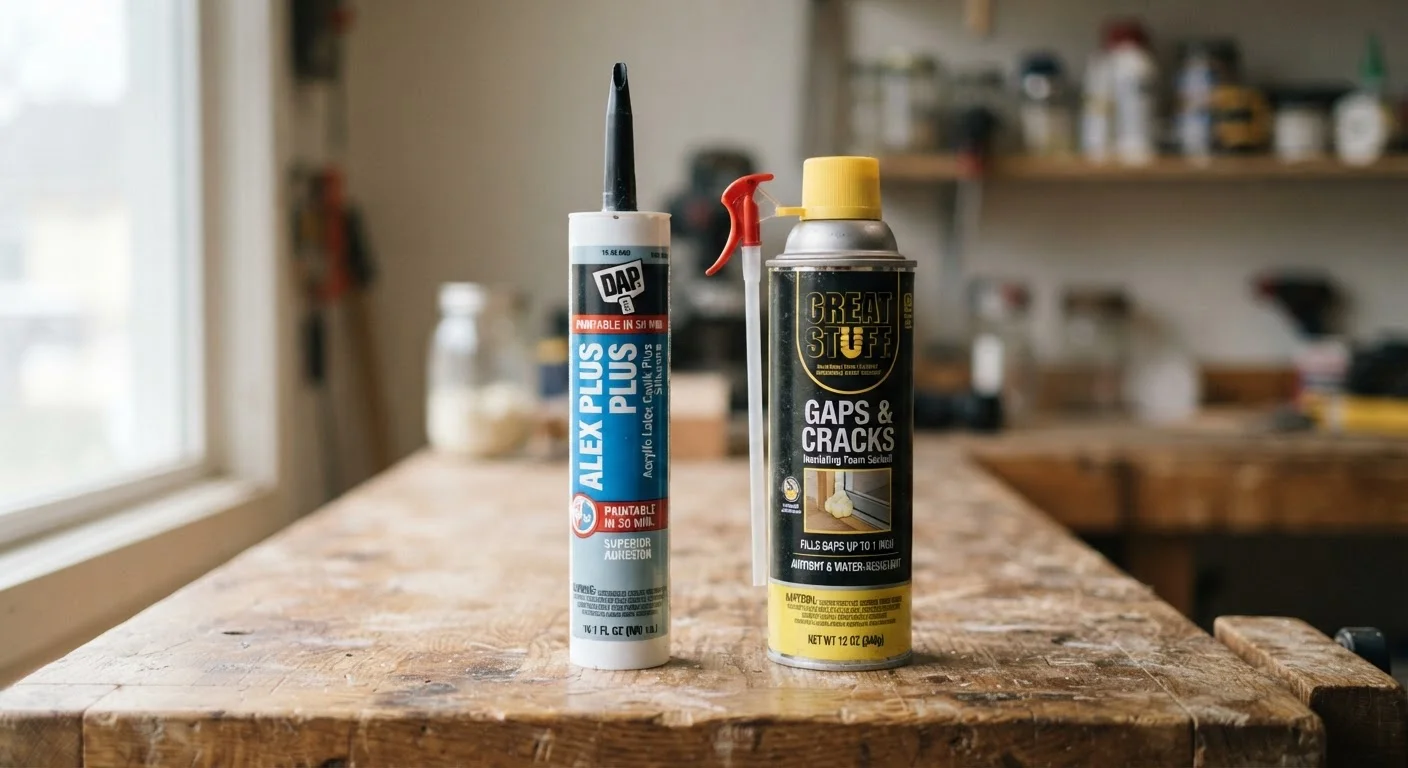
Caulk — the flexible, waterproof sealant applied around bathtubs, showers, sinks, and windows — dries out, shrinks, and cracks over time. Once it gaps, water seeps behind tiles or wall surfaces where it causes mold growth and structural rot that's often invisible until the damage is extensive. Run a finger along all caulked seams every six months or so and look for cracking, discoloration, or sections that have lifted away from the surface.
Removing old caulk with a utility knife or caulk-removal tool and applying a fresh bead is a beginner-friendly job. Use a caulk designed specifically for wet areas — these are formulated to resist mold and humidity. Smooth the bead with a damp finger before it sets, and allow it to cure fully before using the area (the packaging will state cure time). This one task can prevent costly water damage repairs down the line.
Failed caulk around a tub or shower is one of the most common — and preventable — causes of hidden water damage.
Locate and test your main water shutoff valve
When a pipe bursts or a supply line under the sink fails, the ability to shut off the water within seconds can mean the difference between a minor inconvenience and thousands of dollars in flood damage. Yet many homeowners have never located their main shutoff valve — often called a stopcock — let alone tested it.
In most US homes the shutoff is near the water meter, typically in the basement, crawl space, utility room, or outside near the foundation. Turn it fully clockwise to close, then open it again to confirm it operates freely. Valves that haven't been turned in years can seize; if yours resists movement, it's worth having a plumber service it before an emergency arises. Our article on understanding your home's water stopcock covers this in more detail.
Knowing where your shutoff valve is before an emergency may be the single most valuable two minutes you invest in your home.
Building the habit before something goes wrong
The pattern behind every item on this list is the same: small, predictable effort now versus large, unpredictable cost later. Replacing a $5 battery takes two minutes. Remediating mold behind a shower wall — caused by failed caulk — can cost several thousand dollars and requires professional work. Caulk inspection takes five minutes twice a year.
When to call a professional
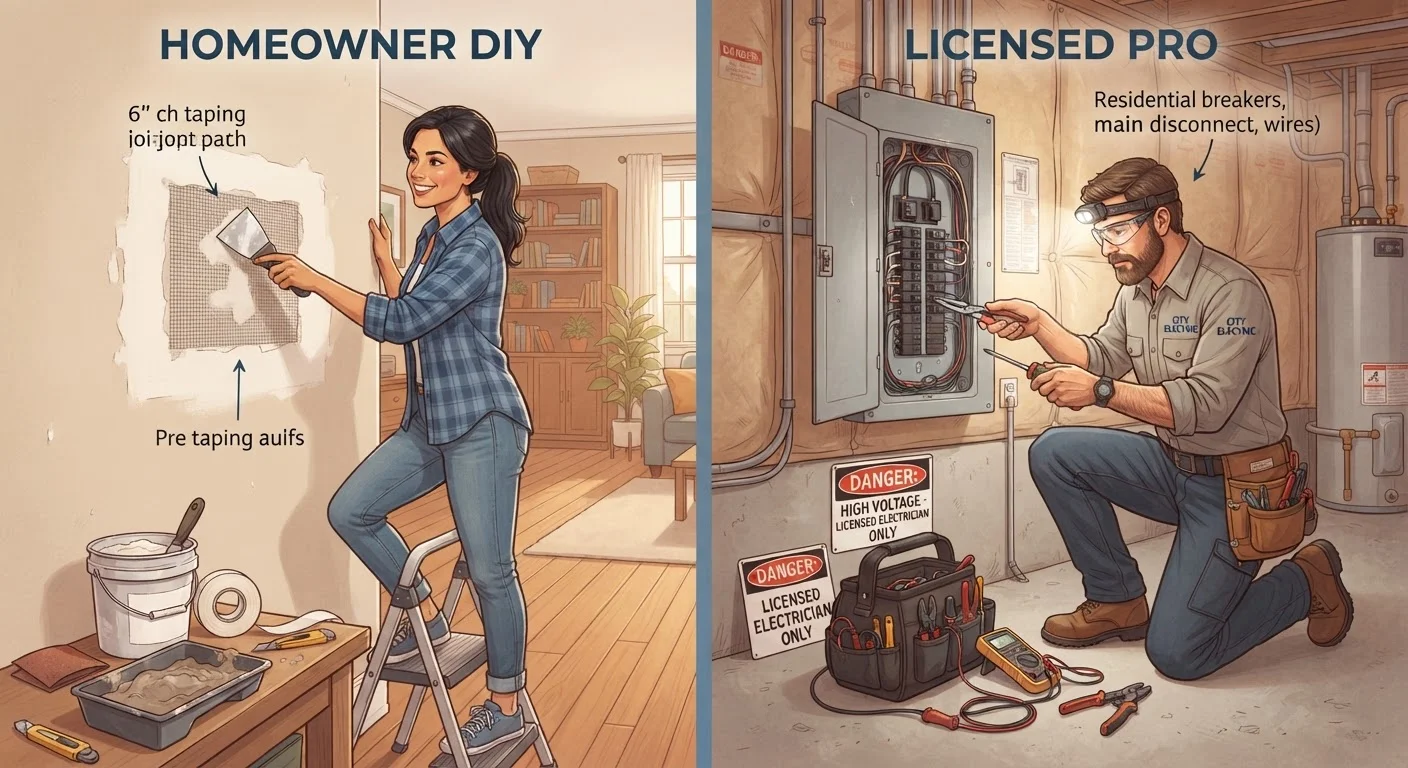
Several tasks on this list — particularly boiler servicing and any work involving gas lines or electrical systems — must be handled by licensed professionals in most US jurisdictions. Permits and inspections may also be required for certain repair work. Always verify local code requirements before undertaking any regulated work yourself, and don't hesitate to call a qualified tradesperson when in doubt.
If you're wondering how all of this fits into a broader upkeep picture, our article on maintaining a home end to end covers the full range of systems and structures worth tracking. And for a look at the misinformation that leads homeowners to skip or mishandle maintenance, see our piece on home maintenance myths that cost money. The goal isn't perfection — it's consistency. A handful of recurring checks, done regularly, will keep most homes in genuinely good shape.