What Gutters Actually Do
Gutters are channels fixed to the edge of your roof that collect rainwater as it runs off the roof surface and direct it into downspouts — the vertical pipes that carry it safely to ground drainage. Without working gutters, rainwater cascades directly off the roof edge, splashing against walls, soaking into foundations, and pooling around the base of your home.
The damage this causes is slow but serious: persistent damp against exterior walls leads to penetrating damp inside, erodes mortar, and can eventually undermine foundations. Overflowing water can also back up under roof tiles. As part of any broader approach to home upkeep — see our beginner's guide to home maintenance — gutter care is one of the simplest and highest-return tasks you can do.
Why Gutters Block — and When It's Worst
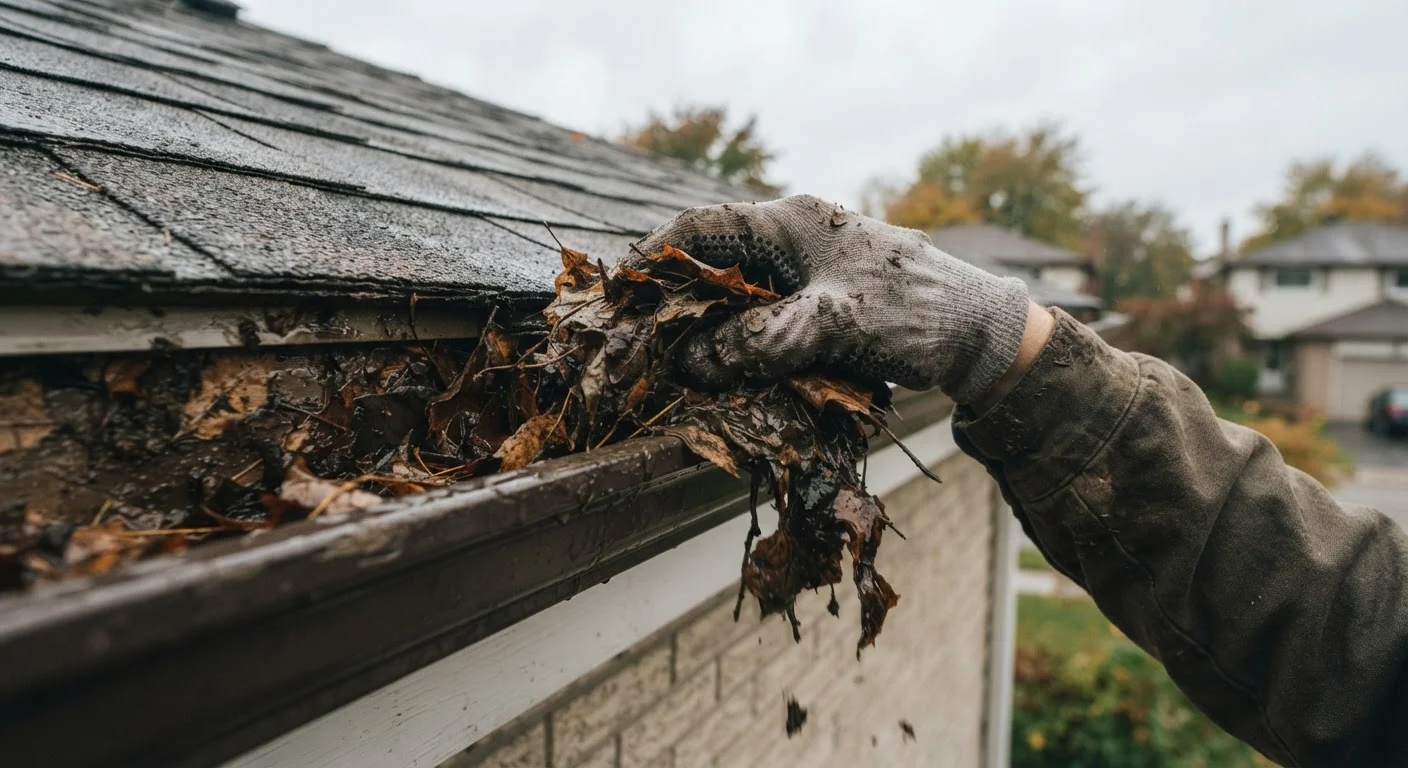
Gutters collect whatever falls onto your roof. In practice, that means autumn leaves are the biggest culprit — they accumulate fast, mat together when wet, and form a dam that holds standing water. Moss and algae growth from roof surfaces also wash into gutters over time, as does fine grit from roof tiles or shingles.
Blockages tend to form at the downspout entry point first, because that's where the channel narrows. Once flow is restricted there, debris backs up along the whole run. Signs of a blocked gutter include water spilling over the front edge during rain, staining or green moss streaks on exterior walls below the gutter line, and damp patches on interior ceilings near exterior walls — a warning covered in more detail in our guide to catching small leaks before they escalate.
Don't Ignore Overflow After Cleaning
If gutters still overflow after you've cleared them, the downspout (the vertical pipe that carries water to ground level) may be blocked lower down. Forcing water through with a hose will usually clear it. Persistent overflow after that could signal a structural sag in the gutter run — a job for a professional to assess.
What You'll Need Before You Start
Gutter cleaning is accessible to most beginners, but the height involved means preparation matters more than with most DIY tasks. Gather the right equipment before you climb anything.
What you will need
Gutter scoop or hand trowel
Removes compacted leaf and debris build-up from the gutter channel efficiently.
Extension ladder
Provides safe, stable access to gutters at roof height.
Garden hose with adjustable nozzle
Flushes remaining fine debris toward the downspout and reveals any remaining blockages.
Bucket with hook
Hangs from the ladder to collect debris, keeping hands free and the ground clear.
Gutter guard mesh
Fitted after cleaning to reduce future debris accumulation in the channel.
How to Clean Your Gutters: Step by Step
Safety First: Working at Height
Gutter cleaning always involves a ladder. Never lean a ladder against the gutter itself — it can bend or detach. Always have someone steady the base of the ladder, and never overreach beyond your shoulder width. If your roof line is above a single storey or you are uncomfortable working at height, hire a professional.
Set up your ladder safely
Position your ladder on firm, level ground at a safe angle — roughly one foot out for every four feet of height. Rest the top against the fascia board (the flat board behind the gutter), never against the gutter channel itself. Ask your helper to stand at the base with both hands on the ladder sides.
Remove large debris by hand
Wearing gloves, use your scoop or trowel to lift out the bulk of leaves, twigs, moss, and compacted grit. Place debris directly into your bucket rather than dropping it — soggy debris on the ground is slippery and messy. Work from the closed end of the gutter toward the downspout opening.
Check and clear the downspout
Once the gutter channel is mostly clear, check the downspout entry point — the hole where water drops into the vertical pipe. This is where blockages most commonly form. If it feels blocked, push a garden hose into the opening and run the water at full pressure to flush the clog downward.
Flush the full gutter run with a hose
Starting at the far end from the downspout, run your hose along the entire gutter channel at medium pressure. This washes out fine silt, checks the flow grade (water should travel steadily toward the downspout, not pool), and confirms the downspout is flowing freely at the bottom.
Inspect for damage while you're up there
With the gutter clean and wet, look along the channel for cracks, rust spots, separated joints, or sections that sag rather than slope gently toward the downspout. Note any areas where water sits rather than drains — these indicate a sag in the gutter bracket, which will need re-securing. Minor cracks can be sealed with gutter sealant; structural sags may need a professional.
Clear up and log the job
Bag or compost the collected debris. Rinse your tools and stow the ladder safely. Take a moment to note the date, any damage you spotted, and when the next clean is due. Twice yearly — late spring after pollen and seed season, and late autumn after leaf fall — is the standard recommendation for most homes.
Consider a Gutter Guard for Long-Term Relief
Mesh gutter guards sit over the open channel and let water in while keeping large debris out. They don't eliminate maintenance entirely, but they can significantly reduce how often you need to clean. They're easiest to fit during a cleaning session when the gutter is already clear and accessible.
Keeping Gutters Clear Over Time
The most effective maintenance strategy is simply consistency. A twice-yearly schedule catches the two heaviest debris periods — spring brings pollen, seeds, and moss spores; autumn brings the bulk of leaf fall. Adding gutter checks to a broader seasonal home routine makes them easy to remember and less likely to be skipped.
Good home upkeep works as a system: sound gutters protect your walls from damp, which in turn protects your insulation and internal structure. If damp issues persist despite clear gutters, poor ventilation may be compounding the problem — our article on understanding home ventilation explains how the two interact. For a complete picture of routine tasks across the whole home, see maintaining a home end to end.