Reading the Damage: What the Clues Tell You
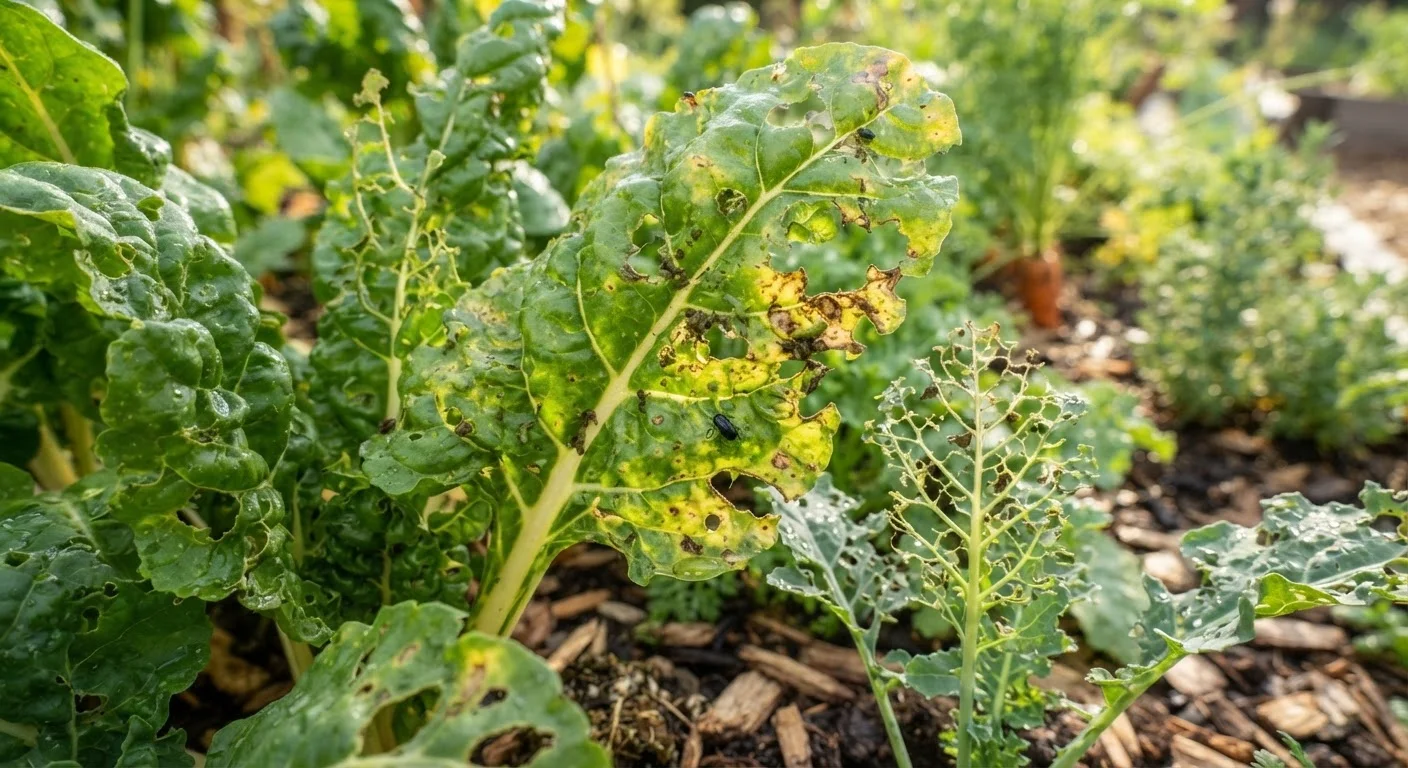
When something is wrong with your plants, the damage itself is your best diagnostic tool. Different pests feed in different ways, leaving behind distinct signatures. Learning to read those signs removes the guesswork and helps you respond appropriately — without reaching for a spray bottle before you even know what you're dealing with.
If you're just starting out, our guide to your first vegetable garden covers the broader context of growing edibles at home, which makes pest identification much easier once you know your plants well.
| Holes in leaves | Chewing insects (caterpillars, beetles, slugs) (University Cooperative Extension pest guides) |
| Stippled or bronzed foliage | Sap-sucking mites (University Cooperative Extension pest guides) |
| Sticky, curled new growth | Aphids or whiteflies (University Cooperative Extension pest guides) |
| Seedling severed at stem base | Cutworms (moth larvae in soil) (University Cooperative Extension pest guides) |
| Silvery slime trail on leaves | Slugs or snails (University Cooperative Extension pest guides) |
| Fine webbing on leaf undersides | Spider mites (University Cooperative Extension pest guides) |
As a general rule: holes in leaves suggest chewing insects; stippled or bronzed foliage points to sap-suckers like mites; distorted, curling, or sticky growth often means aphids or whiteflies; and wilting despite adequate water can indicate root or stem feeders working below the surface. Keep these patterns in mind as you walk your garden.
The Most Common Culprits
The list of possible garden pests is long, but a handful of insects account for the majority of damage in home vegetable and flower gardens. Here's what to look for with each one.
Sap-sucking insects
Insects that pierce plant tissue and feed on the fluid (sap) inside. They do not chew leaves but cause discoloration, wilting, and distorted growth. Examples include aphids, whiteflies, and spider mites.
Honeydew
A sticky, sugary substance excreted by sap-sucking insects like aphids and whiteflies. It coats leaves and can promote the growth of sooty mold, a black fungal coating.
Larvae
The immature, often worm-like stage of an insect's life cycle — for example, caterpillars are the larvae of moths and butterflies. Many pests do their worst damage in the larval stage.
Beneficial insects
Insects that help gardeners by preying on or parasitizing pest species. Common examples include ladybugs (which eat aphids), lacewings, and ground beetles.
Stippling
A pattern of tiny pale dots on leaf surfaces caused when mites pierce individual plant cells. Up close, stippled leaves look speckled or dusty.
Aphids
Tiny, soft-bodied insects that cluster on new growth and the undersides of leaves. They pierce plant tissue and drink sap, causing leaves to curl, yellow, or become sticky with a substance called honeydew. Ants feeding on that honeydew are often a tip-off that aphids are nearby.
Caterpillars and Cutworms
Caterpillars (larvae of moths and butterflies) chew ragged holes in leaves or consume them entirely. Cutworms — a specific group of moth larvae — hide in soil during the day and sever young seedlings at the base overnight. Finding a toppled seedling with a clean cut at the stem is a strong indicator.
Spider Mites
Nearly invisible to the naked eye, spider mites cause stippled, dusty-looking foliage and may leave fine webbing on undersides of leaves. They thrive in hot, dry conditions and can spread rapidly across a planting if left unchecked. Proper watering habits that keep humidity consistent can reduce mite pressure.
Whiteflies
Small white-winged insects that rise in a cloud when disturbed. Like aphids, they suck sap and excrete honeydew. Heavy infestations cause yellowing, wilting, and reduced plant vigor.
Slugs and Snails
Active mostly at night and in damp conditions, slugs and snails leave irregular holes in leaves and a silvery slime trail. Seedlings and low-growing plants are particularly vulnerable. Overwatering and dense mulch near stems create the moist habitat they favor — another reason good watering practice matters.
~25%
Global crop losses attributed to pests annually
The UN Food and Agriculture Organization estimates roughly 20–40% of global crop production is lost each year to pests and disease combined.
500+
Aphid species found in North America
According to entomological surveys, North America hosts over 500 aphid species, though only a fraction commonly affect home gardens.
Why Pests Take Hold: The Conditions That Invite Trouble
Pests rarely devastate a healthy, well-tended garden without some help from conditions that tip the balance in their favor. Understanding those conditions is more useful than memorizing a list of sprays.
- Plant stress: Stressed plants — from drought, waterlogging, or nutrient imbalance — produce weaker tissue that's easier for insects to attack and slower to recover.
- Monoculture planting: Growing one crop in a large block gives pests an easy, concentrated food source with no obstacles. Companion planting introduces variety that can disrupt pest cycles and attract beneficial insects.
- Lack of beneficial insects: Ladybugs, lacewings, parasitic wasps, and ground beetles naturally keep many pest populations in check. Gardens that rely heavily on broad-spectrum pesticides often lose these allies first.
- Poor air circulation: Overcrowded planting traps humidity and creates favorable conditions for both pests and the fungal diseases that often follow.
When to Call in a Professional
Most common garden pests can be managed with cultural changes and patience. However, if an infestation spreads rapidly, damages a large portion of your garden, or you cannot identify the cause, a local Cooperative Extension office is a reliable, free resource. They can help identify the pest accurately before you take action. Misidentifying a problem often leads to ineffective — and sometimes counterproductive — responses.
If you want to build a stronger foundation before tackling pests, the principles in our complete gardening introduction — covering soil health, spacing, and plant selection — apply directly to pest prevention.