Why Watering Myths Are So Persistent
Watering feels intuitive. You give a plant water, it grows — so more water must mean more growth, right? Not quite. Many of the most damaging gardening habits come not from neglect but from well-intentioned routines built on misunderstanding. First-time growers especially tend to inherit watering advice that sounds logical but contradicts how plants actually absorb and use moisture.
The result is often a slow, puzzling decline: yellowing leaves, limp stems, soil that smells faintly musty. Recognising which watering beliefs are myths — and understanding why — is one of the fastest ways to improve your plants' health. If you've also noticed your seedlings struggling after you move them, it's worth exploring why transplanted seedlings often fail, since watering errors play a major role there too.
Myth
You should water your plants on a fixed daily schedule to keep them healthy.
Fact
Plants need water based on soil moisture and environmental conditions, not calendar dates.
A fixed schedule ignores the variables that actually determine water need: pot size, humidity, temperature, season, and plant species. In winter, many plants slow their growth dramatically and need far less water. Watering daily regardless of conditions is one of the most reliable routes to overwatering. Check the soil first — every time — rather than the clock.
Myth
If your plant looks wilted, it definitely needs more water.
Fact
Wilting can be caused by both underwatering and overwatering — checking the soil tells you which.
Root rot caused by waterlogged soil damages the roots' ability to take up water, which causes the plant to wilt even though the soil is wet. If you water a wilting plant without checking the soil first, you risk making root rot significantly worse. A soggy, foul-smelling soil alongside wilting is a strong sign of overwatering, not drought.
Myth
Watering in sunlight will scorch your plant's leaves through a magnifying-glass effect.
Fact
Research does not support the idea that water droplets reliably cause leaf scorch under typical outdoor conditions.
This is one of gardening's most enduring myths. Studies examining the lens-burn hypothesis have found that it does not occur consistently under natural sunlight at normal leaf distances and water droplet sizes. Watering in the morning — regardless of sun exposure — is recommended primarily because it allows foliage to dry before nightfall, which reduces the risk of fungal disease. The burn concern, however, is largely unfounded.
Myth
More water always helps a struggling or newly potted plant recover faster.
Fact
Excess water suffocates roots by displacing the oxygen they need to function.
Healthy roots need both water and air in the soil. When soil stays saturated, air pockets fill with water and roots begin to die. Newly potted or transplanted plants are especially vulnerable because their root systems haven't yet established. Water a new plant thoroughly once, then let the soil approach — but not reach — dryness before watering again, giving roots time to spread toward moisture.
Myth
Yellow leaves always mean your plant needs fertiliser or more nutrients.
Fact
Yellowing leaves are one of the most common symptoms of overwatering and root damage.
When roots rot from excess moisture, they lose the ability to deliver nutrients to the rest of the plant — so the plant shows nutrient-deficiency symptoms even when nutrients are present. Adding fertiliser to an overwatered plant doesn't fix the problem and can increase stress. Before reaching for a feed, check the soil, inspect the roots if possible, and address moisture issues first.
Myth
Pots without drainage holes are fine as long as you're careful with how much you water.
Fact
Without drainage, excess water accumulates at the bottom of pots and creates ideal conditions for root rot.
Even careful waterers misjudge volume. Without a drainage hole, there is no way for excess water to escape, and it collects unseen at the root zone. Over time this creates a permanently anaerobic (oxygen-free) layer that destroys roots. If you love a decorative pot without drainage, use it as a cachepot — place your plant in a plain nursery pot with holes inside the decorative outer pot, and empty any standing water after watering.
Reading Your Plants, Not Your Calendar
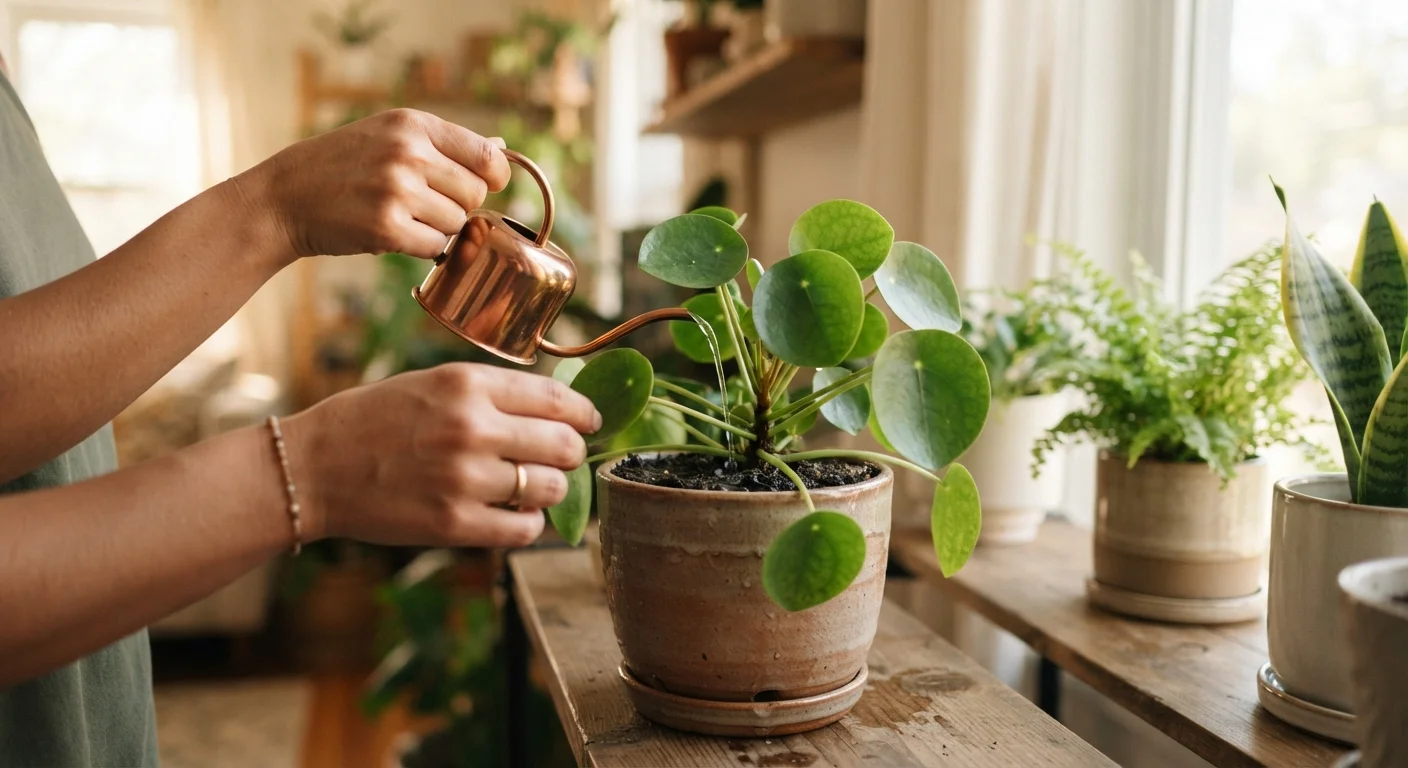
The single most useful shift a beginner can make is moving from schedule-based watering to soil-based watering. Before you reach for the watering can, push your finger about an inch into the soil. If it feels moist, wait. If it feels dry at that depth, water thoroughly until it drains from the bottom of the pot.
Don't Mistake Root Rot for Drought
If your plant is wilting and the soil feels wet or smells musty, stop watering immediately. Gently remove the plant from its pot and inspect the roots — healthy roots are firm and white or tan, while rotted roots are brown, mushy, and may fall apart when touched. Trim away rotted sections with clean scissors, repot in fresh dry soil, and hold off on watering for several days. Continuing to water a root-rotted plant accelerates its decline.
This approach works for the vast majority of common houseplants and garden vegetables. Different species have different thresholds — succulents prefer to dry out completely between waterings, while ferns prefer consistently moist (not wet) soil — but the finger-test habit removes guesswork for almost every plant. Pair good watering practice with pest awareness, since stressed, over- or underwatered plants are more vulnerable to attack. Our guide to common garden pests can help you tell the difference between a watering problem and an infestation.
If you enjoy untangling gardening misconceptions, you may also find it useful to challenge assumptions in other areas of home upkeep — the home maintenance myths that cost homeowners money follow surprisingly similar patterns of well-meant but counterproductive habits.