Why Beginners Struggle With Tools From Day One
Walking into a hardware store as a first-timer can feel genuinely overwhelming. Entire aisles are devoted to tools that look subtly different from one another, with no clear sign of which ones you actually need. The instinct to over-buy — or to grab whatever's on sale — is understandable, but it sets up a pattern of frustration before the first screw is driven.
The good news: most household projects are far less equipment-intensive than they appear. Once you understand the logic behind tool selection, the decisions get much easier. See our beginner's map to home improvement projects for a broader look at where to direct your early efforts.
Buying a large tool set 'just in case' before completing a single project.
Why it happens: Beginners often feel that having every tool means being prepared, but this leads to clutter, wasted money, and decision fatigue when you actually need something specific.
Using a flathead screwdriver on a Phillips-head screw — or vice versa.
Why it happens: Screwdriver types look similar and beginners often grab whichever is closest, assuming they're interchangeable.
Skipping measurement and assuming pieces will 'fit roughly right.'
Why it happens: Measuring feels like extra work when you just want to get started, so beginners eyeball cuts and placements.
Using a hammer when a mallet — or no percussion tool at all — is needed.
Why it happens: A hammer feels like the universal answer to 'hit this,' but it can split wood, crack tiles, or dent surfaces that need a softer touch.
Ignoring safety gear because the task looks simple.
Why it happens: Eye protection, gloves, and dust masks feel unnecessary for quick jobs, so they get skipped — until something goes wrong.
Your Practical Starter Kit: Eight Tools That Actually Earn Their Space
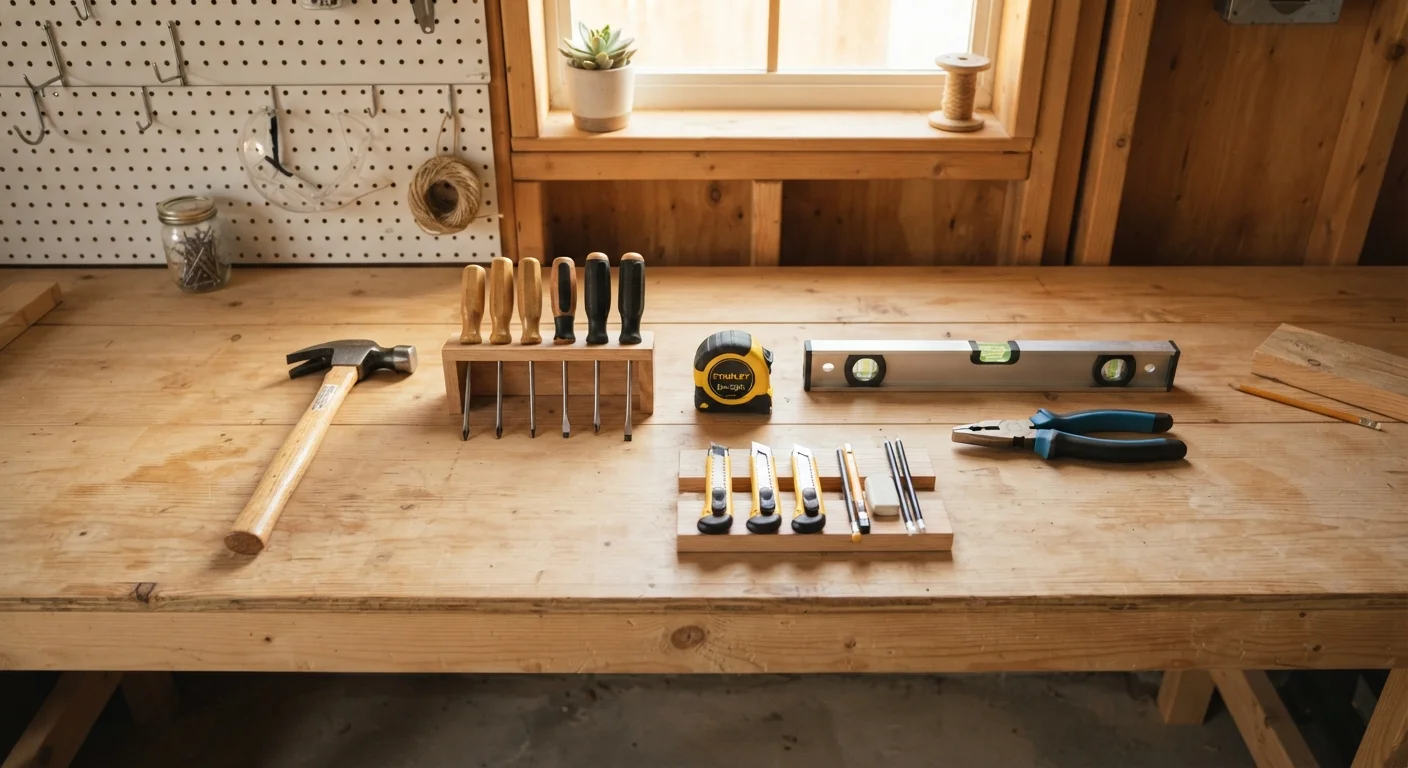
Rather than building a wish list, think about which tools solve the most common problems. The eight below cover hanging pictures, assembling flat-pack furniture, tightening loose fixtures, making basic cuts, and checking that shelves are level — tasks that come up within the first weeks of living in any home.
~80%
Of home repairs handled with basic hand tools
Home improvement educators widely estimate that the large majority of routine household fixes require only hand tools, not power tools.
8
Core tools that cover most beginner projects
A hammer, tape measure, flathead and Phillips screwdrivers, adjustable wrench, pliers, utility knife, and a level form a practical beginner's starter kit.
- Claw hammer — for driving and pulling nails. A 16 oz head suits most household tasks.
- Flathead and Phillips-head screwdrivers (at least two sizes each) — screws are everywhere and they are not all the same.
- 25-foot retractable tape measure — measurement is the foundation of every project that involves fitting or cutting.
- Adjustable wrench — handles a range of nut and bolt sizes without needing a full socket set.
- Needle-nose pliers — grips small items, bends wire, and reaches into tight spaces.
- Utility knife — scores drywall, cuts packaging, trims materials cleanly.
- 4-foot spirit level — a spirit level tells you whether a surface is perfectly horizontal or vertical. Essential for shelves and frames.
For a deeper look at what each of these tools does and why it matters, see The Hidden Logic Behind a Well-Stocked Home Toolkit.
Cheap Tools Can Be a False Economy
Very inexpensive tools — especially power tools — may lack the safety features and durability of mid-range equivalents. A drill bit that snaps or a screwdriver that slips can cause injury and damage your workpiece. Invest in at least mid-range quality for items you'll use repeatedly, and read the safety instructions before first use.
Knowing When Your Tool Kit — or Skills — Aren't Enough
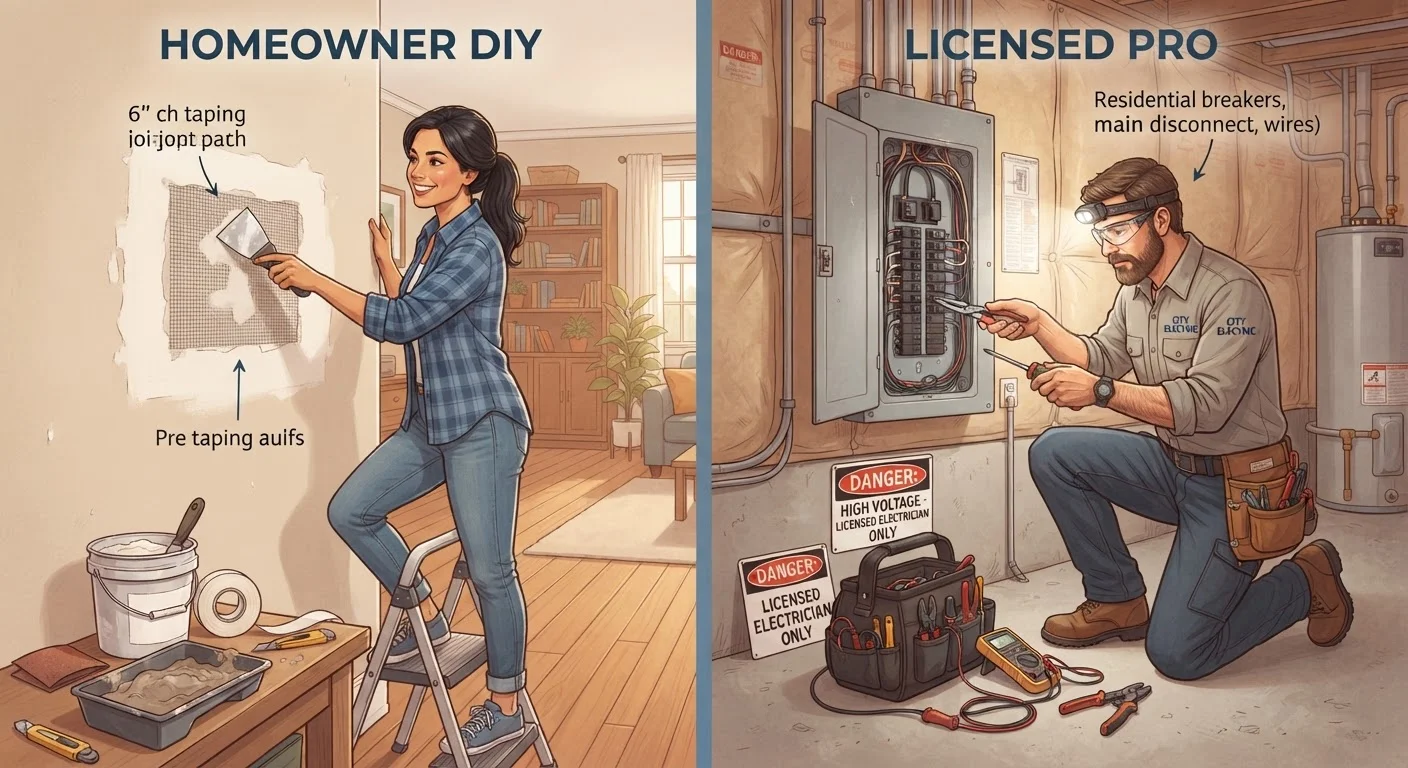
Part of being a competent DIYer is recognizing the limits of what you should attempt. Some repairs that look straightforward on a video tutorial involve hidden risks: working near electrical wiring, cutting into walls that may contain pipes, or making structural modifications that require a permit.
Never Improvise on Electrical or Structural Work
No tool kit substitutes for professional licensing when it comes to electrical wiring, load-bearing walls, gas lines, or roof repairs. These tasks carry serious safety and legal risks. Always hire a licensed contractor and check local permit requirements before starting any such project.
Before starting any new project, it's worth asking two questions: Do I have the right tool for this specific task? And is this a job I'm legally and safely able to do myself? Our guide to DIY vs. calling a professional walks through the practical signals that help you decide. For a broader foundation in home upkeep, Home Maintenance Demystified is an excellent companion read.
Starting simple — and getting those simple tasks right — builds the confidence and judgment that makes more complex projects approachable over time. Use our room-by-room readiness checklist before diving into any new project to make sure you're genuinely prepared.