Why DIY Repairs Appeal — and Where the Logic Breaks Down
The appeal is straightforward: skip the labor bill, fix the problem on your schedule, and pick up a new skill along the way. For many repairs, that logic holds up. A leaky faucet washer, a scuffed wall, a squeaky door hinge — these are genuinely manageable tasks that cost little to address yourself and even less to undo if you make a small mistake.
Where things go sideways is when homeowners apply the same confidence to jobs that have a much steeper penalty for error. An improperly patched water leak can rot subfloor over months before anyone notices. A miswired outlet can create a persistent fire hazard. The gap between "I watched a video" and "I understand what I'm doing" matters enormously in these situations.
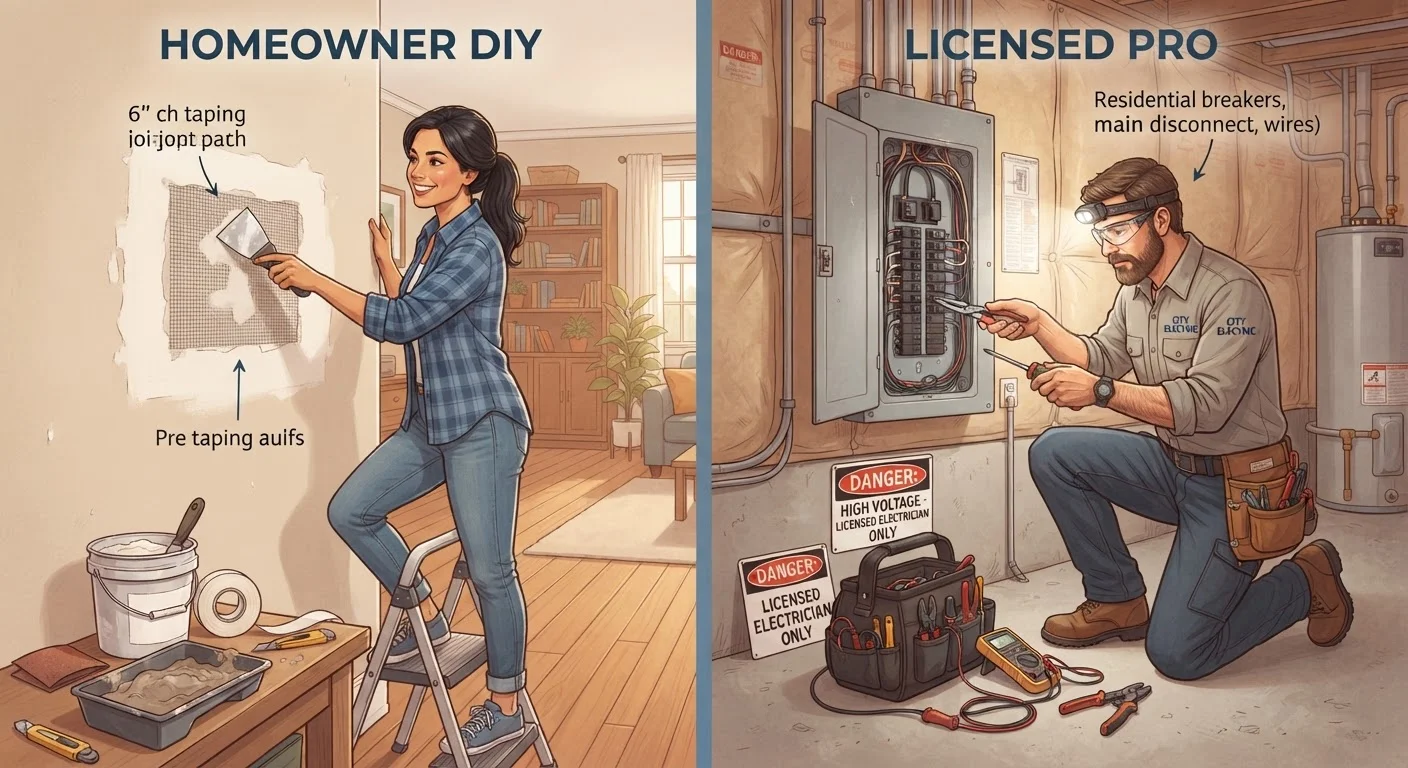
The practical signals that separate safe DIY jobs from pro territory come down to three factors: the consequences of failure, whether a permit is required, and whether the repair touches systems that are regulated for safety reasons.
Repairs That Genuinely Save Money When You DIY
These tasks are beginner-accessible with basic tools, widely documented, and low-risk if you make a minor error:
Significant labor cost savings on simple tasks
Labor typically accounts for 40–60% of a repair bill. For low-complexity jobs like caulking, patching, or replacing hardware, skipping that cost adds up quickly across a home.
Work done on your own schedule
You don't have to wait days or weeks for a contractor's availability. Straightforward repairs can often be completed in an afternoon, preventing minor problems from becoming larger ones.
Builds practical knowledge of your home
Understanding how your home's systems and surfaces work helps you catch problems earlier and communicate more effectively with professionals when you do need to hire one.
Low-cost entry with basic starter tools
Many beginner-level repairs require only a few inexpensive tools — a putty knife, screwdriver set, caulk gun, and utility knife cover a wide range of common fixes.
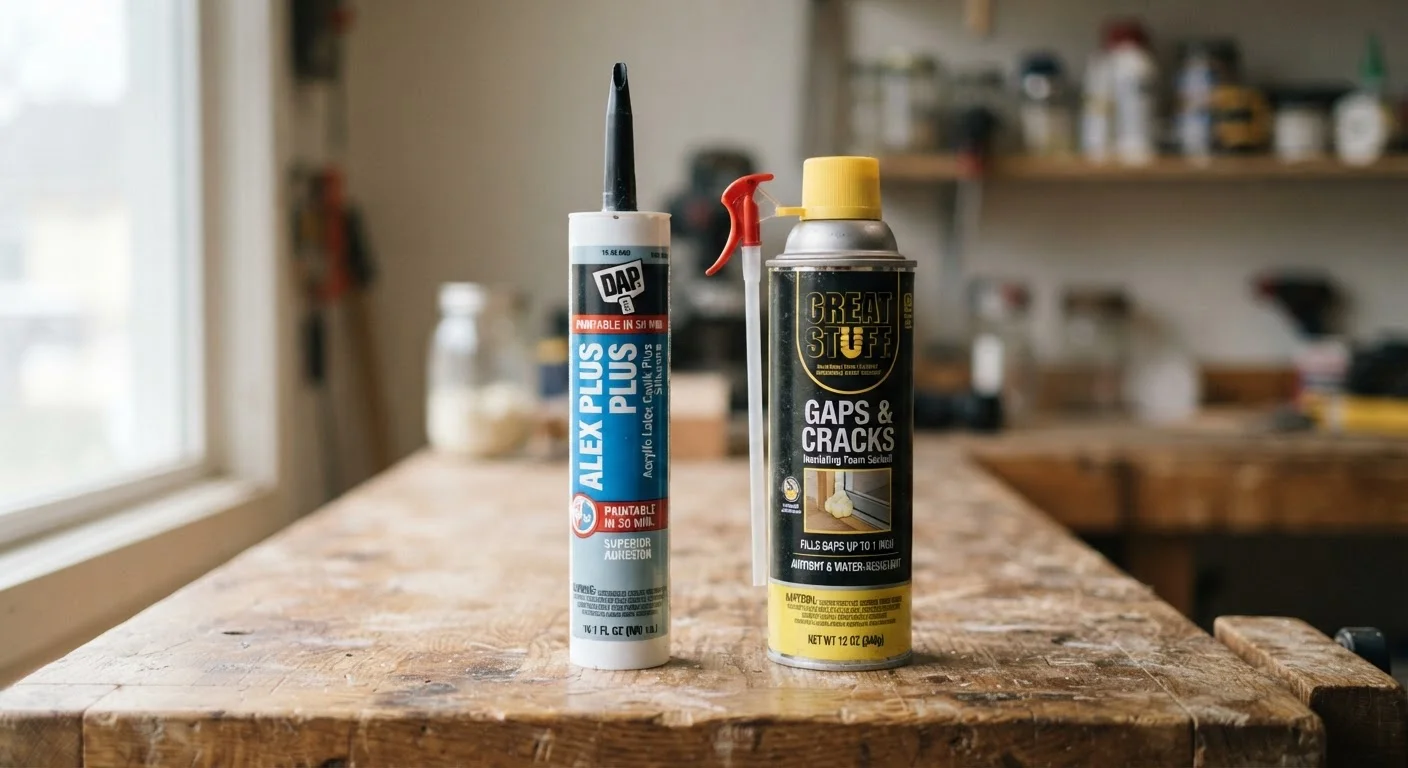
- Caulking gaps and cracks — Around tubs, windows, and door frames, deteriorated caulk is one of the most common sources of drafts and moisture intrusion. Removing old caulk with a plastic scraper and applying a fresh bead takes under an hour and costs just a few dollars.
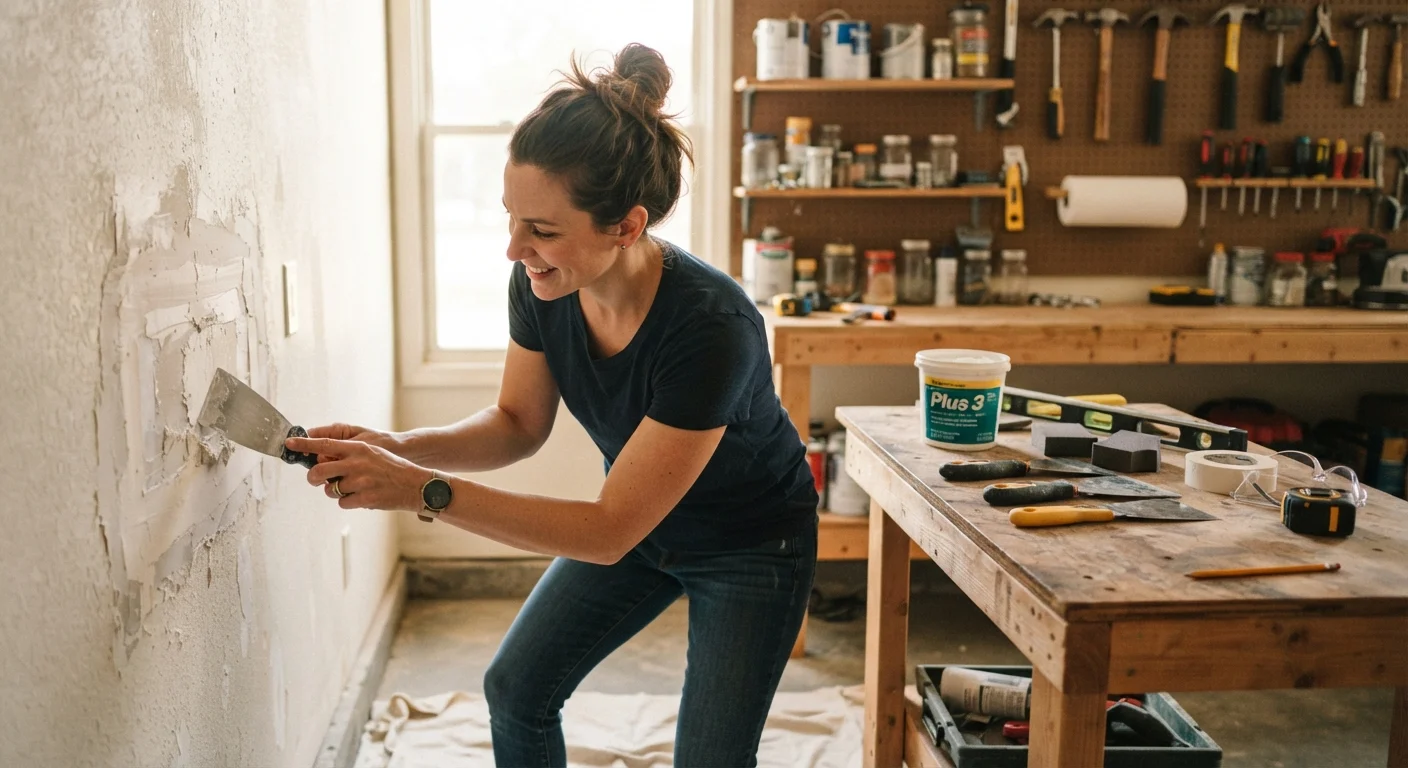
- Patching small drywall holes — Nail holes and minor dents are easy to fill with pre-mixed spackling compound, sand smooth, and repaint. Larger holes (up to about 4–6 inches) can be repaired with a patch kit. See why rushing the drying and painting steps creates bigger problems later.
- Replacing cabinet hardware and faucet handles — Swapping knobs, pulls, or a worn faucet handle requires only a screwdriver and basic wrench. It's a high-impact cosmetic upgrade that can dramatically refresh a kitchen or bathroom.
- Weatherstripping doors — Foam or rubber weatherstripping peels off and sticks on without any special tools, and it meaningfully reduces heating and cooling loss around exterior doors.
Having the right starting kit matters for all of these. Our guide on what tools beginners actually need — and what to skip covers the essentials without overcomplicating it.
Repairs That Can Cost More If Done Wrong
These jobs look approachable but carry consequences that are disproportionate to any labor savings:
Mistakes on complex jobs multiply costs fast
A poorly executed plumbing connection or a miswired circuit can cause water damage, fire hazards, or require a licensed professional to undo and redo the work — often at higher cost than the original job.
Unpermitted work creates legal and insurance risk
Work done without required permits can delay or derail a home sale, result in mandatory tear-out, or give an insurer grounds to deny a related claim.
Hidden damage can be missed by untrained eyes
Surface symptoms like staining or soft flooring can signal mold, rot, or structural compromise that requires professional assessment before any surface repair makes sense.
Time investment is often underestimated
A repair that takes a professional two hours may take a beginner a full day, with additional trips to the hardware store. Factor this into the real cost of DIY before starting.
Electrical and gas work carries serious safety risk
Mistakes with wiring or gas lines can cause fires, carbon monoxide exposure, or electrocution. These systems are regulated precisely because the margin for error is extremely small.
Electrical and gas work sits in a category of its own. In most U.S. jurisdictions, certain electrical repairs require a permit and must be inspected — and homeowner insurance policies may deny claims if unpermitted work contributed to a loss. Always verify local code requirements before starting anything beyond replacing a light switch or standard outlet cover.
When a Permit Is Required
In most U.S. jurisdictions, electrical panel work, new circuits, HVAC installation, structural modifications, and additions all require a building permit. Requirements vary by city and county, so always check with your local building or planning department before starting any project that goes beyond surface-level repair. Performing regulated work without a permit can affect your homeowner's insurance and complicate future property sales.
For bathroom upgrades that stay safely in DIY territory, the high-impact bathroom improvements a beginner can handle guide focuses specifically on cosmetic and fixture-level changes that don't touch mains plumbing or wiring.
How to Decide Before You Start
Before picking up a tool, run through these questions:
- What happens if I get this wrong? Cosmetic damage is recoverable. Structural, electrical, or water damage often is not.
- Does this job require a permit in my area? Check your local building department's website. Unpermitted work can complicate home sales and void insurance coverage.
- Do I have the right tools — not just close approximations? Using the wrong tool is one of the most consistent beginner mistakes. Review what beginners get wrong about tools before purchasing anything new.
- Have I read about this specific repair, not just a general version of it? A ceiling water stain might be a simple roof nail pop or a sign of active structural damage — they look similar but require completely different responses.
The home maintenance hub covers the recurring upkeep tasks every homeowner should understand, which is a good place to build baseline knowledge before diving into repairs. And if you're uncertain whether a maintenance habit you follow is actually helping, it's worth checking which common maintenance beliefs are actually myths.
40–60%
Typical labor share of a repair bill
Labor costs generally make up the largest portion of any home repair estimate, which is why straightforward DIY tasks offer the clearest savings opportunity.
~$1,000+
Average cost to remediate minor water damage
According to general contractor estimates, even a small, undetected leak left unaddressed can result in subfloor or drywall remediation costs that dwarf the original repair.