Why the Wording on Fruit Beverage Labels Actually Matters
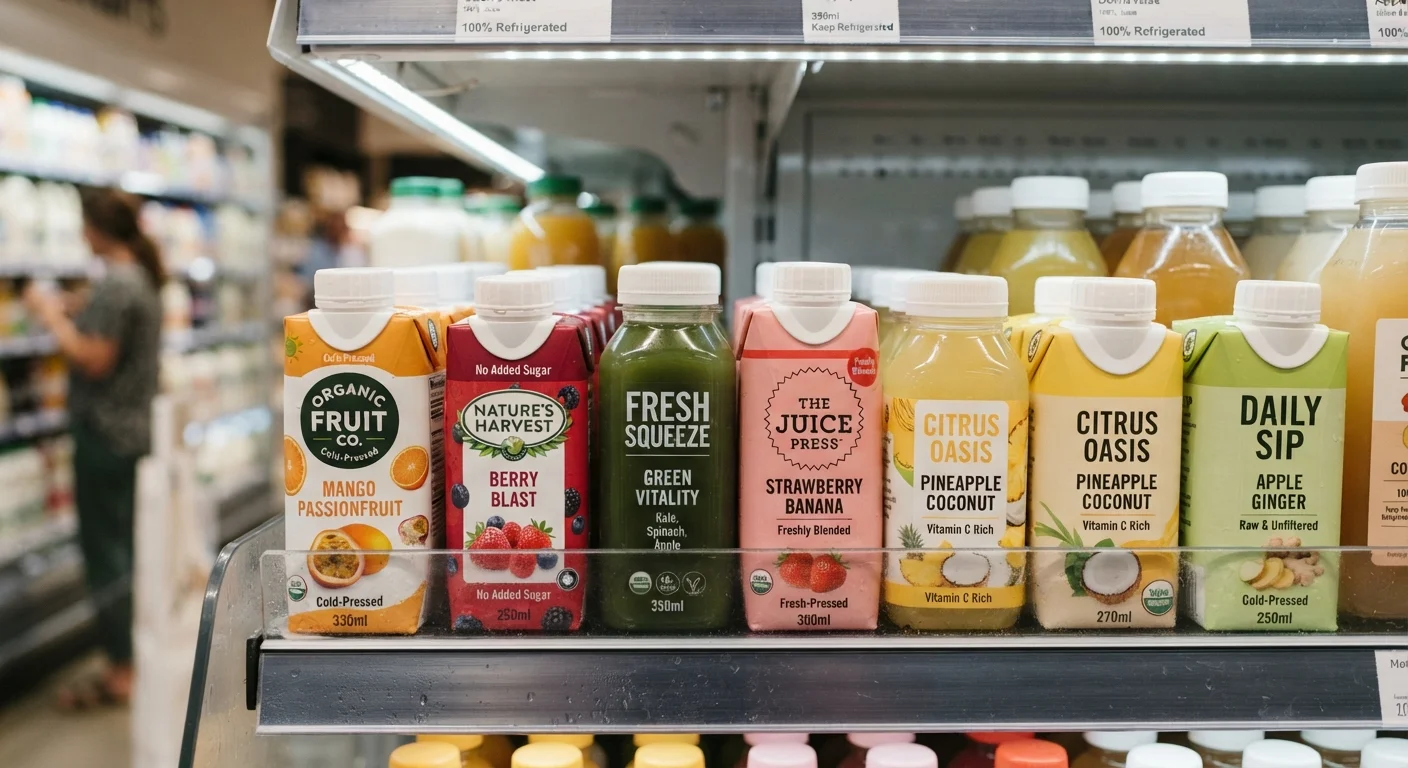
Standing in the juice aisle, you'll notice cartons and bottles labeled "100% juice," "fruit nectar," "fruit drink," "fruit cocktail," and "fruit punch." These aren't interchangeable marketing phrases — they're regulated categories that tell you something concrete about what's actually inside the container.
In the United States, the FDA and USDA set definitions for how fruit beverages must be labeled, specifically around what percentage of the product is real fruit juice. Knowing these categories helps you make informed choices and avoid being surprised when a "fruit drink" tastes thin or unexpectedly sweet.
For a deeper look at how to read any label systematically, see our guide to reading ingredient lists.
| Minimum juice content: 100% Juice | 100% juice from fruit — no added water or sugar (U.S. FDA labeling standards) |
| Typical juice content: Nectar | 25%–99%, depending on the fruit (Codex Alimentarius / general industry practice) |
| Minimum juice content: Fruit Drink | No minimum — can be as low as 1–5% (U.S. FDA labeling standards) |
| Label disclosure requirement | Non-100% juice products must state juice % on the label (21 CFR Part 102, U.S. FDA) |
| Common nectar fruits | Guava, mango, passion fruit, peach, pear |
| Added sugars visibility | Listed separately on U.S. Nutrition Facts panel since 2020 (FDA updated Nutrition Facts label rules) |
The Three Core Categories: Juice, Nectar, and Drink
Here's how to tell each type apart at a glance:
100% Juice
A product labeled 100% juice must contain nothing but juice squeezed or pressed from fruit — no added sugar, no water, and no artificial flavoring. It can, however, contain juice from concentrate (where water is removed during processing, then added back). The flavor may still vary from carton to carton, a topic explored in depth in our article on why orange juice tastes different every carton.
Fruit Nectar
Nectar is a middle-ground category. It contains real fruit juice or fruit purée, but also includes added water and often added sugar. The required minimum juice content varies by fruit — for example, nectar made from high-acid or very thick fruits like guava or passion fruit typically contains between 25% and 50% juice. Nectar is common for tropical fruits whose pure juice would be too thick or tart to drink straight.
Fruit Drink, Cocktail, or Punch
These terms apply to beverages with less than 100% juice — and often much less. A fruit drink might contain as little as 5–10% juice, with the remainder being water, sweeteners, and flavorings. The label is required to state the juice percentage, so look for it. Understanding what those added sweeteners actually are is also useful — our plain-language breakdown of sugar forms explains the variety you'll encounter.
100% Juice
A beverage made entirely from the juice of fruit, with no added water, sugar, or artificial flavoring. It may be made from concentrate, meaning water is removed and later restored during processing.
Fruit Nectar
A beverage containing real fruit juice or purée diluted with water and often sweetened. It occupies a middle tier between pure juice and fruit drinks, with minimum juice content varying by fruit type.
Fruit Drink
A beverage containing less than 100% juice — sometimes as little as 5% — combined with water, sweeteners, and flavorings. Labels must disclose the actual juice percentage.
Juice from Concentrate
Juice that has had most of its water removed for easier storage and transport, then had water added back before packaging. Nutritionally similar to fresh-squeezed but may differ slightly in flavor.
Fruit Purée
Whole fruit blended into a smooth, thick liquid. Purée retains fiber from the fruit, which is typically absent in clear juices.
Added Sugar
Sugar introduced during manufacturing, as distinct from sugars naturally present in the fruit. Added sugars must be disclosed on the nutrition facts panel under the 'Added Sugars' line.
Reading the Label Like a Pro
Once you know the categories, three specific spots on any label give you the clearest picture:
- The front panel claim: Words like "100% juice," "contains juice," or "made with real fruit" each carry different weight. "Contains juice" or "made with real fruit" typically signals a drink-type product with a low juice percentage.
- The juice percentage disclosure: U.S. regulations require beverages that aren't 100% juice to state the percentage of juice on the label. Look for a line reading something like "Contains 15% juice."
- The ingredient list: Ingredients are listed in descending order by weight. If water and a sweetener appear before any mention of juice or fruit concentrate, the juice content is minimal.
- The nutrition facts panel: Sugars listed here include both naturally occurring fruit sugars and any added sugars. Our companion article on reading nutrition facts labels walks you through exactly how to interpret those numbers.
"No Added Sugar" Doesn't Mean Low Sugar
A product labeled "no added sugar" may still contain a significant amount of naturally occurring fruit sugars. This claim only confirms that no extra sweetener was mixed in during production. For a full picture of sugar content, check both the "Total Sugars" and "Added Sugars" lines on the nutrition facts panel.
Also worth noting: terms like "natural flavor" on a juice-adjacent product can be genuinely ambiguous. Our article on natural and artificial flavours unpacks why.
A Quick Reference: What to Expect from Each Type
Use this summary as a fast mental checklist the next time you're comparing products on the shelf:
100%
Juice content required for '100% juice' label claim
U.S. FDA regulations require no additions of water or sweetener for a product to carry this designation.
As low as 1%
Minimum juice content in some fruit drinks
Products labeled 'fruit drink' or 'fruit punch' are not required to meet a minimum juice threshold, though the actual percentage must appear on the label.
25–50%
Typical juice range in tropical fruit nectars
Thick or highly acidic fruits like guava and passion fruit are commonly sold as nectar rather than pure juice due to their intense texture and flavor.
If hydration is part of your goal, it's also worth knowing that beverages aren't your only source of fluid — foods contribute meaningfully too, as described in our overview of hydration from food.
By recognizing these label categories, you can quickly match the product to your actual intent — whether that's maximizing fruit content, managing sweetness, or simply knowing what you're pouring into a glass.