Why the Difference Actually Matters
If a recipe says to simmer your soup but you crank the heat to a rolling boil, you haven't just skipped a detail — you've changed the dish. The temperature of your cooking liquid directly affects how food proteins behave, how much moisture stays locked in, and whether a sauce thickens gracefully or goes watery and thin.
Understanding these three methods gives you real control at the stove rather than just guessing. It's the kind of knowledge that explains why your pasta turns out fine but your braised chicken comes out dry, or why a poached egg at a diner looks perfectly set while yours falls apart. For a broader look at how heat behaves during cooking, see our guide to heat zones.
212°F
Water's boiling point at sea level
A well-established physical constant — water boils at 100°C (212°F) at standard atmospheric pressure (sea level).
~25°F
Temperature gap between simmering and boiling
Simmering typically sits 15–25°F below boiling, a seemingly small difference that has a significant impact on how proteins and connective tissue respond to heat.
160–180°F
Ideal poaching temperature range
This range is widely cited in culinary education as the sweet spot for poaching delicate proteins without toughening them.
Boiling: High Heat, Fast Results
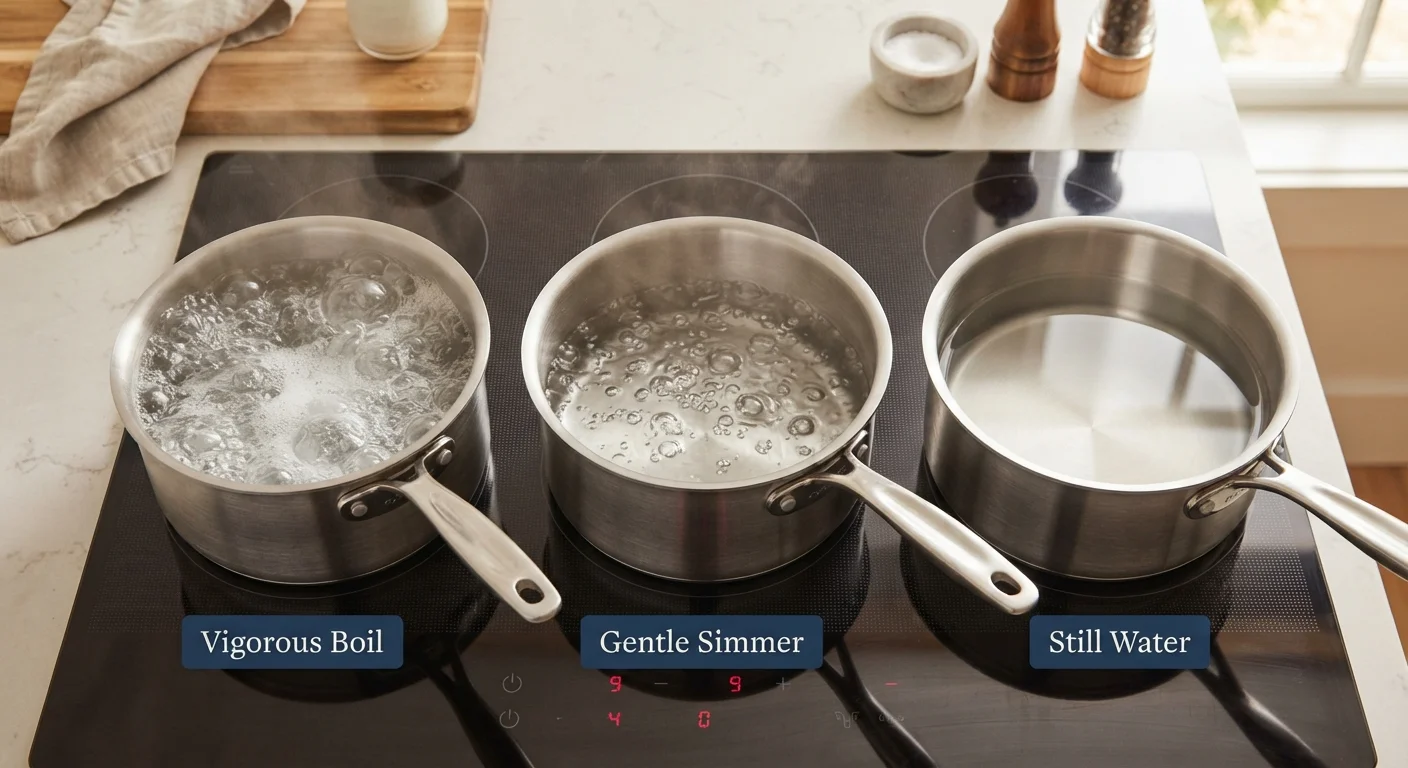
Boiling means your liquid has reached its maximum heat — 212°F (100°C) at sea level — and is churning with large, constant bubbles. It's the loudest, most energetic of the three methods, and that energy is the point.
Boiling works well for foods that can handle aggressive heat without falling apart or toughening: dried pasta, potatoes, hard-cooked eggs, and green vegetables like broccoli or green beans. The vigorous movement of the water also helps separate pasta strands and prevents sticking.
What boiling doesn't do well is cook proteins gently. Toss a chicken breast into a hard boil and the proteins contract too fast, squeezing out moisture and leaving the meat tough and stringy. Save the boil for starches and sturdy vegetables.
Simmering: The Real Workhorse
Simmering sits just below boiling — roughly 185–205°F (85–96°C) — and looks much calmer. You'll see lazy bubbles rising slowly to the surface, maybe a gentle rolling motion, and plenty of steam. It doesn't look dramatic, but it's the method behind almost every great soup, stew, braise, and sauce.
At simmering temperatures, connective tissue in tougher cuts of meat (like a pork shoulder or beef short rib) slowly breaks down into gelatin, creating that silky, fall-apart texture that high heat could never achieve. A simmer also lets flavors meld and deepen over time rather than boiling off quickly.
Most recipes that say "bring to a boil, then reduce heat" are asking you to move from boiling to simmering. That transition is doing real work — it shifts the dish from a fast start to a slow, controlled cook. If you're making a liquid-based dish, also check our breakdown of stock, broth, and bouillon for the right liquid to start with.
The Lid Trick for Hitting a Simmer
Bring your pot to a boil with the lid on — it gets there faster. Then remove the lid, reduce the heat, and watch for the rolling bubbles to slow to a lazy drift. Keeping the lid partially on during simmering retains heat and reduces evaporation without letting the temperature creep back up to a boil.
Poaching: Gentle Heat for Delicate Foods
Poaching is the most restrained of the three methods, keeping liquid between 160–180°F (71–82°C). At this temperature, the water barely moves — you might see a faint shimmer or an occasional small bubble drifting to the surface, but nothing vigorous.
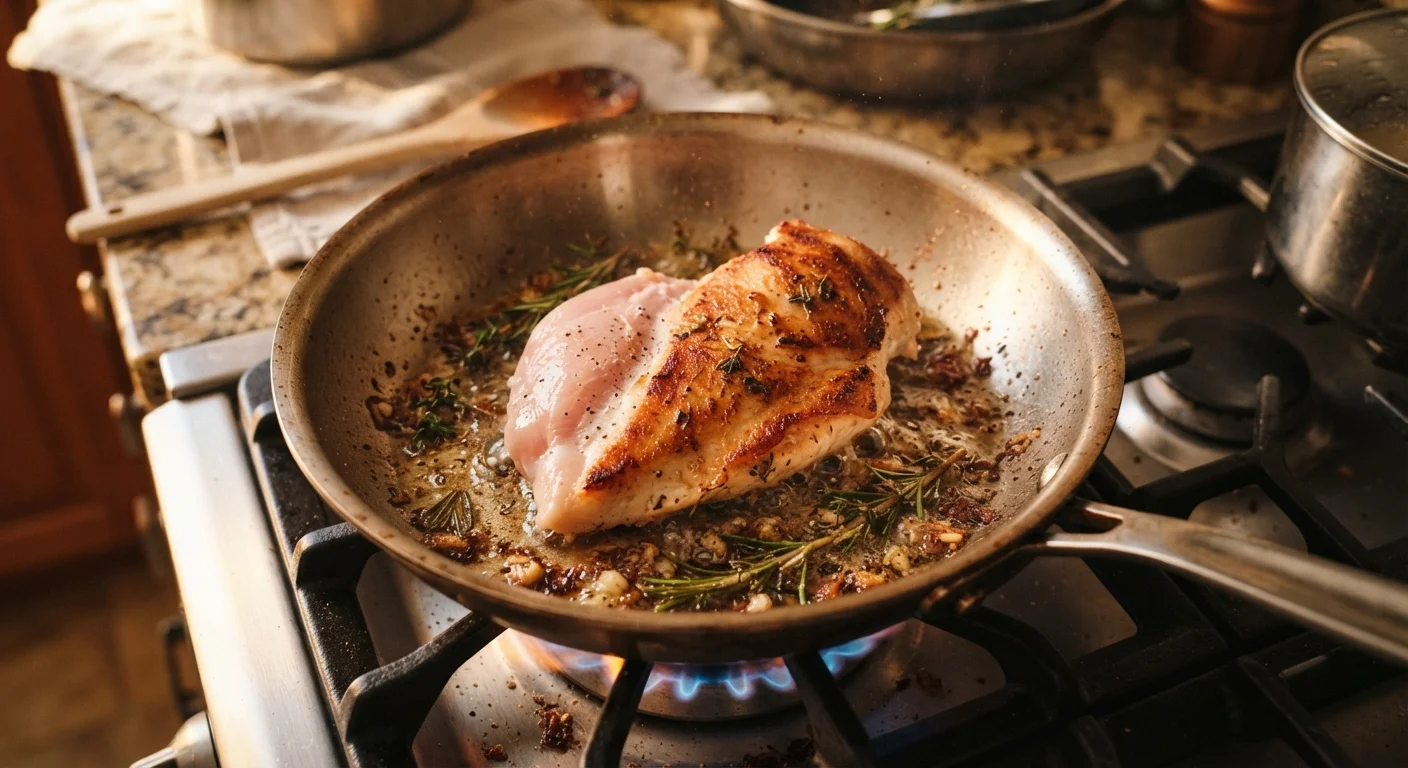
This gentle environment is exactly what delicate proteins need. Eggs, fish fillets, chicken breasts, and even fruit all benefit from poaching because the low heat lets them cook through evenly without the outside overcooking before the center is done. A poached egg, for example, sets its whites fully while keeping the yolk just runny — something a boil would ruin in seconds.
The poaching liquid matters, too. It's in contact with your food the entire time and infuses subtle flavor, so seasoning it well — with salt, aromatics, wine, or broth — pays dividends in the finished dish.
For more on common beginner errors at the stove, see stovetop habits that undermine your cooking.
Poaching Is Not the Same as Steaming
Poaching submerges food directly in the liquid, while steaming holds food above the liquid and cooks it with vapor. Both are gentle methods, but they produce slightly different textures and flavors. Steamed food tends to retain its natural moisture more completely, while poached food absorbs flavor from the cooking liquid.
Choosing the Right Method at a Glance
Here's a quick reference for matching your method to the food in front of you:
| Method | Temperature | Visual Cue | Best For |
|---|---|---|---|
| Boiling | 212°F / 100°C | Large, rolling bubbles | Pasta, potatoes, vegetables |
| Simmering | 185–205°F / 85–96°C | Small, lazy bubbles | Soups, stews, sauces, braises |
| Poaching | 160–180°F / 71–82°C | Barely a ripple | Eggs, fish, chicken, fruit |
If you want to go deeper on how different cooking methods compare, sautéing vs. pan-frying is another pairing that trips up many beginners.
“The temperature of a cooking liquid is not a minor detail — it determines whether a protein surrenders gracefully or fights back. Most home cooks boil when they should simmer, and the food pays the price.”
— The Culinary Institute of America, Culinary education institution, from foundational cooking curriculum materials