The Core Difference in One Sentence
Stock, broth, and bouillon all add liquid and savory flavor to cooking — but they are made differently, taste different, and behave differently in a pot. Understanding what separates them helps you make smarter decisions at the stove and at the grocery store.
| Primary ingredient | Stock: bones | Broth: meat | Bouillon: dehydrated concentrate |
| Typical texture | Stock: rich and slightly gelatinous | Broth: thin and light | Bouillon: depends on dilution |
| Salt content | Stock: usually unsalted | Broth: salted | Bouillon: high sodium |
| Best use case | Stock: sauces and braises | Broth: soups and grains | Bouillon: quick flavor boost |
| Shelf life (unopened) | Cartons: 12–18 months | Bouillon cubes/powder: 1–2 years |
| Interchangeable? | Mostly yes, with minor seasoning adjustments |
If you've ever stood in the soup aisle wondering whether to grab chicken broth or chicken stock, you're not alone. Recipes frequently use the terms interchangeably, which creates genuine confusion. This guide cuts through that ambiguity with straightforward definitions and practical guidance.
What Is Stock?
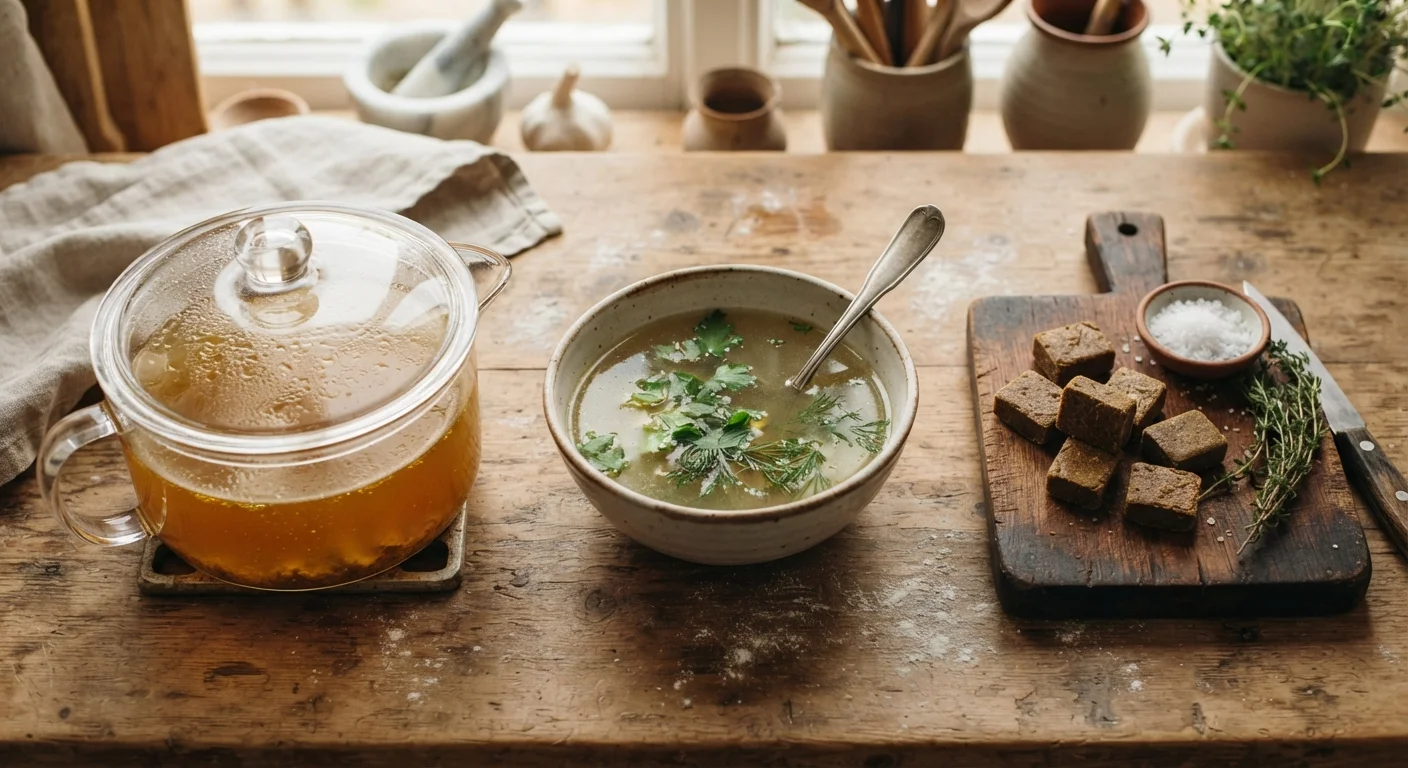
Stock is made by simmering bones — usually with some attached meat and connective tissue — in water for an extended period, typically two to six hours or longer. The long cooking time extracts collagen from the bones and cartilage, which converts into gelatin. That gelatin is what gives a good stock its slightly silky, body-rich texture. When chilled, a well-made stock may turn semi-solid, like a loose jelly — a sign of quality, not a defect.
Stock is traditionally made with little to no added salt. This is intentional: it allows the cook to reduce the liquid freely without making the final dish overly salty. Common varieties include chicken stock, beef stock, fish stock (often called fumet), and vegetable stock.
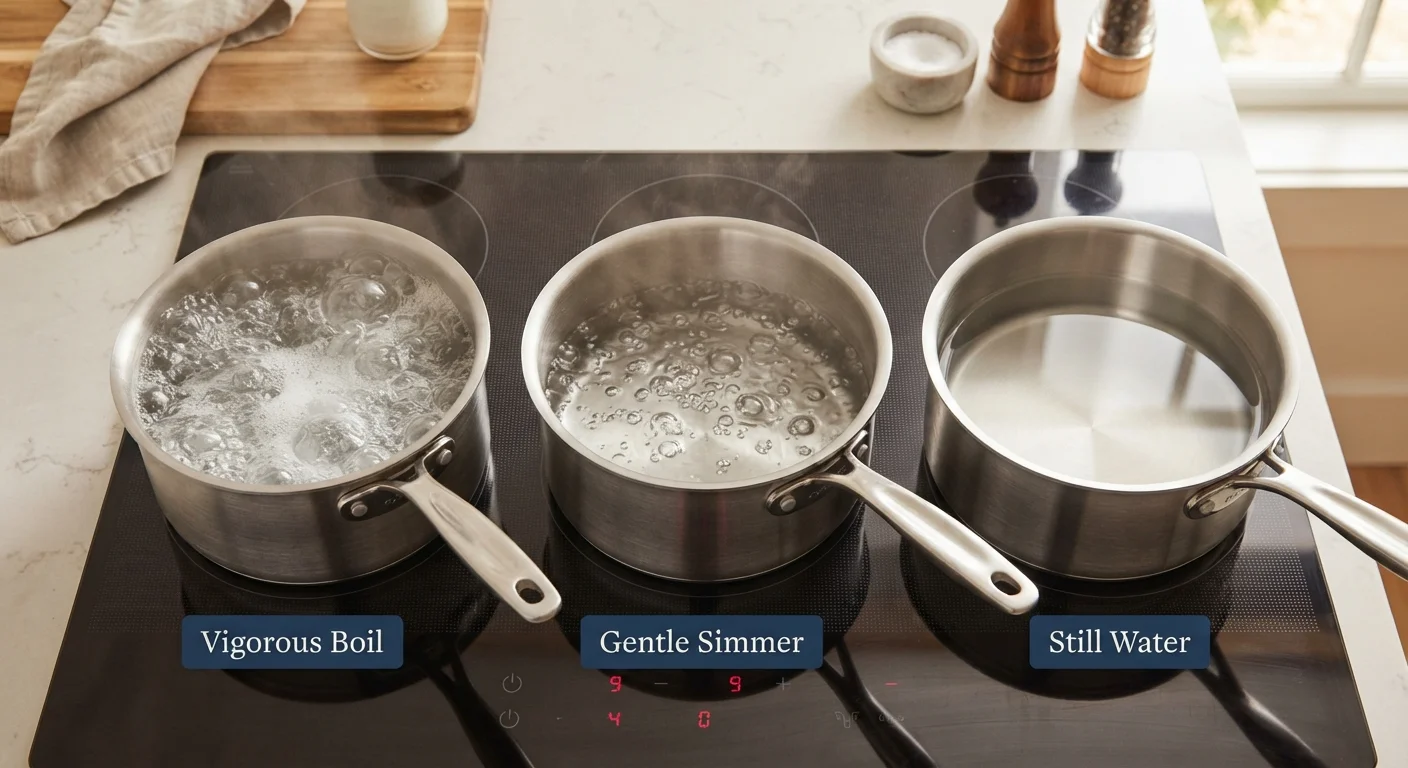
Because of its gelatin content, stock is the better choice when you want body and richness — think gravies, pan sauces, braises, and soups where texture matters. When a recipe calls for deglazing a pan or building a sauce from scratch, stock is usually the more professional pick. This connects naturally to how heat level affects liquid-based cooking, since stock typically simmers low and slow rather than boiling hard.
What Is Broth?
Broth is made by simmering meat — with or without bones — in water, usually for a shorter time than stock. Because it relies on meat rather than bones, broth contains far less gelatin and has a thinner, more watery consistency. It also tends to be salted during cooking, giving it a more immediately rounded, drinkable flavor straight from the container.
Broth is lighter, brighter, and more seasoned than stock. This makes it ideal for dishes where you want savory flavor without heaviness — cooking grains like rice or quinoa, steaming vegetables, making lighter soups, or adding moisture to a stir-fry. It is also what most people reach for when they want a comforting cup of warm liquid on its own.
Because broth is already salted, be mindful when reducing it. As liquid evaporates, the salt concentrates and the dish can become too salty quickly. Understanding how salt behaves in cooking helps you anticipate this before it becomes a problem.
What Is Bouillon?
Bouillon (pronounced BOOL-yon) is a concentrated, dehydrated form of broth or stock. It comes in cubes, granules, pastes, or powders and is dissolved in hot water to reconstitute a cooking liquid. The word itself is French and simply means broth.
Bouillon is the most convenient and shelf-stable option. A single cube dissolved in one cup of hot water typically produces the equivalent of one cup of broth. It has a long pantry life and takes up almost no storage space — useful in small kitchens or when you only occasionally cook recipes that call for stock or broth.
The tradeoff is flavor complexity and sodium content. Most commercial bouillon products are quite salty and rely on flavor additives to approximate the depth of a slow-cooked liquid. They work well when a recipe calls for modest amounts of savory liquid — a splash added to rice, a quick pan sauce, or a simple soup base. They are less suited to dishes where the cooking liquid is the main event and nuance matters.
Stock
A cooking liquid made by simmering bones, connective tissue, and aromatics in water for an extended time. The long cook extracts gelatin, giving stock a richer body than broth.
Broth
A cooking liquid made by simmering meat (with or without bones) in water, usually seasoned with salt. It is lighter and thinner than stock, with a more immediately drinkable flavor.
Bouillon
A dehydrated, concentrated form of broth or stock sold as cubes, granules, paste, or powder. It is dissolved in hot water before use and is known for convenience and long shelf life.
Collagen
A protein found in animal bones and connective tissue. When simmered over time, it converts into gelatin, which gives stock its silky body and helps sauces cling to food.
Gelatin
The substance produced when collagen is broken down by prolonged heat in liquid. It adds body and a slightly thickened texture to stocks and sauces.
Reduce / Reduction
The process of simmering a liquid to evaporate water, concentrating its flavor and thickening its consistency. Salted liquids like broth become saltier as they reduce.
If you frequently encounter unfamiliar terms in recipes, knowing these three words is a good foundation for understanding the broader vocabulary of savory cooking.
When to Use Each: A Practical Guide
Here is a straightforward framework for choosing the right one:
- Use stock when making sauces, gravies, braises, or rich soups where body and depth matter. Its gelatin content builds texture that broth cannot replicate.
- Use broth when cooking grains, making lighter soups, or when you want an already-seasoned liquid that works from the moment you open the container.
- Use bouillon when convenience matters, you only need a small amount, or you are stretching pantry ingredients. Adjust added salt in the recipe accordingly, since bouillon is usually high in sodium.
When a recipe lists one and you only have another, substitution is generally fine with minor adjustments. Swap broth for stock and you may get a slightly thinner result — compensate by reducing a touch more. Swap stock for broth and your dish may need less added salt. Dissolve bouillon in the appropriate amount of water and it works as either in most everyday recipes.
For anyone exploring common ingredients and their practical uses, stock, broth, and bouillon are among the most versatile items to understand — they appear in nearly every cuisine and almost every cooking method.