What Makes a Cooking Method 'Dry' or 'Moist'?
Every cooking technique you will ever use — whether you learned it from a recipe, a parent, or a cooking show — belongs to one of two broad families: dry heat or moist heat. The distinction comes down to a single question: is water involved in how heat reaches the food?
In dry heat cooking, heat is transferred through hot air (an oven), direct contact with a hot surface (a pan or grill), or fat (deep frying). There is no water in the equation. As a result, surface temperatures can climb well above 212°F (100°C) — the point at which water boils — which is why dry heat is capable of creating browning, crisping, and those deeply savory flavors associated with roasted or grilled food.
In moist heat cooking, water (or a water-based liquid like broth or wine) is the medium that carries heat to food. Because water cannot exceed 212°F at standard atmospheric pressure, moist heat always operates within a lower, gentler temperature range. That lower ceiling is actually an advantage for many ingredients, producing silky, tender results rather than a crispy exterior.
Understanding this split is a foundational step. See our guide to heat zones in a pan for a deeper look at how temperature control shapes results.
Dry Heat Methods: When Browning Is the Goal
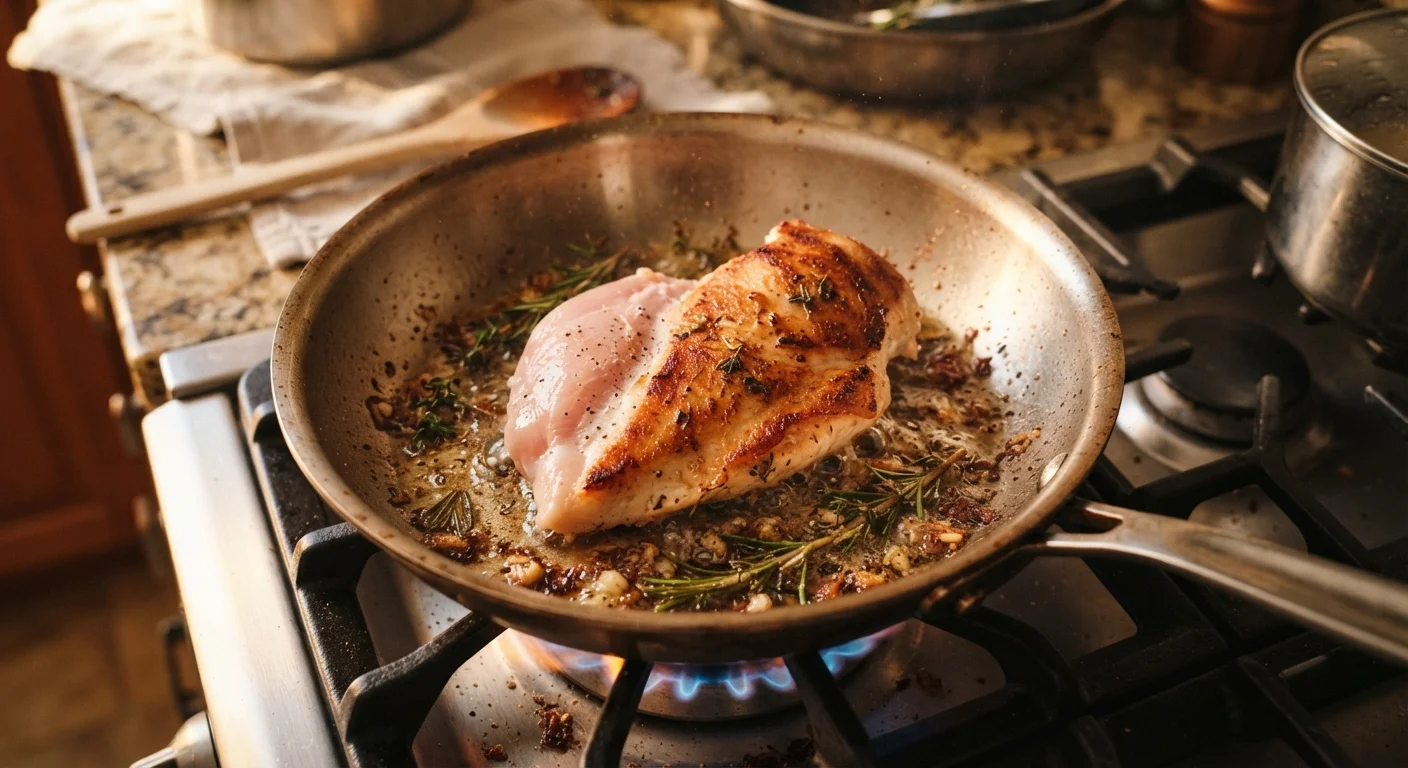
The defining feature of dry heat is the Maillard reaction — a chemical process that occurs when proteins and sugars on the food's surface are exposed to high heat. The result is the golden-brown color and complex flavor that makes roasted chicken skin or a seared steak so appealing. Moist heat, by contrast, cannot produce this reaction because water keeps temperatures too low.
Common dry heat methods include:
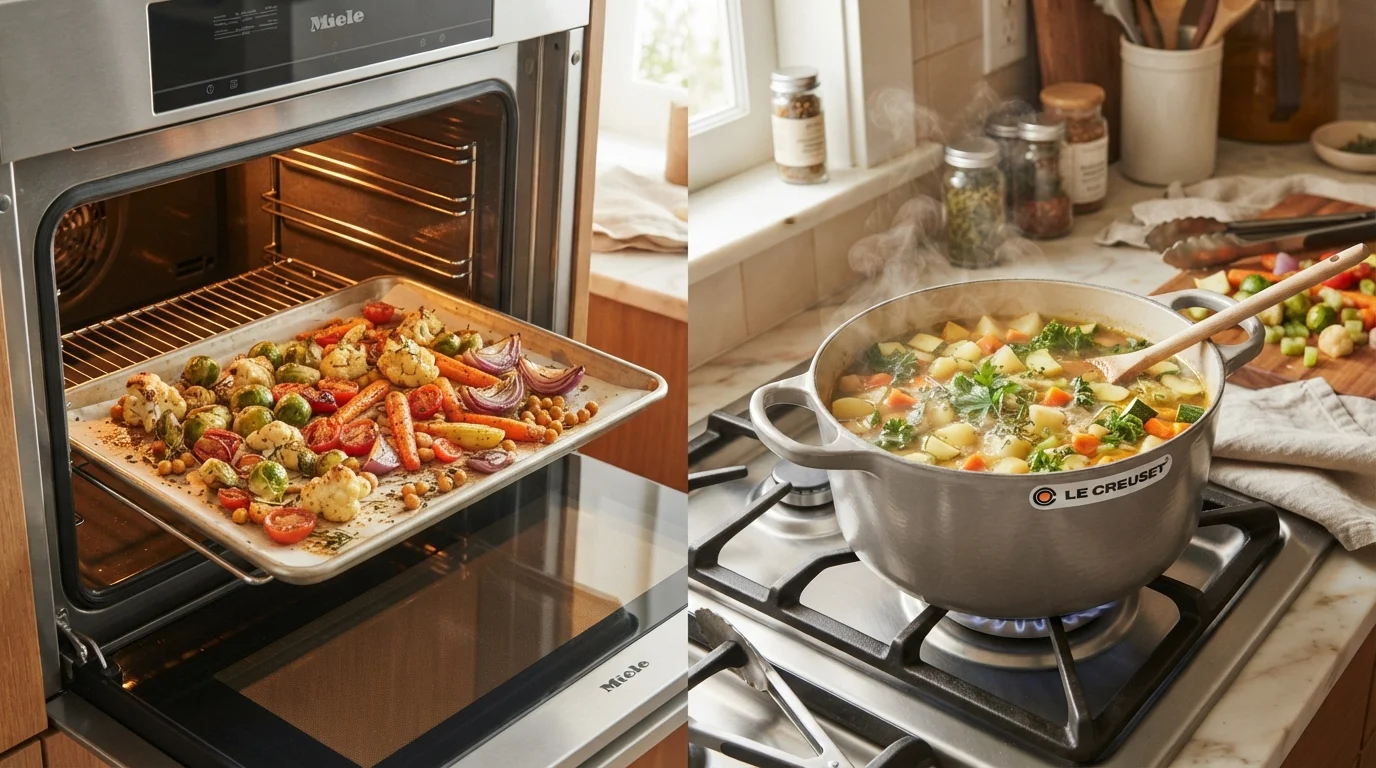
- Roasting and baking — cooking in a closed oven using circulating hot air. Roasting and baking are distinct techniques even though they use the same oven.
- Grilling and broiling — intense, direct radiant heat from below (grill) or above (broiler).
- Sautéing and pan-frying — cooking in a small amount of fat over direct burner heat.
- Deep frying — submerging food in hot oil, which conducts heat much faster than air.
Dry heat works best for naturally tender ingredients — think chicken breasts, fish fillets, most vegetables, and cuts of beef that are already soft. Applying prolonged dry heat to tough, collagen-rich cuts (like beef chuck) will make them dry and chewy rather than tender.
Match the Method to the Cut
When in doubt, look at the fat and connective tissue content of your ingredient. Lean, tender cuts do well with quick dry heat. Marbled, tougher cuts with visible connective tissue — like shanks, shoulders, or ribs — are almost always better served by a long moist-heat or combination method. This single habit prevents most common cooking mistakes.
Moist Heat Methods: When Tenderness Is the Goal
Moist heat is the right tool whenever you need to soften something that would otherwise remain tough or fibrous. Water and steam penetrate food differently than dry air does, breaking down collagen (the connective tissue in meat) into gelatin over time. That transformation is what makes a braised short rib fall apart while a grilled one of the same cut would be nearly impossible to chew.
Common moist heat methods include:
- Boiling — fully submerging food in rapidly bubbling water at 212°F.
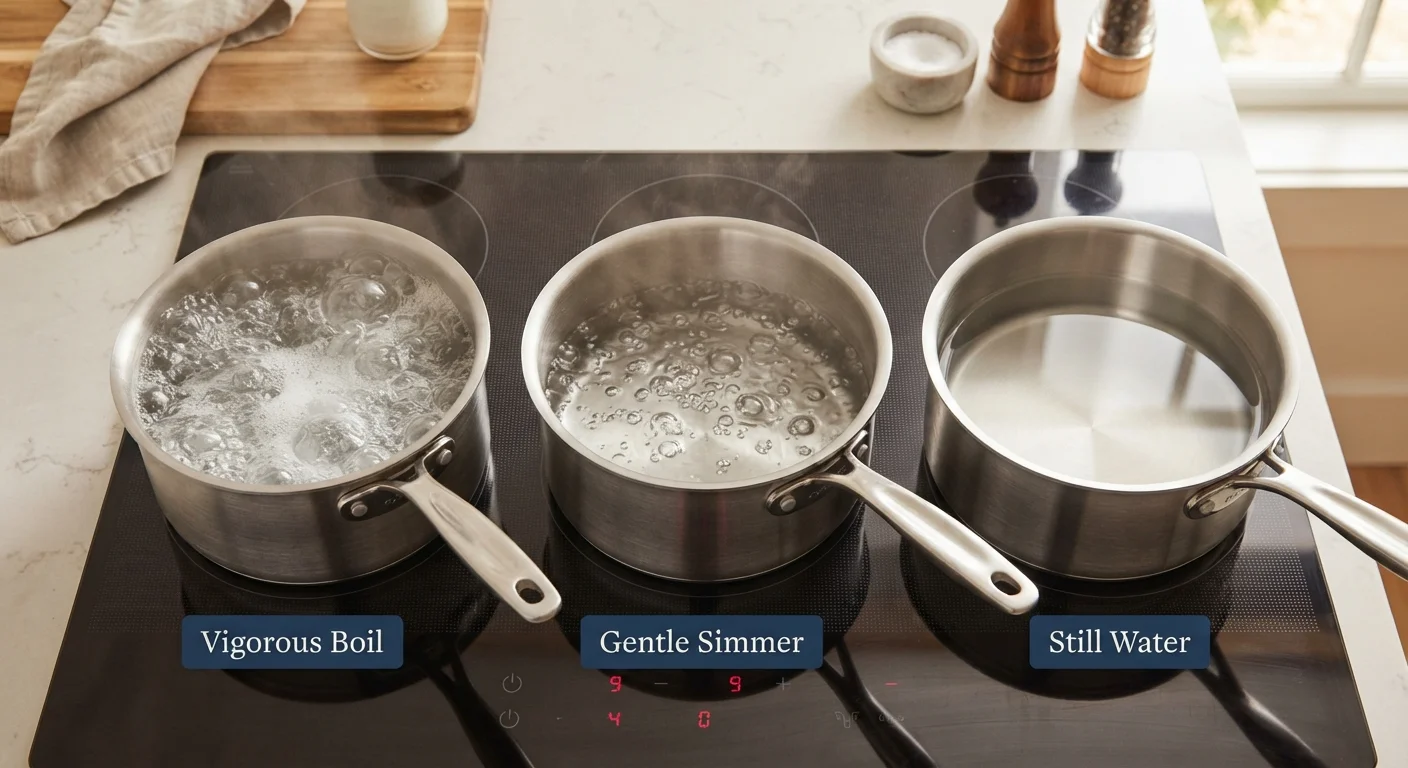
- Simmering and poaching — gentler water-based methods that operate below a full boil. These three methods are not interchangeable.
- Steaming — cooking above (not in) boiling water using trapped vapor.
- Braising and stewing — partially or fully submerging food in liquid, then cooking low and slow. These are combination methods that often start with a dry-heat sear before liquid is added.
Moist heat is ideal for tough cuts, dried legumes, root vegetables, and anything that benefits from a long, slow cook in flavorful liquid.
| Dry Heat | Moist Heat | |
|---|---|---|
| Heat medium | Hot air, metal surface, or fat | Water, steam, or broth |
| Maximum surface temperature | 400°F–500°F+ (200°C–260°C+) | Up to 212°F (100°C) |
| Browning / Maillard reaction | Yes — characteristic result | No — not possible at these temps |
| Typical texture outcome | Crispy, caramelized exterior | Tender, soft, moist throughout |
| Best suited for | Tender cuts, vegetables, bread | Tough cuts, legumes, delicate proteins |
| Example methods | Roasting, grilling, sautéing, frying | Boiling, steaming, poaching, braising |
Choosing the Right Method for Any Ingredient
A practical rule of thumb: tender ingredients benefit from dry heat; tough or fibrous ingredients benefit from moist heat. A chicken breast is already tender, so roasting or pan-searing gives it appealing texture without turning it rubbery. A chicken thigh with bone and skin can handle either approach, but a whole chicken leg that has been braised in broth will deliver a depth of tenderness that no amount of oven time alone achieves.
Avoid Moist Heat for Crispy Results
A common beginner mistake is using a lid or adding water to a pan when you actually want a crispy, browned result. Trapping steam in a pan converts a dry-heat sauté into a moist-heat braise, preventing browning entirely. If you want a golden crust, keep the pan uncovered and the food dry before it hits the heat.
Combination techniques — braising, pot roasting — exist precisely because experienced cooks recognized that neither family alone handles every job perfectly. A braise typically begins with a dry-heat sear (building flavor through browning) before liquid is added for a long, gentle, moist-heat finish. Once you understand the two families, combination methods become much easier to understand intuitively.
With this framework in place, you have the conceptual foundation to decode almost any recipe you encounter, whether it calls for roasting, simmering, steaming, or something in between.