The Core Difference: It's Not Just the Temperature Dial
Walk into any kitchen and you'll find one oven dial — yet cooks talk about roasting and baking as if they're worlds apart. They are. The difference isn't about the appliance or even the heat source; it's about what the heat is meant to do to the food.
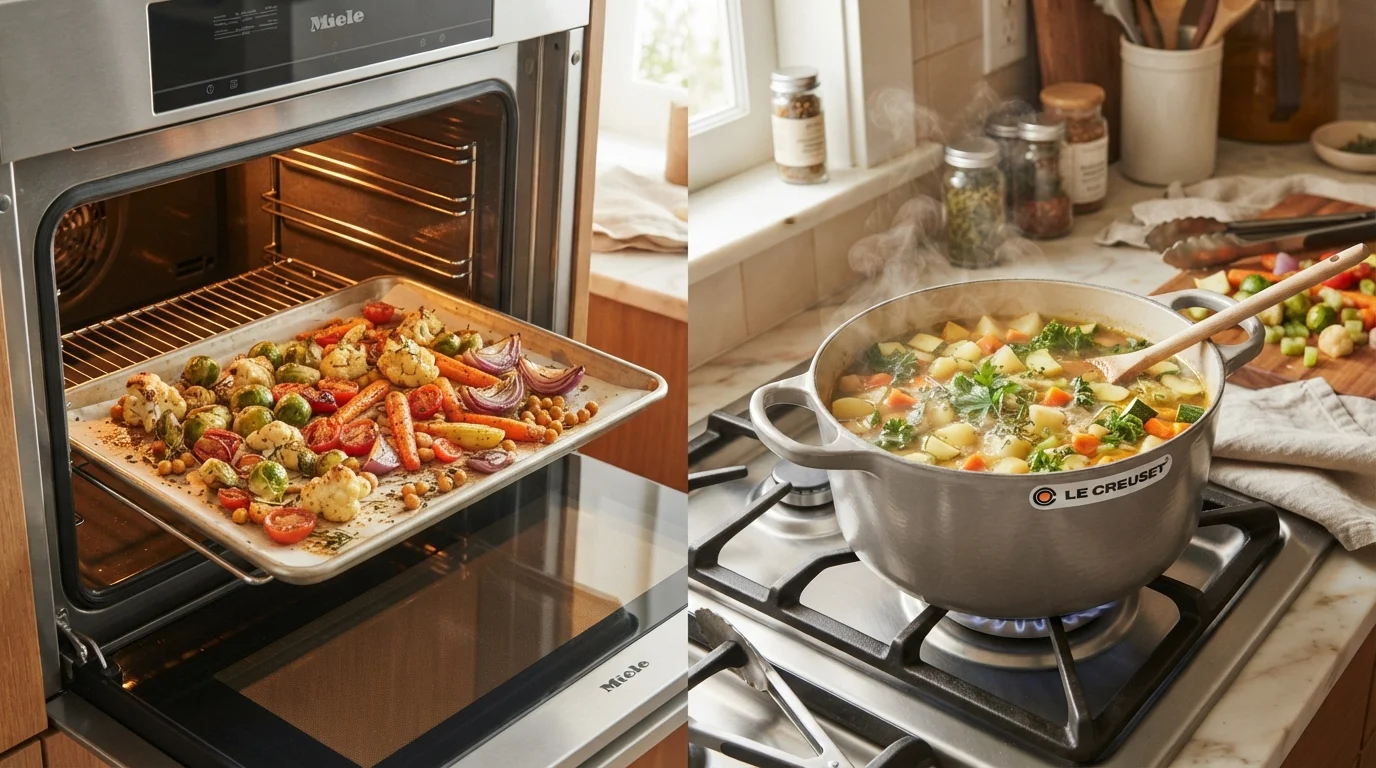
Roasting applies high, direct heat — typically 400°F (205°C) and above — to firm, solid foods. The goal is surface browning: a crackling chicken skin, caramelized carrots, or a mahogany-crusted pork shoulder. That browning is produced by two chemical reactions — the Maillard reaction (a savory browning of proteins and sugars) and caramelization (the sweetening of sugars under heat). Roasting assumes the food already has a defined structure that won't collapse under high heat.
Baking, by contrast, uses moderate, steady heat — often 325°F–375°F (163°C–190°C) — to create structure where none existed before. A cake batter is liquid; a bread dough is slack and shapeless. Heat causes starches to gelatinize, proteins to set, and leavening gases (from yeast, baking soda, or baking powder) to expand in an orderly way. Rush that process with too much heat, and the outside burns before the inside has time to firm up. Understanding how leavening agents behave is a key part of successful baking — see our guide to baking soda vs. baking powder for more on that chemistry.
| Criterion | Roasting | Baking |
|---|---|---|
| Typical temperature range | 400°F–500°F (205°C–260°C) | 325°F–375°F (163°C–190°C) |
| Primary goal | Brown exterior, concentrate flavor | Build internal structure, set mixture |
| Starting food state | Already solid (meat, vegetables) | Liquid or semi-liquid (batter, dough) |
| Key chemical reactions | Maillard reaction, caramelization | Starch gelatinization, protein setting, leavening |
| Covering the food | Usually uncovered to maximize browning | Usually uncovered; covered can trap steam |
| Common foods | Chicken, beef, root vegetables | Cakes, bread, cookies, quiche |
| Heat tolerance of food | High — food won't collapse | Moderate — structure needs time to form |
Why Food Type Is the Real Deciding Factor
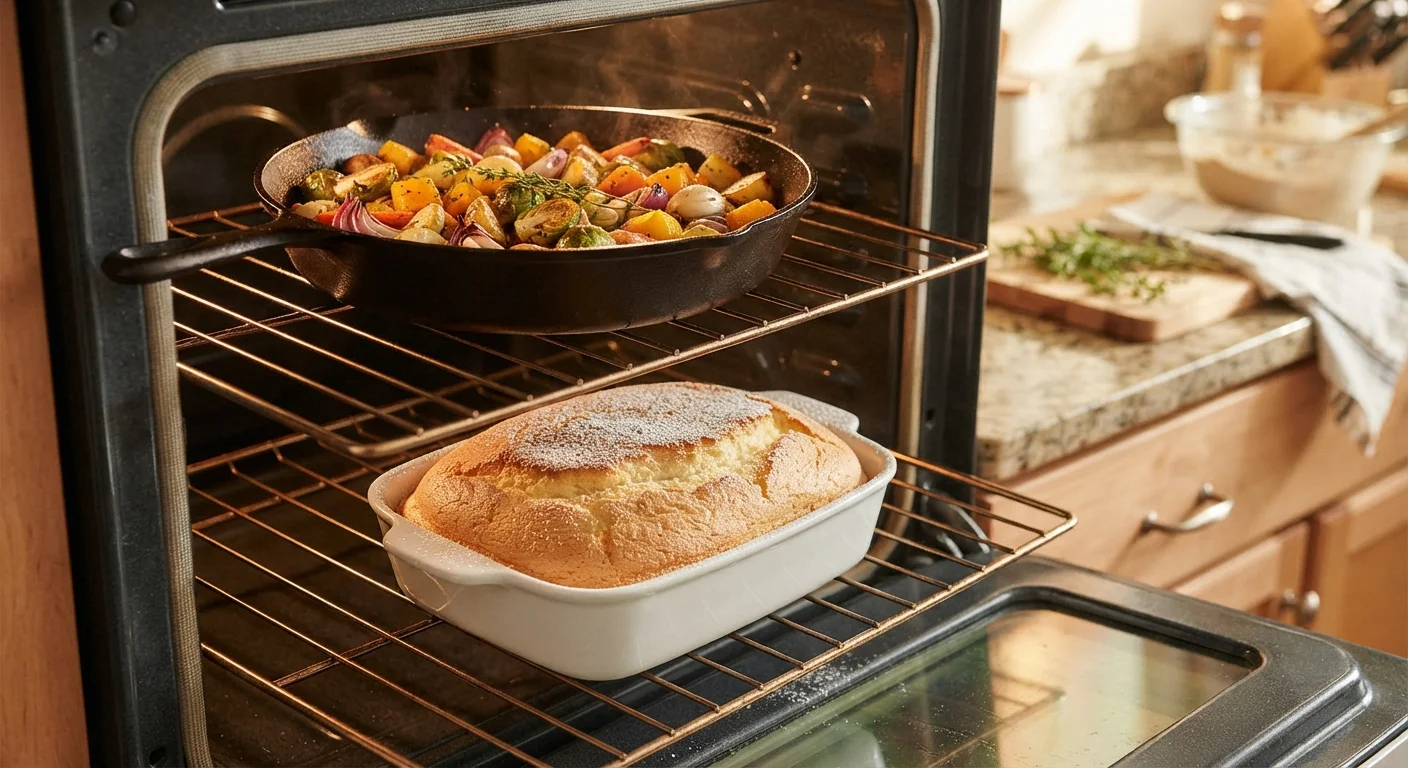
Temperature alone doesn't sort roasting from baking — the nature of the food is what really determines which technique applies. A useful rule of thumb: if the food is already structurally solid before it enters the oven, you're likely roasting it. If the food is a mixture that needs to set, you're baking it.
This is why we roast a butternut squash (solid before cooking) and bake a squash casserole (a soft mixture). It's also why fish sits in a gray zone — firm enough to roast, delicate enough that lower baking temperatures often work better. Context matters: when a recipe says "bake the chicken thighs at 425°F," it's technically roasting by temperature and food type, but home cooks and recipe writers often use the words interchangeably for poultry.
400°F+
Threshold where roasting browning begins
Culinary science sources broadly agree that significant Maillard browning on most foods accelerates above 400°F (205°C) in a dry oven environment.
2 reactions
Distinct browning processes in roasting
The Maillard reaction (protein-sugar browning) and caramelization (sugar-only browning) are separate processes that both contribute to roasted flavor.
~50°F
Typical temperature gap between roasting and baking
Most standard recipes place baking temperatures roughly 50°F–100°F lower than equivalent roasting temperatures for the same oven.
The overlap also extends to vegetables. At 375°F, broccoli softens without meaningful browning — closer to baking behavior. At 450°F, the same broccoli chars at the edges and concentrates its flavor — that's roasting. The vegetable is the same; the outcome is different. Once you understand this, you can deliberately choose your result rather than leaving it to chance.
For comparison, stovetop cooking methods have their own structural distinctions — our article on sautéing vs. pan-frying applies the same logic to skillet techniques. And if you want a deeper look at how heat levels change food behavior at every stage, understanding heat zones explains the underlying principles.
When Recipes Use Both Terms Loosely
Recipe writers don't always use "roast" and "bake" consistently. A recipe that says "bake the salmon at 400°F" is using baking language for what is effectively roasting by temperature. Rather than getting caught up in the label, look at the temperature and the food type to understand what's actually happening. When in doubt, ask: am I trying to build structure, or am I trying to brown and concentrate flavor?