Why Kitchen Layout Actually Matters
Most beginner cooks focus immediately on recipes — what to make, what ingredients to buy. But before any of that, there is something more fundamental: knowing where you are and how your kitchen works as a space. A kitchen is not just a room with appliances. It is a system, and understanding that system is what separates a stressful cooking session from a calm one.
Think of a kitchen the way you might think of a workshop. Every tool has a home. Every task has a surface. And the path between tasks — if thoughtfully arranged — flows in one direction without backtracking or collision. When that system breaks down, you end up holding a hot pan and hunting for a trivet, or rinsing vegetables across a counter already covered with flour. The kitchen's layout is either working for you or against you.
The good news: you do not need a professionally designed kitchen to cook well. You just need to understand the logic behind how kitchens are typically organized — and then apply that logic to whatever space you have.
Kitchen zone
A designated area of the kitchen assigned to a specific task — such as prep, cooking, or cleaning — to keep workflow organized.
Mise en place
A French culinary term meaning 'everything in its place.' It refers to gathering and arranging all ingredients and tools before cooking begins.
Cross-contamination
The transfer of harmful bacteria from one food or surface to another — most commonly from raw meat to vegetables or ready-to-eat foods.
Work triangle
A kitchen design concept that positions the sink, stove, and refrigerator at three points of a triangle to minimize unnecessary movement during cooking.
Landing zone
A clear, heat-safe surface kept near the stove where hot pots, pans, and trays can be placed immediately after leaving the heat source.
The Four Core Kitchen Zones
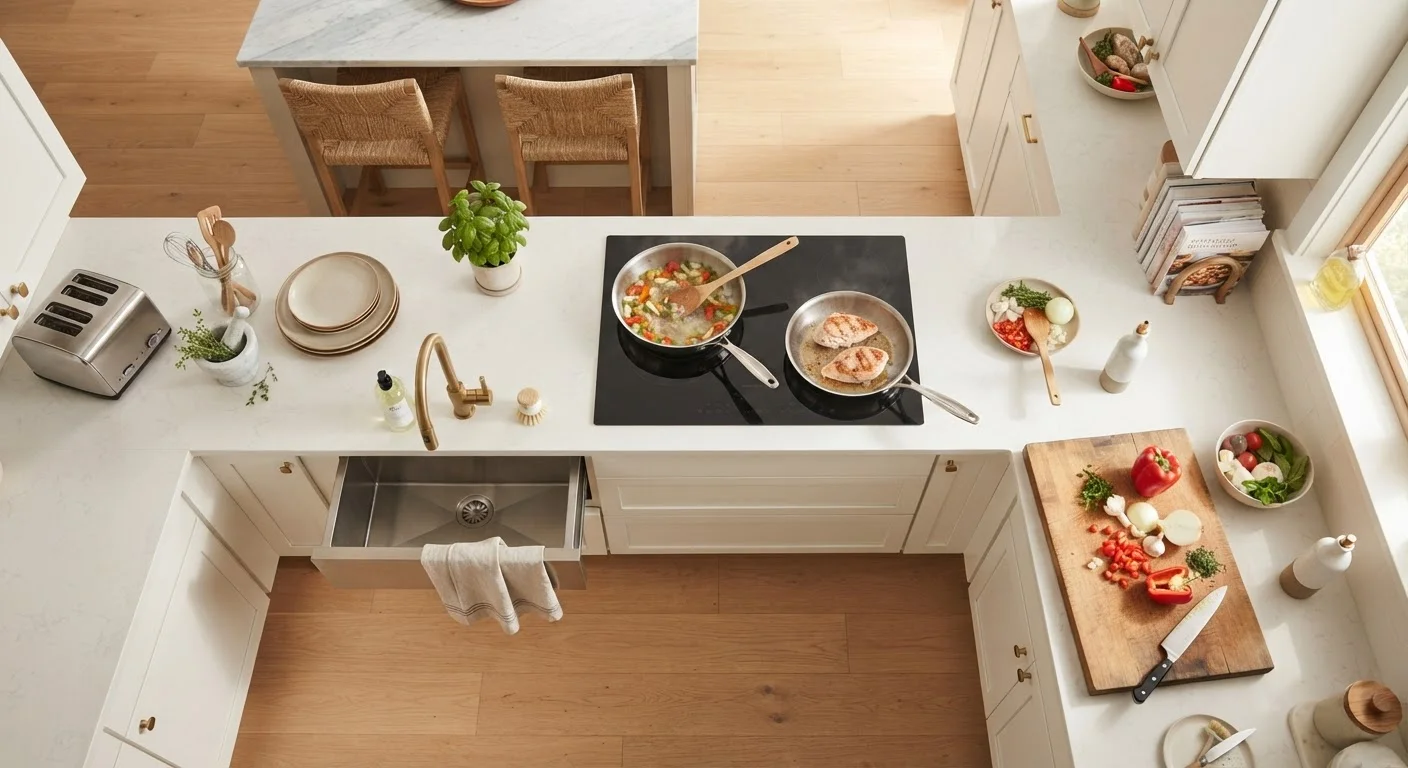
Professional kitchen designers and chefs alike think of kitchens in terms of distinct zones, each with a specific function. For home cooks, there are four that matter most:
- Storage zone: Where food and equipment live when not in use — the refrigerator, pantry shelves, cabinets, and drawers. This is where a recipe begins: gathering ingredients.
- Prep zone: Your work surface, usually a section of countertop beside or near the sink. This is where washing, peeling, chopping, and measuring happen. It is the command center of any cooking session. See our guide to foundational knife skills for how to make the most of this zone.
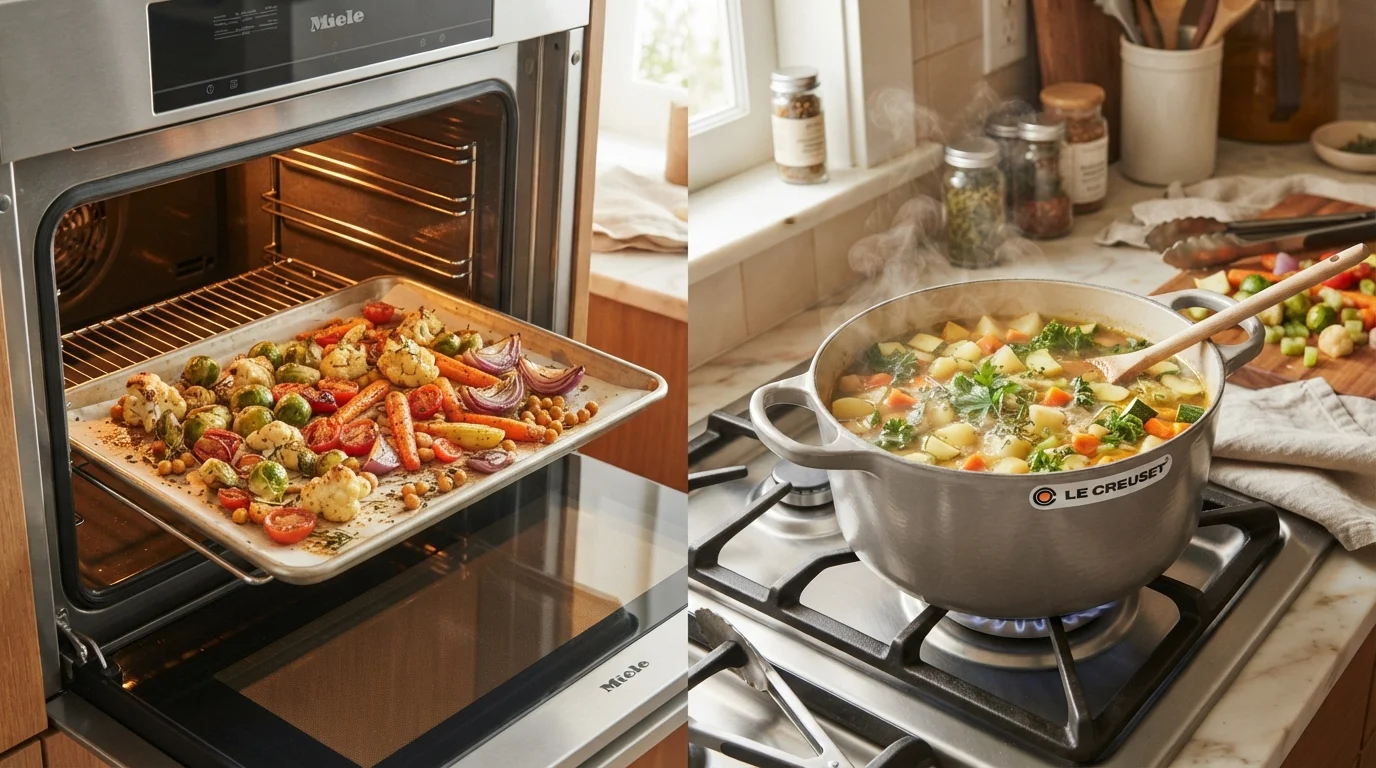
- Cooking zone: The stovetop and oven, where heat is applied. Tools like pans, spatulas, and pot holders belong here, within easy reach but not cluttering your prep space.
- Cleaning zone: The sink and, if present, the dishwasher. Scraps go here, used tools get rinsed here, and raw-meat contamination stops here before it spreads.
In most kitchens, these zones already exist — they are just not labeled or consciously acknowledged. Naming them in your own mind is the first step toward using them intentionally.
Understanding Your Surfaces
Not all kitchen surfaces are interchangeable. Each one has a job, and using them correctly makes cooking both safer and easier.
Countertops
Your countertop — whether it is laminate, stone, wood, or tile — is your general workspace. Stone counters like granite or quartz are durable and heat-resistant, but they will dull a knife quickly. Never cut directly on them. Laminate surfaces scratch easily and should also be protected with a cutting board.
Cutting Boards
A cutting board is the one surface designed specifically for knife work. Wooden boards are gentle on blades and naturally durable with care. Plastic boards are easier to sanitize and are recommended for raw meat. Ideally, keep two separate boards — one for produce, one for raw proteins — to avoid cross-contamination. Check out our guide to starter kitchen equipment for what size and type suits a beginner best.
Stovetop and Oven Surfaces
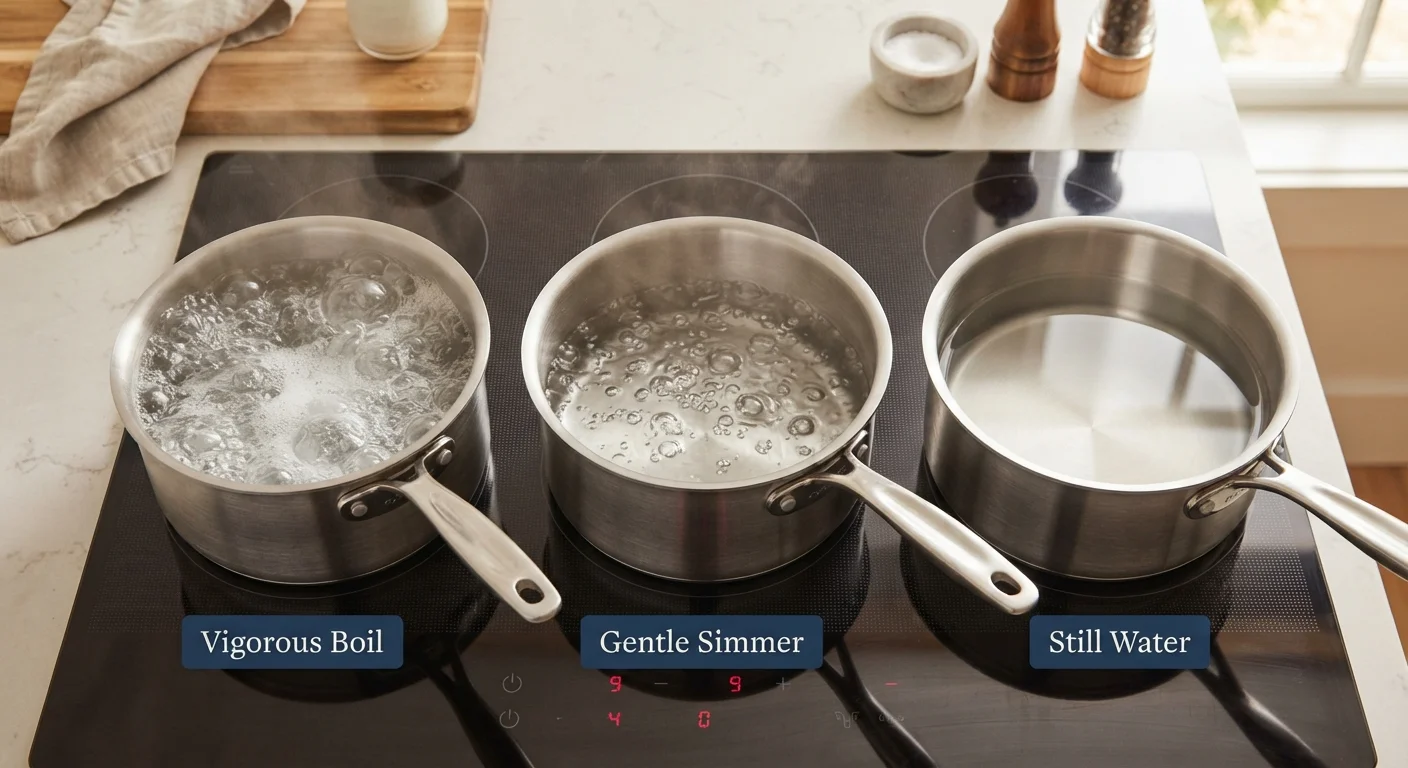
These are heat-delivery surfaces, not work surfaces. Never place paper, plastic, or flammable materials near an active burner. Keep a clear landing zone — a trivet or folded towel — nearby so hot pots have somewhere safe to go immediately after leaving the heat.
Use Two Cutting Boards from Day One
Designating one cutting board for raw meat and another for vegetables and fruit is one of the simplest food safety habits you can establish. Color-coded boards make it easy to keep track — many kitchen supply sections carry sets specifically designed for this purpose. This single habit prevents the most common source of foodborne illness in home kitchens.
How to Move Through Your Kitchen Without Chaos
Efficient kitchen movement follows a natural arc: storage → prep → cooking → plating → cleaning. When you cook in this direction — rather than zigzagging randomly — tasks build on each other and nothing gets missed or repeated.
A few practical principles help this flow:
- Travel light. Move one item at a time when possible. Carrying a stack of ingredients from the refrigerator and dropping half of them is a classic beginner mistake.
- Return tools after use. A spatula left on the cutting board becomes a problem when you need that space for the next task. Return it to its zone — near the stove — immediately.
- Keep the path between your prep and cooking zones clear. This is the most-traveled corridor in any kitchen. Bags, appliances, and clutter on this stretch create real obstacles when you are holding something hot.
- Use the sink as a reset point. After handling raw meat or finishing a prep task, a quick handwash at the cleaning zone resets you — hygienically and mentally — for the next step.
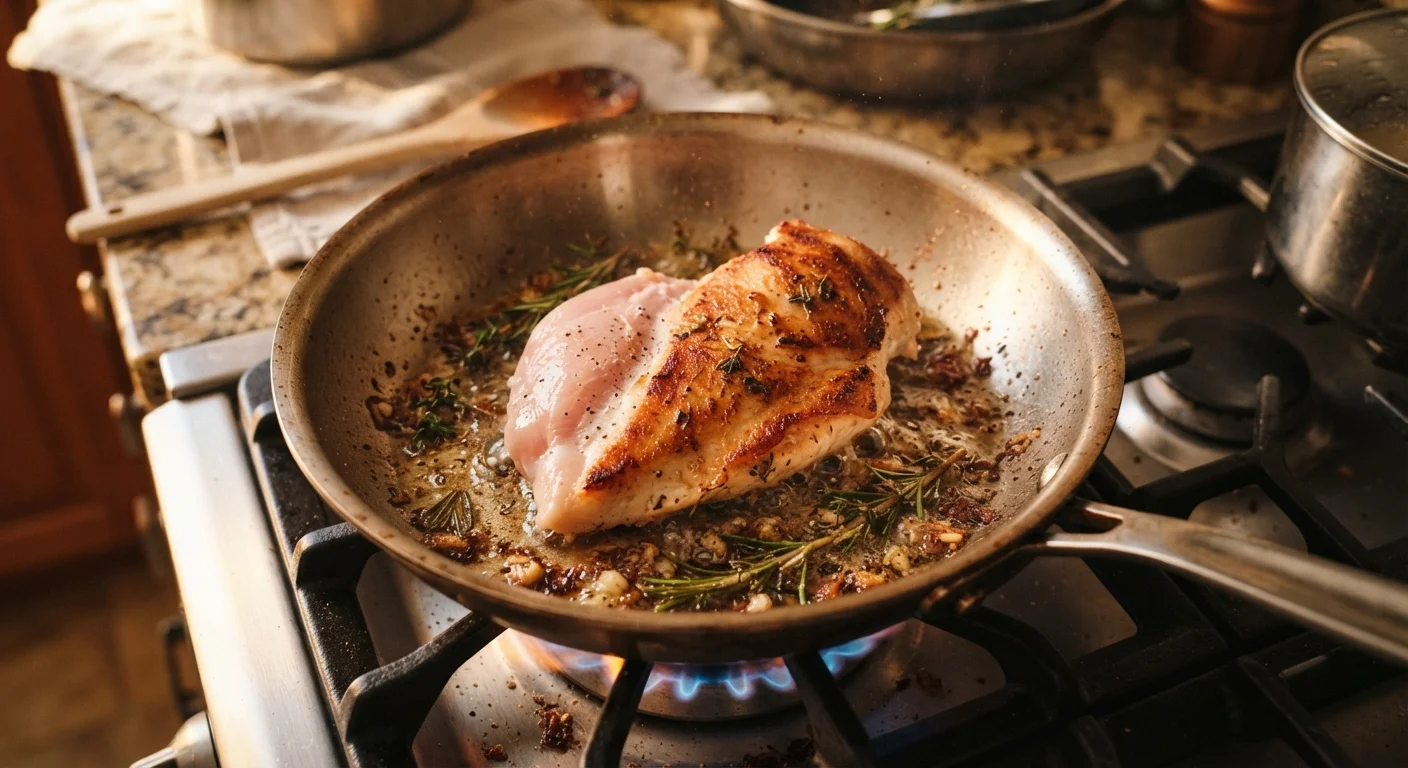
Understanding how heat behaves at the stove becomes much easier once you are no longer simultaneously searching for tools and managing the clock.
Setting Up Your Kitchen Before You Cook
The single most effective habit a beginner can build is setting up their kitchen before cooking starts. This means reading the recipe fully, pulling all ingredients from storage, arranging them on the prep surface, and placing the tools you will need within arm's reach of where you will use them. This practice is the heart of what professional kitchens call mise en place — a concept worth exploring in depth. Learn more in our article on mise en place and why it makes cooking calmer.
Before you light a burner or lift a knife, ask yourself three questions:
- Do I know where everything I need is located?
- Is my prep surface clear and my cutting board in position?
- Is there a safe place for hot items to land when they come off the heat?
If the answer to all three is yes, you are ready. That is the whole map — zones identified, surfaces understood, movement planned. From here, every recipe becomes a series of logical steps through a space you control, rather than a scramble through a room that controls you. And if you want to avoid the habits that quietly undermine a dish once you are at the stove, see our guide to common stovetop mistakes.
Every Kitchen Layout Is Different
Studio apartments, galley kitchens, and open-plan spaces all present different constraints. The zone concept does not require physical separation — it is a mental framework you apply to whatever space you have. Even a single stretch of countertop can be mentally divided into a prep side and a plating side, and that distinction alone will improve your flow.