What Mise en Place Actually Means
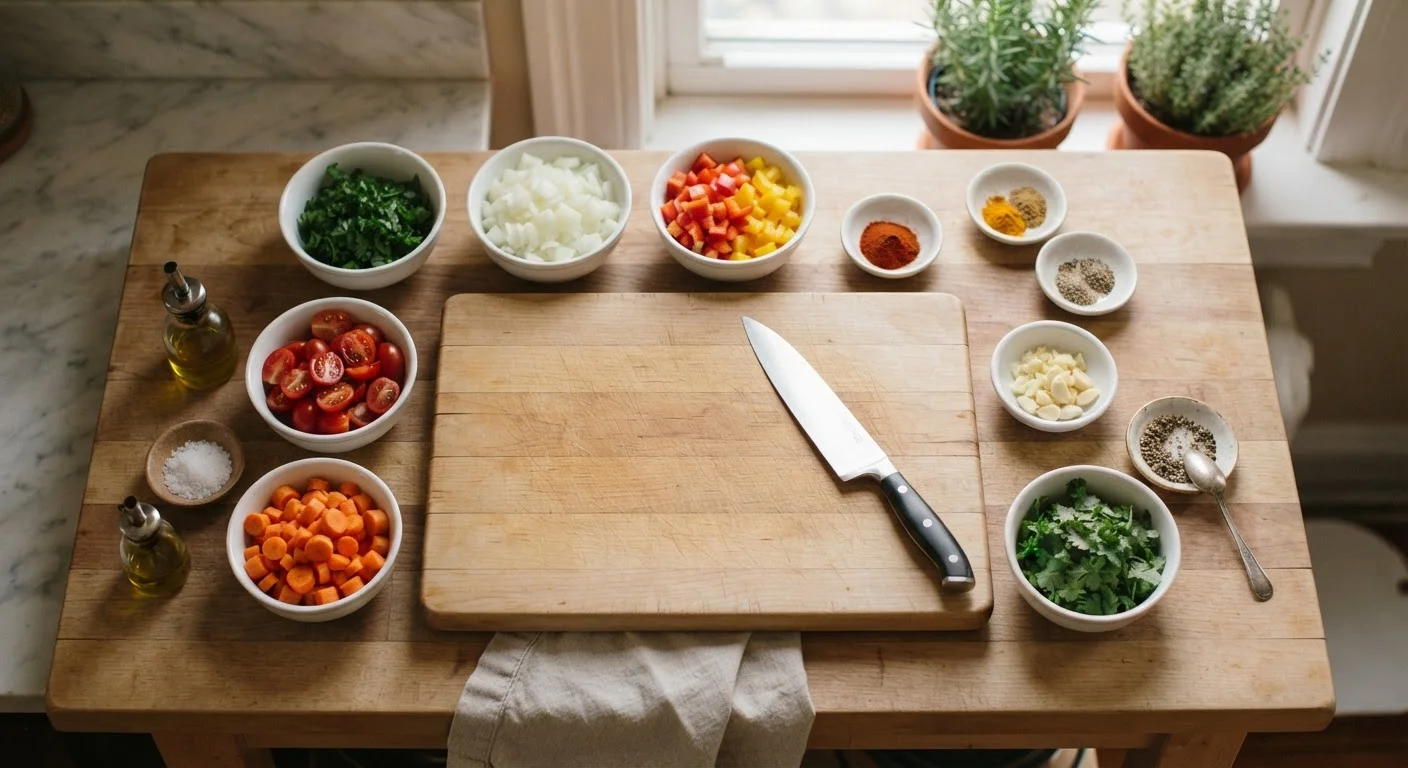
If you've ever watched a cooking show and noticed the host has tiny bowls of pre-chopped onions, measured spices, and portioned liquids all lined up before the pan hits the stove — that's mise en place. The term comes from French professional cooking culture, but the logic behind it belongs to any kitchen, anywhere.
At its core, mise en place is a discipline of sequence. Instead of reading a recipe line by line while you cook — chopping the garlic right when the oil is already smoking — you do all the preparation first. Every ingredient gets washed, peeled, cut, measured, and placed within arm's reach before a single burner is switched on.
This might sound like extra work, but it's actually a reallocation of effort. The cognitive load of cooking — figuring out quantities, managing timing, remembering steps — gets shifted to a calm, pressure-free window rather than squeezed into moments when a pan is demanding your full attention.
Mise en Place Scales to Any Recipe
The principle works whether you're making scrambled eggs or a multi-component dinner. For simple dishes, your mise en place might just mean cracking eggs into a bowl and measuring out salt before the butter melts. The habit matters more than the scale.
Why It Makes Cooking Feel Less Chaotic
Most beginner cooking stress comes from simultaneity: the onions are browning, the timer is running, and you still need to find the cumin and open the can of tomatoes. That pile-up of tasks is where mistakes happen — burnt garlic, missed ingredients, seasoning that never gets added.
Mise en place eliminates that collision. Once you've done your prep, the cooking phase becomes almost mechanical. You reach for each ingredient exactly when the recipe calls for it, because it's already ready. Your attention can stay on the food in the pan rather than on the pantry shelf.
This is why the practice matters most for high-speed cooking methods like stir-frying, where the window between 'cooked correctly' and 'overdone' can be thirty seconds. But it also pays off for slower dishes — it means you won't realize halfway through a braise that you forgot to dice the carrots.
If you want to pair this approach with a stronger grasp of recipe language, see our guide to reading a recipe without getting confused — understanding recipe structure and mise en place work best together.
Start Simple: One Bowl Per Ingredient
You don't need to be precise about containers. Even setting each prepped ingredient on a small square of parchment paper counts. The goal is separation and visibility — being able to see every component at a glance before cooking starts. Start with your next simplest recipe and work up from there.
How to Apply It at Home Right Now
You don't need a culinary school background to practice mise en place. Here's the straightforward approach:
- Read the full recipe first. Don't start chopping until you've read every step. This tells you what needs to be prepped, in what form, and at what size.
- Gather all ingredients. Pull everything out of the pantry, fridge, and spice cabinet before you begin. Running to find something mid-cook is exactly what mise en place prevents.
- Prep each ingredient. Chop, measure, mince, drain, and portion everything into small containers or bowls. Work through the ingredient list methodically.
- Arrange by order of use. Place the ingredients you'll need first closest to the stove. Items you'll add later can sit farther back.
- Check your equipment. Make sure the pan, lid, spatula, and any other tools are within reach before you turn on the heat.
Once this becomes habit — even a relaxed five-minute version before a weeknight meal — the cooking itself will feel noticeably calmer. For a broader view of habits that affect cooking outcomes, our article on stovetop habits that undermine your cooking shows how preparation connects to technique.
~80%
Of cooking errors traced to poor preparation
Culinary educators broadly estimate that the majority of beginner cooking mistakes — burnt ingredients, missed additions, mistimed steps — stem from inadequate prep rather than poor technique at the stove.
5–10 min
Typical home mise en place setup time
For most weeknight recipes, a structured pre-cook prep takes under ten minutes and tends to reduce total hands-on cooking time by preventing errors that require starting over.
Mise en place also pairs naturally with tasting as you cook — once you're not scrambling, you have the mental space to actually adjust flavour as you go.