Why Most Beginner Tool Lists Set You Up to Fail
Walk into a kitchenware shop without a plan and you'll leave either overwhelmed or broke — or both. Many beginner guides recommend enormous starter lists that include a mandoline, a garlic press, a zester, a muffin tin, and a stand mixer before you've boiled your first egg. That approach fills drawers and empties wallets without making anyone a better cook.
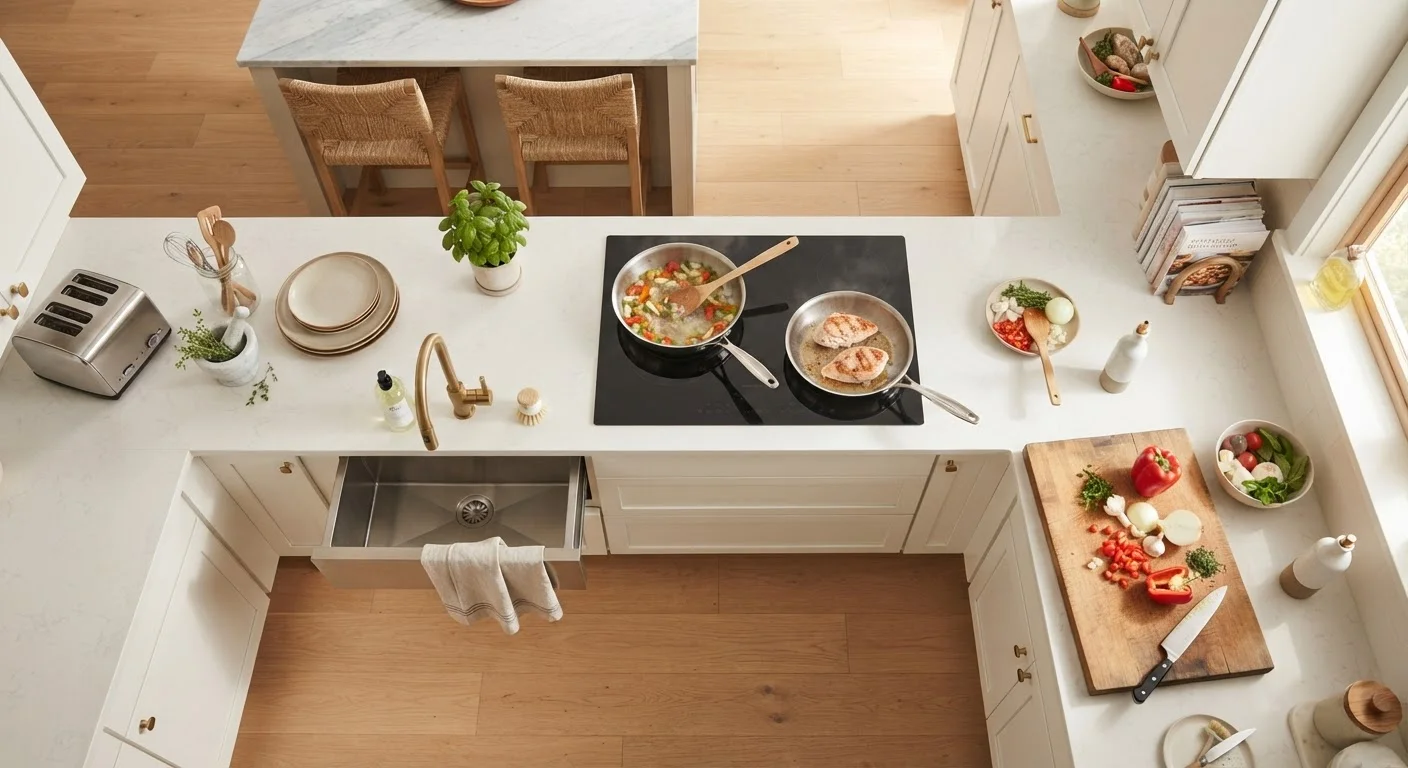
The honest truth is that a small number of reliable, versatile tools will carry you through the vast majority of meals you'll cook in your first year. Once you understand how a kitchen is organised and how to move through it efficiently — prep zone, cooking zone, plating zone — you'll also understand why certain tools belong on the must-have list and why others are optional extras.
This checklist is divided into what you genuinely need from day one, what's useful once you build confidence, and what can wait until you have a specific reason to own it. Work through each group before you buy anything.
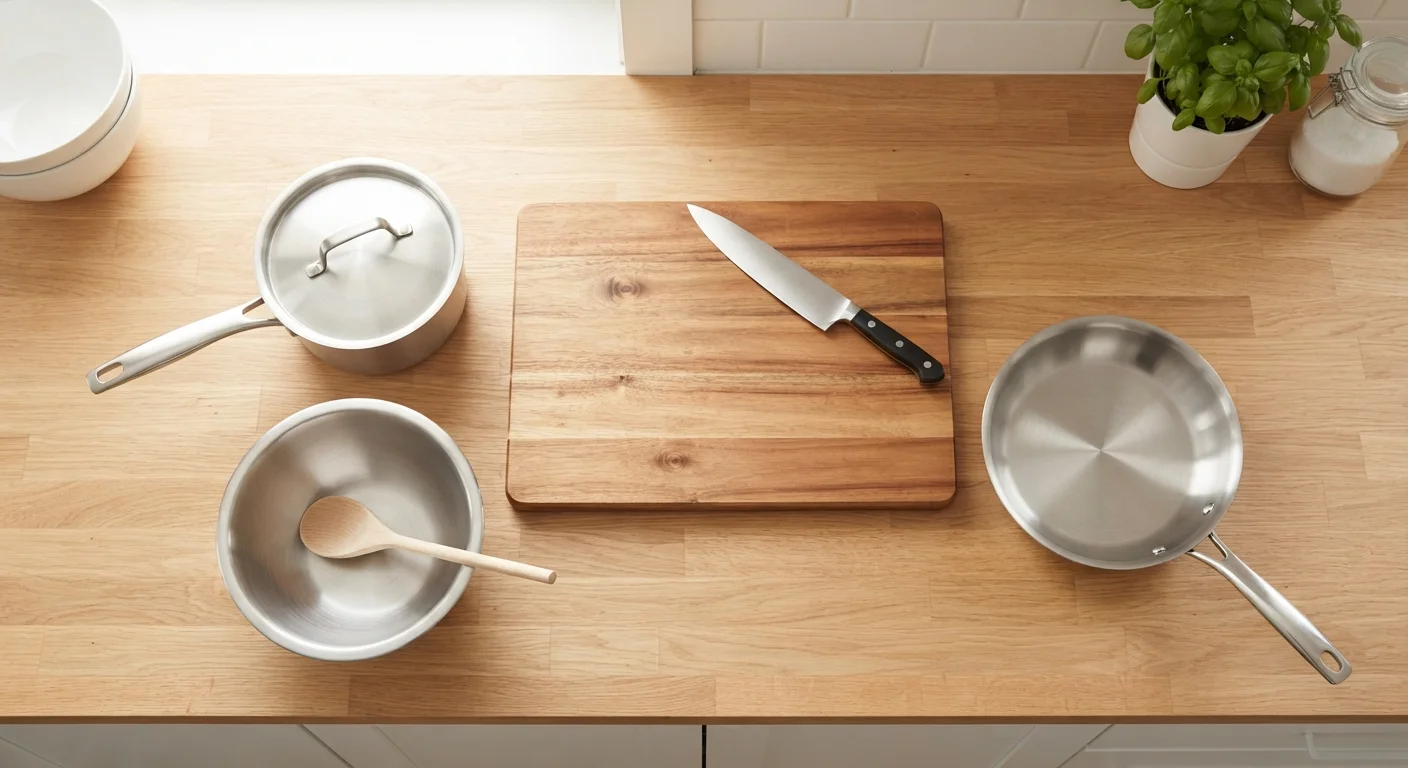
Chef's Knife (20 cm / 8 inch)
Your primary cutting tool — handles chopping, slicing, and dicing across almost every ingredient type.
Cutting Board (large)
Protects your surfaces and gives you a stable, hygienic prep workspace for all cutting tasks.
Medium Frying Pan
Used for searing, frying, sautéing, and making sauces — the most-reached-for piece of cookware for beginners.
Medium Saucepan with Lid
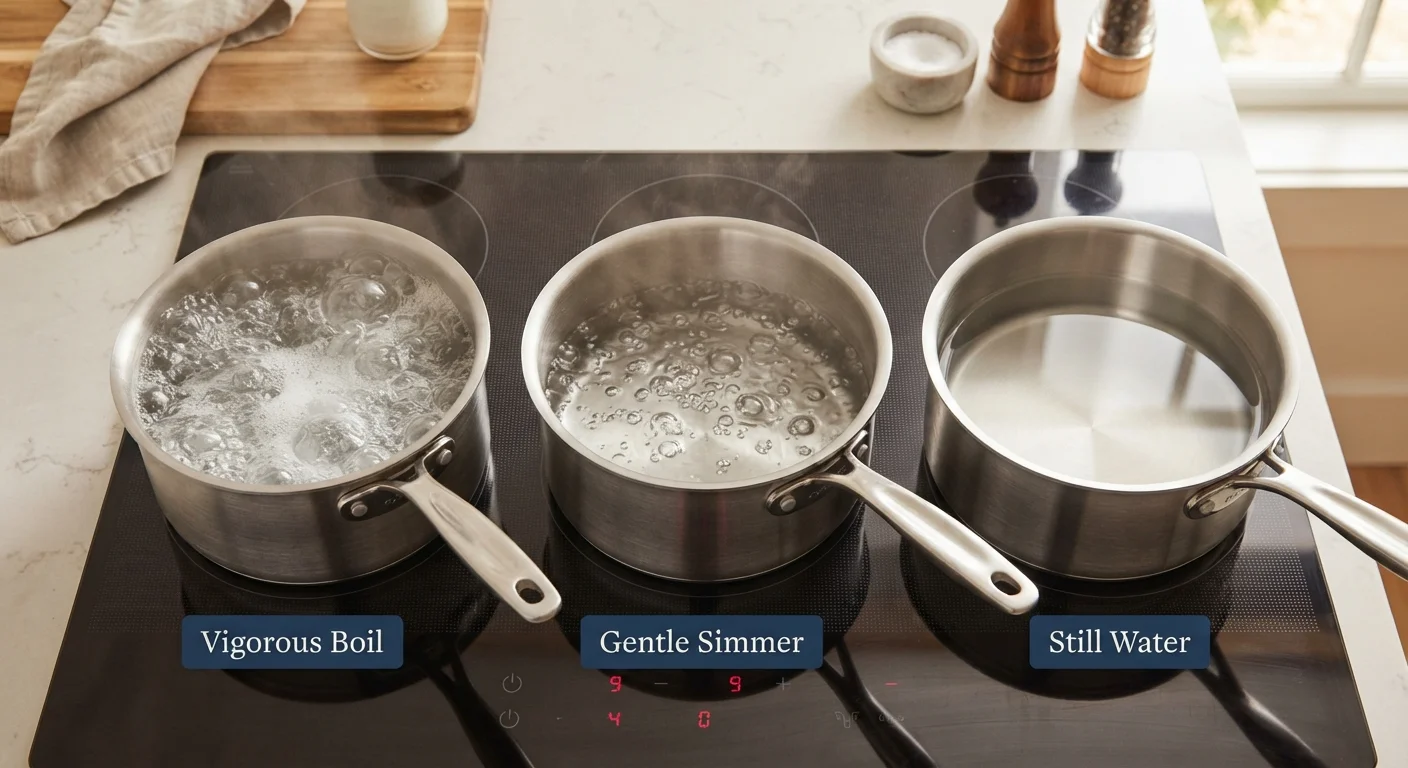
Handles boiling, simmering, steaming, and making everything from pasta water to sauces.
Wooden Spoon and Silicone Spatula
Core stirring, folding, and scraping tools that are safe for use across all pan surfaces.
Measuring Cups and Spoons
Ensures accurate proportions when following recipes, which is especially important for beginners.
Instant-Read Food Thermometer
Takes the guesswork out of cooking meat to safe internal temperatures — a key food safety tool.
Large Pot (5+ litres)
Required for cooking pasta, making soups and stews, and batch cooking larger quantities.
The Core Checklist: Tools That Earn Their Space
Every item in the must category below is something you'll reach for almost every time you cook. They're deliberately non-specialist: a 20-cm (8-inch) chef's knife, for example, handles chopping, slicing, and mincing across proteins, vegetables, and herbs. Learning to use it well is one of the most impactful skills you can build — see our guide on foundational knife skills every beginner should develop before anything else.
Pans are the other area worth spending on once, rather than replacing cheap versions repeatedly. A heavy-bottomed frying pan distributes heat evenly, which is the difference between a golden sear and a grey, uneven mess. You don't need a full set — one medium frying pan and one medium saucepan cover most beginner recipes.
Cutting and Prep
Cookware
Mixing, Measuring, and Storage
Utensils and Finishing Tools
A Dull Knife Is More Dangerous Than a Sharp One
It sounds counterintuitive, but a dull blade requires more force to cut through food — and that force is what sends the knife skidding unpredictably. A sharp knife bites cleanly and gives you control. Buy a honing steel alongside your first knife and use it before each cooking session to keep the edge aligned.
What You Can Add Later — and What to Skip
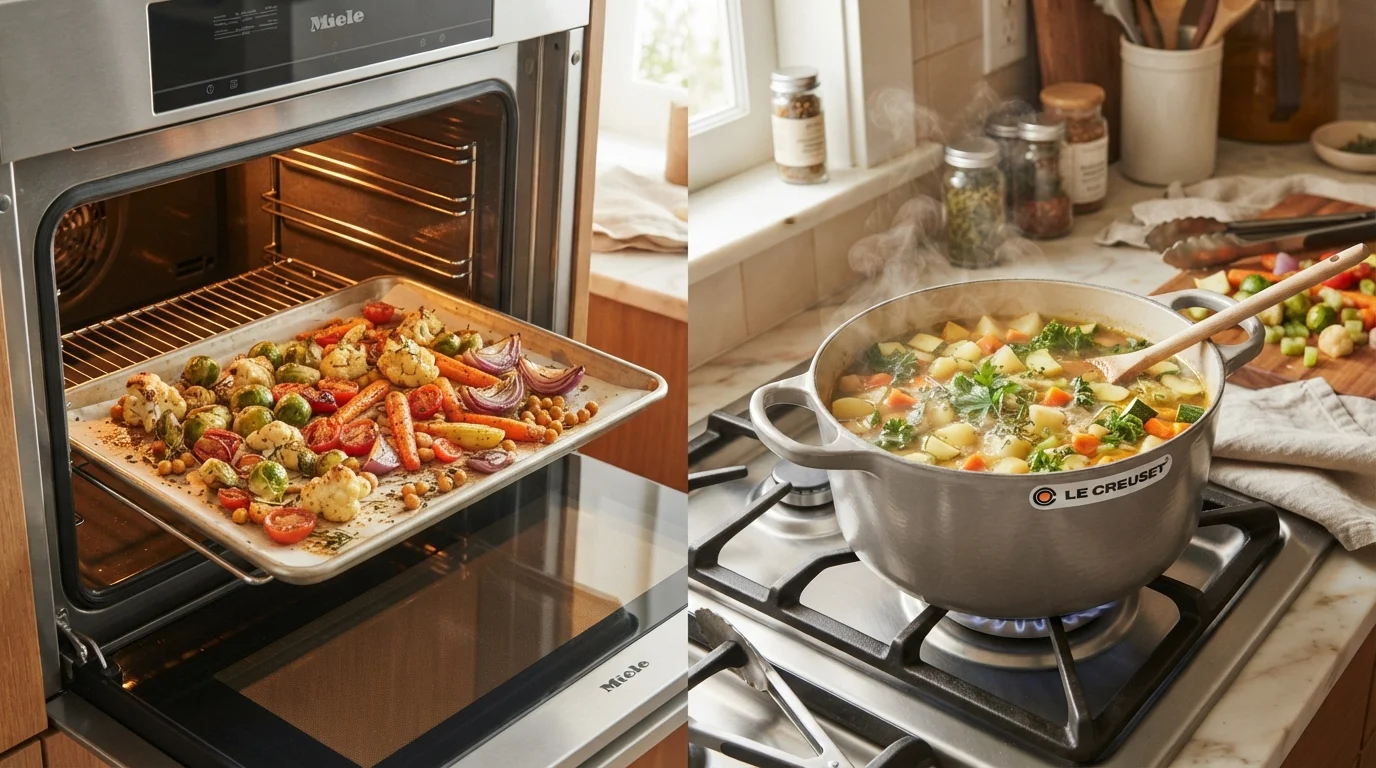
Once you're cooking several times a week and exploring recipes beyond the basics, a handful of additional tools start earning their counter space. A baking sheet, for instance, opens up roasted vegetables, sheet-pan dinners, and simple baked goods. A colander becomes essential the moment you cook pasta regularly.
But the skip list is just as important as the buy list. Garlic presses, avocado slicers, strawberry hullers, and egg separators all do one job that a basic knife or spoon already handles in seconds. The same logic that applies to what DIY beginners get wrong about buying tools first applies directly in the kitchen: specificity creates clutter, versatility creates capability.
Your cooking will also improve when you pair the right tools with the right ingredients. Understanding fats and oils, for example, changes how you use your pans — our introduction to fats and oils for first-time cooks explains when to reach for butter versus oil and why it matters.
Don't Buy Everything at Once
Purchasing a full set of pots, pans, and gadgets before you know what you actually cook is one of the most common beginner mistakes. Start with the must-have items, cook for two to four weeks, and then identify the specific gaps in your kit. You'll make smarter purchases and avoid filling drawers with tools you never touch.