Water Doesn't Only Come in a Glass
Most of us think about hydration as something we manage with beverages — water bottles, cups of tea, or the occasional sports drink. But a significant portion of the fluid your body uses every day arrives quietly through the food on your plate.
According to nutrition research, food accounts for roughly 20–30% of total daily water intake for most adults. For someone who eats a diet rich in fruits and vegetables, that share can be even higher. Understanding this helps paint a fuller picture of what hydration actually means — and why what you eat is part of the equation, not just what you drink.
If you're curious about other aspects of how your body uses what you eat, see our explainer on gut health and digestion for an accessible breakdown.
20–30%
Of daily fluid intake from food
Estimates from nutrition research suggest most adults obtain roughly 20–30% of total daily water from food sources.
90%+
Water by weight in top vegetables
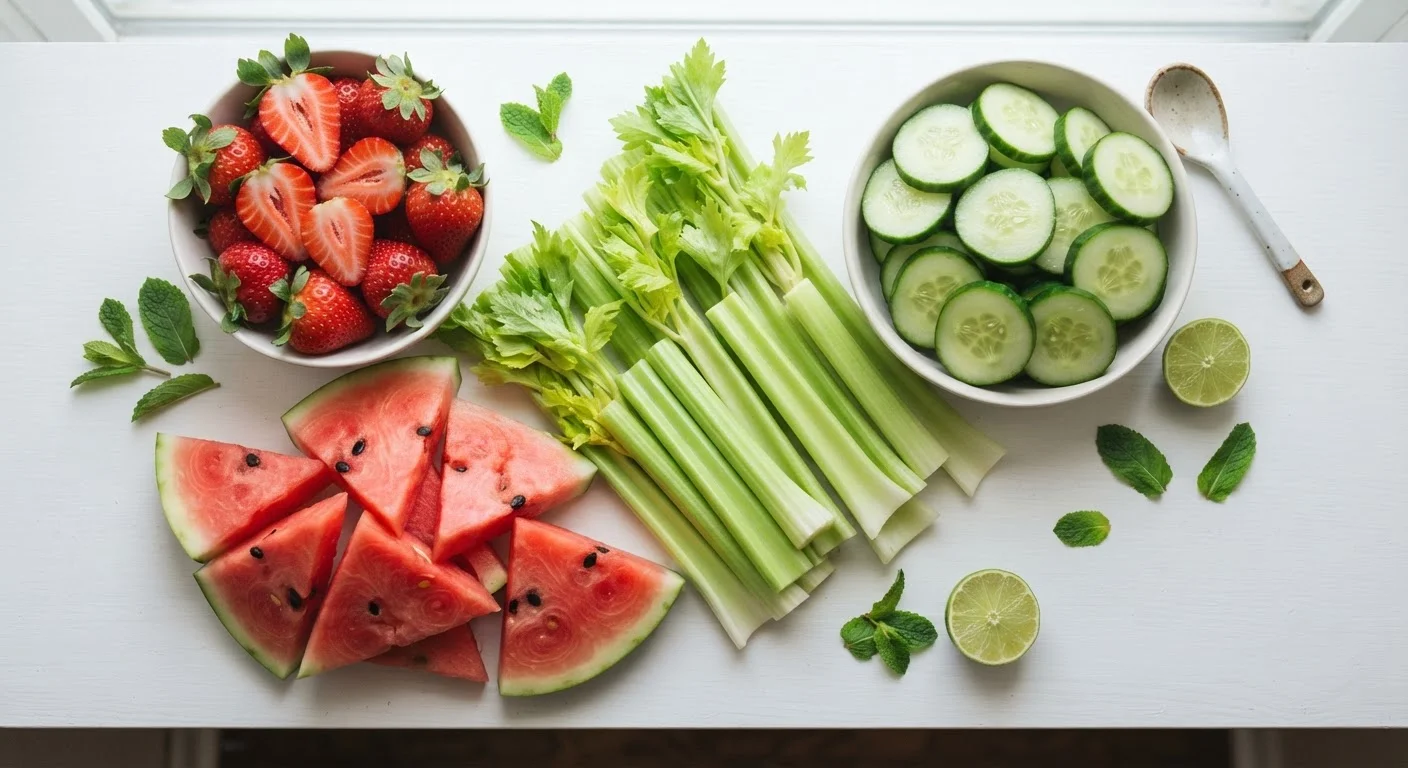
Foods like cucumber, lettuce, and celery are composed of more than 90% water by weight, according to USDA nutrient data.
~2 cups
Estimated water from food per day
For an average adult eating a mixed diet, food contributes roughly 1.5–2 cups of water equivalent daily, though this varies widely.
Which Foods Deliver the Most Water?
The water content of food varies widely. Here's a general breakdown by category:
- Vegetables: Cucumber, celery, lettuce, tomatoes, and zucchini are over 90% water by weight. Even cooked vegetables like spinach and broccoli retain significant moisture.
- Fruits: Watermelon, strawberries, cantaloupe, peaches, and oranges all sit above 85–90% water content. Eating a few servings a day adds a meaningful fluid contribution.
- Dairy and alternatives: Plain yogurt, milk, and many plant-based milks are largely water-based and contribute to hydration alongside their protein and calcium content.
- Soups and broths: These are among the most efficient food-based hydration sources because they are predominantly liquid.
- Cooked grains: Oatmeal, rice, and pasta absorb water during cooking, so their final water content is far higher than the dry ingredient suggests.
Highly processed, dry, or salty foods (crackers, chips, cured meats) contribute little to no fluid and can actually increase your body's need for water.
Why Food-Based Hydration Matters
Water absorbed from food tends to enter the body more gradually than water gulped from a glass. This slower release can support steadier hydration throughout the day, particularly because whole foods often pair their water content with fiber, electrolytes like potassium, and other nutrients that help the body use and retain fluid effectively.
For example, the potassium in a cucumber or a banana helps regulate fluid balance at a cellular level. This is part of why eating a varied diet of whole foods supports hydration in a way that drinking plain water alone does not fully replicate.
A Simple Habit Worth Building
At each meal, try to include at least one ingredient from the high-water-content category — a tomato slice, a handful of berries, or a broth-based side. Over a full day, these small additions accumulate into a meaningful hydration contribution without requiring any extra effort or tracking.
It's also worth noting that there is no universally agreed daily water target that applies to every person. Fluid needs vary based on body size, physical activity, climate, health status, and — yes — how much water-rich food you eat. For a deeper look at common misconceptions around daily water targets, the article on hydration myths offers useful perspective.
Putting It All Together in Your Daily Habits
You don't need to calculate the water content of every meal. Instead, think of food and beverages as two sides of the same hydration coin. A diet that regularly includes fruits, vegetables, soups, and dairy-based foods will naturally support your fluid needs alongside whatever you drink.
A few practical patterns worth noting:
- Including at least one serving of a high-water vegetable or fruit at most meals provides a steady background contribution to hydration.
- Choosing a bowl of vegetable soup over a dry snack at lunch is a small choice with a real hydration impact.
- Recognizing that dry, salty, or processed foods shift the balance — they require more water from beverages to compensate.
For a broader look at your overall eating habits, our weekly nutrition self-check is a practical place to start. And if you reach for fruit beverages as part of your fluid intake, understanding what's actually in them can help you make informed choices.
This article is for general informational and educational purposes only and does not constitute medical or dietary advice. For guidance specific to your health needs, please consult a qualified healthcare professional.