Why Hydration Myths Spread So Easily
Water is fundamental to life, which means advice about drinking it carries an almost automatic authority. When a figure like 'eight glasses a day' gets repeated by enough voices — from wellness blogs to well-meaning family members — it starts to feel like established science even when the evidence is thin. Hydration is also a topic where individual variation is enormous, making simple universal rules both appealing and misleading.
The myths below are among the most commonly repeated. Each one contains a kernel of logic, which is partly why they persist. Understanding where they come from — and where they go wrong — makes it easier to think clearly about how much, and what, to actually drink. For a broader look at how this pattern plays out in food and nutrition, see our piece on nutrition myths that refuse to die.
Myth
Everyone needs exactly eight glasses of water every day to stay properly hydrated.
Fact
There is no universal eight-glass requirement. Fluid needs vary widely based on body size, activity level, climate, and diet.
The '8×8' rule — eight 8-ounce glasses per day — is one of the most persistent beliefs in nutrition, yet it lacks a clear scientific origin. Researchers who have examined the evidence, including a widely cited 2002 review in the American Journal of Physiology, found no solid scientific support for the figure. The U.S. National Academies of Sciences suggests general daily fluid adequate intakes (around 3.7 liters for men and 2.7 liters for women), but these totals include water from all food and beverages — not just drinking water — and represent averages, not prescriptions. A petite sedentary person in a cool climate has genuinely different needs than a large athlete in summer heat.
Myth
If you feel thirsty, you are already dehydrated and have waited too long.
Fact
Thirst is the body's normal, timely signal to drink — not a sign that you have already crossed into dehydration.
This myth encourages people to drink on a schedule rather than listening to their body, which can backfire. For healthy adults, thirst is a well-calibrated mechanism. Mild fluid deficit does trigger thirst well before performance or health is meaningfully compromised. The exception worth noting is older adults, whose thirst sensation can diminish with age, making it a less reliable sole guide. In those cases, regular drinking habits — independent of thirst — can be a sensible strategy, but this applies to a specific population, not everyone.
Myth
Coffee and tea dehydrate you, so they don't count toward your fluid intake.
Fact
Caffeinated beverages do have a mild diuretic effect, but the net fluid they deliver still contributes positively to hydration.
Caffeine stimulates a slight increase in urine output, which led to the widespread belief that coffee and tea dehydrate. However, a significant body of research — including studies published in the journal PLOS ONE — has found that moderate coffee consumption (around 3–4 cups per day) is not associated with dehydration in regular drinkers. The water content of these beverages substantially outweighs any diuretic effect. Both coffee and tea are primarily water and count meaningfully toward your daily fluid total. Very large doses of caffeine from concentrated sources are a different matter, but ordinary cup-by-cup consumption is not a hydration liability.
Myth
Clear urine means you are perfectly hydrated; any color at all signals a problem.
Fact
Pale yellow urine generally indicates good hydration. Completely colorless urine may mean you are drinking more than necessary.
Urine color charts — ranging from pale straw to deep amber — are a reasonable rough guide, but they are far from precise. Many factors besides hydration affect urine color: B-vitamin supplements can turn urine bright yellow regardless of fluid intake; beets can produce a reddish tint; and certain medications alter color entirely. Consistently clear, odorless urine throughout the day can actually suggest over-hydration, which, in extreme cases, can dilute electrolytes and create its own problems. Pale yellow is generally considered the target. It's also worth knowing that your food contributes significantly to hydration, so color alone tells only part of the story.
Myth
You need sports drinks or electrolyte supplements to rehydrate after any exercise.
Fact
Electrolyte drinks are beneficial mainly for prolonged or intense exercise. Water is typically sufficient for everyday activity.
Sports drinks were developed for endurance athletes — people exercising intensely for 60 to 90 minutes or more, sweating heavily and losing meaningful sodium. For a 30-minute walk or a casual gym session, plain water replaces what most people lose without any special formulation needed. Consuming electrolyte drinks unnecessarily adds sugar and sodium without a physiological benefit. The confusion partly stems from effective marketing rather than broad nutritional need. If you are doing genuinely prolonged, sweat-heavy exercise, an electrolyte source can be helpful — but that threshold is higher than most people reach in daily life.
What Actually Shapes Your Hydration Needs
Rather than chasing a fixed number, it helps to understand the real variables that influence how much fluid your body needs on any given day.
~20%
Daily water intake from food
The U.S. National Academies of Sciences estimates roughly 20% of daily water intake typically comes from food rather than beverages.
3–4 cups
Coffee intake not linked to dehydration
Research including studies in PLOS ONE found moderate daily coffee consumption at this level does not cause net dehydration in habitual drinkers.
- Body size and composition: Larger bodies and those with more muscle mass generally require more water, since muscle holds more water than fat tissue.
- Activity level: Physical exertion increases fluid loss through sweat, so active days require proportionally more intake.
- Climate and environment: Heat and low humidity accelerate fluid loss through both sweat and respiration.
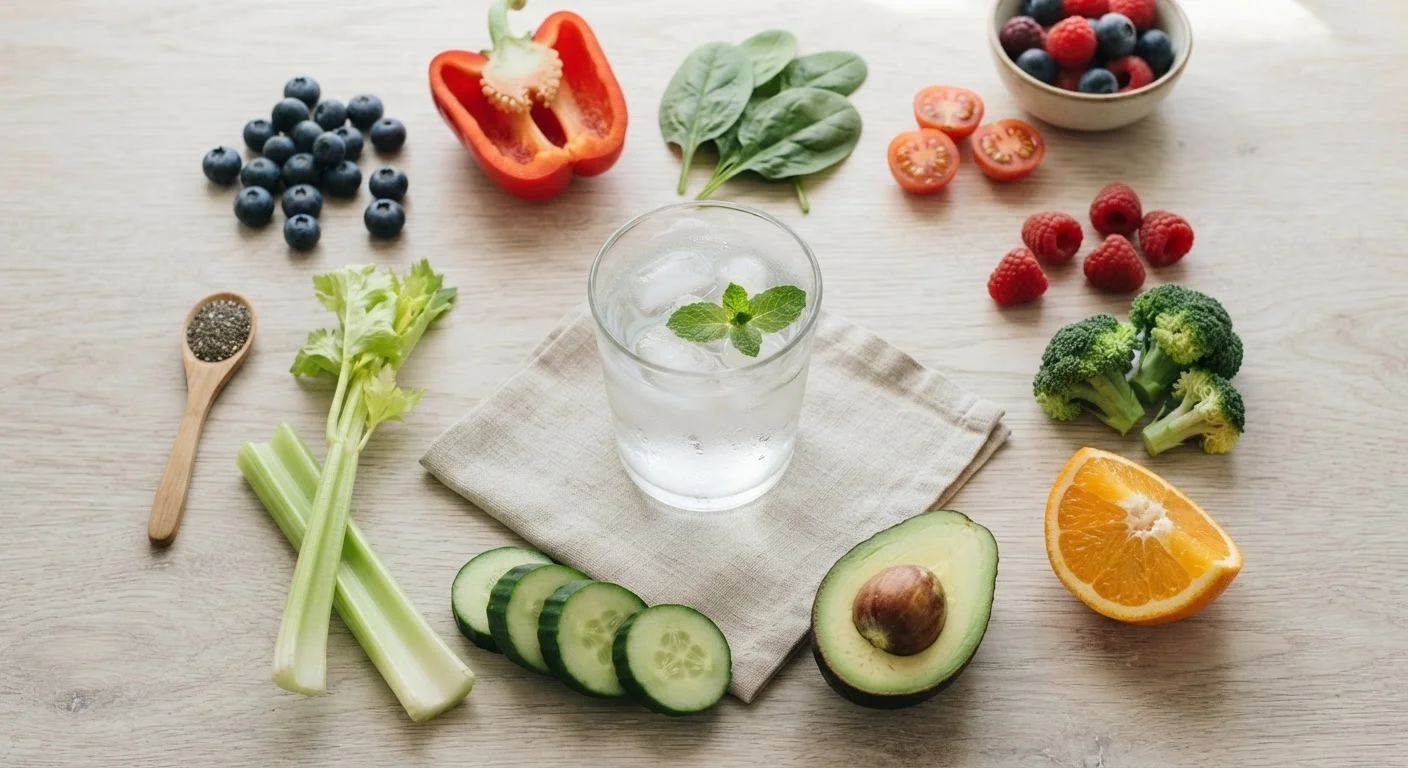
- Diet: A diet rich in fruits and vegetables contributes significantly to fluid intake. Cucumbers, watermelon, and lettuce are more than 90% water by weight. If you are curious how much this adds up, our article on how much water comes from food breaks it down clearly.
- Health status: Fever, illness, pregnancy, and breastfeeding all alter fluid requirements. Anyone managing a health condition should discuss hydration with a qualified healthcare professional rather than relying on general guidelines.
Over-Hydration Is a Real Risk
Drinking far more water than your body needs can dilute sodium and other electrolytes in the blood, a condition called hyponatremia. It is rare in everyday life but has occurred in endurance events where athletes drink large volumes of plain water without replacing electrolytes. Drinking to satisfy thirst — rather than following an aggressive intake target — is a sensible guard against both under- and over-hydration for most healthy adults.
This article provides general educational information about hydration. It is not medical advice. Consult a qualified healthcare professional for guidance specific to your health circumstances.