The Journey of a Meal: Digestion Step by Step
Every time you eat, your body launches a coordinated process that spans several organs and many hours. Understanding this sequence makes it easier to appreciate why what you eat — and how you eat it — matters so much.
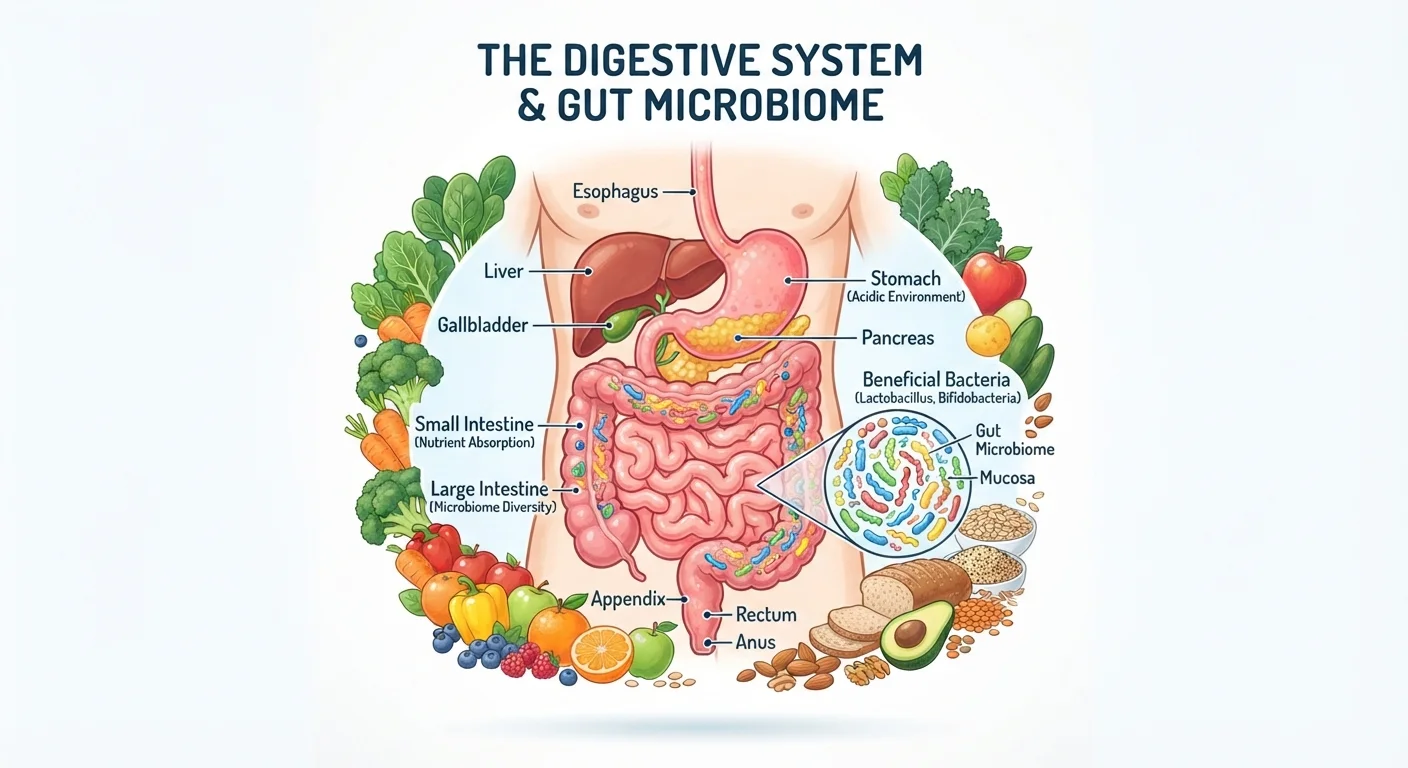
Mouth: Digestion begins the moment you start chewing. Your saliva contains an enzyme called amylase that starts breaking down carbohydrates before food even reaches your stomach. This is why nutritionists often emphasize chewing thoroughly.
Stomach: Swallowed food enters the stomach, where strong acid and enzymes continue breaking it down into a semi-liquid called chyme. Protein digestion happens mainly here. The stomach also acts as a gatekeeper, releasing food gradually into the small intestine.
Small intestine: This is where most nutrient absorption happens. The walls of the small intestine are lined with tiny finger-like projections called villi, which dramatically increase the surface area available to absorb proteins, fats, carbohydrates, vitamins, and minerals into the bloodstream. To understand what each macronutrient does once absorbed, see our guide to macronutrients.
Large intestine (colon): Whatever the small intestine doesn't absorb moves into the colon. Water is reclaimed here, and the remaining material is prepared for elimination. Crucially, this is also where much of your gut microbiome lives.
~38 trillion
Estimated bacterial cells in the human gut
According to a widely cited estimate published in Cell (Sender et al., 2016), bacterial cells in the body roughly equal human cells in number.
~28g
Daily fiber intake recommended for adults
The 2020–2025 Dietary Guidelines for Americans recommend around 28 grams of fiber per day for a 2,000-calorie diet; most Americans consume roughly half that.
24–72 hours
Typical total digestion transit time
The Mayo Clinic notes that complete digestion from eating to elimination generally takes between one and three days, varying by individual and food type.
Your Gut Microbiome: A Living Community Inside You
The term microbiome refers to the vast community of microorganisms — mostly bacteria — that live in your digestive tract, particularly in the colon. There are estimated to be tens of trillions of microbial cells in the gut, comprising hundreds of species. Far from being harmful passengers, most of these microbes are essential partners.
Beneficial gut bacteria help ferment dietary fiber into short-chain fatty acids (SCFAs), compounds that nourish the cells lining your colon and support immune regulation. They also produce certain B vitamins and vitamin K, and they compete with potentially harmful bacteria for space and resources.
“The gut microbiome is like a fingerprint — it's unique to each person and shaped by a lifetime of diet, environment, and experience. Its influence on health extends well beyond digestion.”
— Rob Knight, Microbiome researcher and Professor at UC San Diego
The composition of your microbiome is shaped by many factors: what you eat, your age, whether you've taken antibiotics, your stress levels, and even how you were born. No two people have exactly the same microbial profile, which is one reason why dietary advice doesn't work identically for everyone.
Research into the microbiome is still young, and many findings are preliminary. What scientists do agree on is that diversity — having many different types of bacteria — is generally associated with better digestive and overall health outcomes.
How Everyday Food Choices Shape Your Digestive Health
What you eat directly feeds your microbiome. Different bacteria thrive on different food components, which means your dietary patterns literally shape which microbes flourish in your gut.
Fiber is the most important nutrient for your gut
Dietary fiber — found in vegetables, fruits, whole grains, legumes, and nuts — is the primary fuel source for beneficial gut bacteria. When bacteria ferment fiber, they produce those SCFAs mentioned earlier. Yet most Americans consume far less fiber than recommended. For a deeper look at this issue and how to address it, see our article on the fiber gap.
Try Adding One New Plant Food Per Week
You don't need an overhaul to improve microbiome diversity. Simply adding one new vegetable, legume, or whole grain to your routine each week gradually expands the variety of fiber types available to your gut bacteria. Small, consistent changes are more sustainable than dramatic dietary shifts.
Variety matters as much as quantity
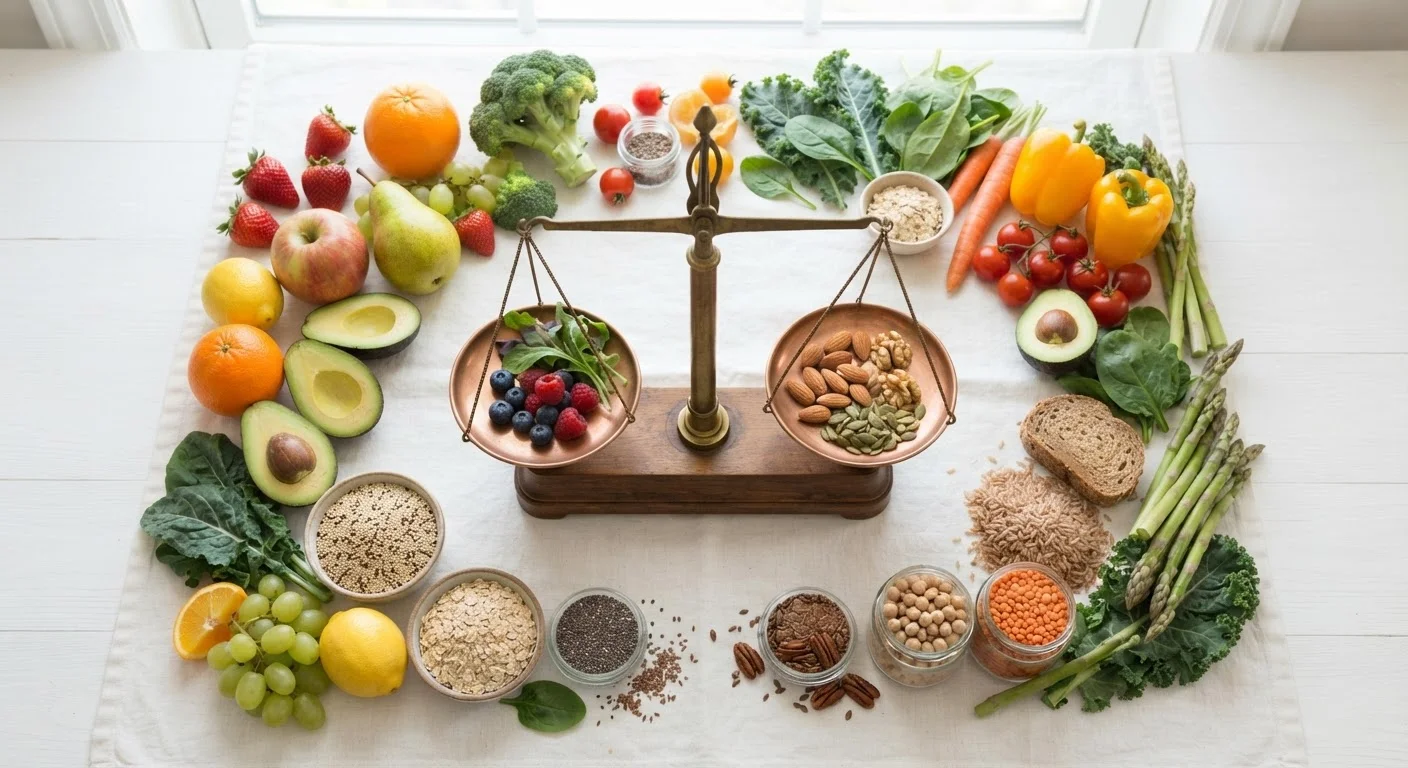
Different plant foods contain different types of fiber and phytonutrients, which feed different bacterial species. Eating a wide range of plant-based foods — sometimes called a high-diversity diet — is consistently linked to a more diverse and resilient microbiome.
Ultra-processed foods and gut health
Diets high in ultra-processed foods (those with many additives, refined flours, and added sugars) are associated with lower microbiome diversity and increased markers of gut inflammation in research studies. This doesn't mean occasional processed foods are harmful, but a pattern dominated by them may have cumulative effects over time.
Hydration and digestion
Water is essential for moving food through the digestive tract and preventing constipation. You may be getting more hydration from food than you realize — our article on hydration from food explores this further.
For a practical way to reflect on your current eating patterns — including fiber and variety — try our weekly nutrition self-check.
This article is for general informational and educational purposes only. It is not a substitute for professional medical advice, diagnosis, or treatment. If you have concerns about your digestive health or symptoms, please consult a qualified healthcare provider.