
Why the Nutrition Facts Label Exists
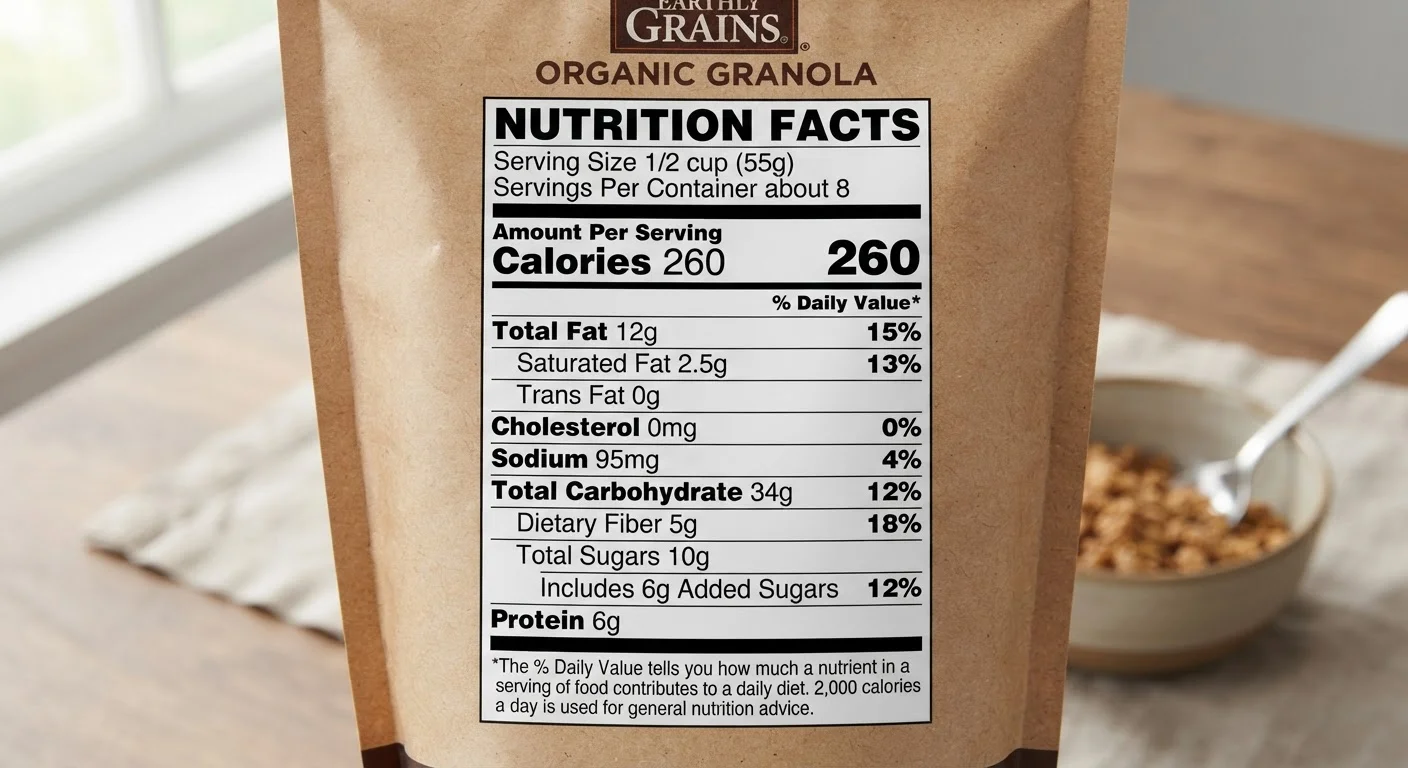
The Nutrition Facts label is a standardized panel required by the U.S. Food and Drug Administration (FDA) on most packaged foods and beverages. Its purpose is straightforward: to give you consistent, comparable information about what's in your food so you can make informed choices. The current format was updated in 2020 to reflect newer dietary science, including a clearer distinction between total sugars and added sugars.
Before diving into any individual number, it helps to understand the label as a system. Each figure is tied to a specific serving size — meaning none of the numbers mean much until you know how much food they're describing. Think of the label as a nutritional snapshot of one serving, not necessarily the whole package. For a broader look at how nutrients work together in your diet, see our beginner's guide to balanced eating.
How to Read the Label Step by Step
The steps below walk you through the label from top to bottom — which is also the order of importance for most everyday decisions.
Start with the serving size
At the very top of the panel you'll find Serving Size and Servings Per Container. The serving size is expressed in a common household unit (like cups or pieces) plus grams in parentheses. Every other number on the label — calories, fat, sodium — applies to exactly this amount, not the whole package.
If a bag of chips lists a serving size as 1 oz (about 28g) and the bag contains 3 servings, eating the whole bag means tripling every number you see.
Read the calorie count in context
Calories appear in large bold type directly below the serving size. This number tells you how much energy one serving provides. The FDA guidance suggests that around 400 calories per meal is a reasonable general reference for a 2,000-calorie diet, but individual energy needs vary significantly.
Calories alone don't capture nutritional quality — a 200-calorie serving of nuts and a 200-calorie serving of candy contribute very differently to your overall diet.
Scan the nutrients to limit
The next section lists nutrients that, according to U.S. dietary guidelines, many Americans consume in excess: Saturated Fat, Trans Fat, and Sodium. Trans fat has no safe established intake level; the FDA has largely phased out artificial trans fats, but trace amounts can still appear.
Dietary cholesterol also appears here. Current guidelines no longer set a specific numeric limit for cholesterol, but it's still listed for reference.
Look at Total Carbohydrate, Dietary Fiber, and Sugars
Total Carbohydrate is the parent line; beneath it are two sub-items: Dietary Fiber and Total Sugars. Under Total Sugars, the label separately identifies Added Sugars — these are sugars added during processing (like cane sugar or high-fructose corn syrup), distinct from sugars that occur naturally in the food (like the lactose in milk or fructose in fruit).
Dietary fiber has a % DV and is worth increasing for most people; added sugars have a % DV and are worth moderating.
Check Protein
Protein is listed in grams but does not always carry a % Daily Value, because protein needs vary widely by age, body weight, and activity level. The number tells you how many grams of protein one serving provides. For context on how protein functions in the body and how plant and animal sources differ, see our guide to plant vs. animal proteins.
Use % Daily Value as a quick comparison tool
The right-hand column shows % Daily Value (% DV) for most nutrients. This percentage reflects how much of the daily recommended amount one serving provides, based on a 2,000-calorie reference diet. Use the FDA's quick rule of thumb: 5% DV or less is low; 20% DV or more is high.
This makes % DV useful for comparing two similar products side by side — even if you don't follow a 2,000-calorie diet, the relative comparison still holds.
The 5/20 Rule Is Your Shortcut
When you don't have time to analyze every nutrient, use the 5/20 rule: 5% DV or less means a food is low in that nutrient, and 20% DV or more means it's high. Apply this to nutrients you want more of (fiber, vitamins) and nutrients you want less of (saturated fat, sodium, added sugars) for a quick, reliable read.
Once you're comfortable reading nutrition facts, you may also want to explore the ingredient list below the panel. Our guide to reading a food ingredient list without getting lost explains how that separate section works.
Common Misconceptions and What to Watch For
A few points trip up even careful readers:
- "Low fat" doesn't mean low calorie. Fat has 9 calories per gram, while carbohydrates and protein each have 4 — but a reduced-fat product can still be calorie-dense if it compensates with added sugar.
- Percent Daily Values are based on a 2,000-calorie reference diet. This is a general benchmark set by the FDA, not a personal prescription. Your actual needs may be higher or lower depending on age, size, activity level, and health status. A registered dietitian can help you interpret numbers for your specific situation.
- Calories from fat are no longer listed. The updated label removed this line because research shifted focus from total fat to the type of fat consumed. Saturated fat and trans fat still appear as separate line items.
Labels Have Limits — Context Still Matters
Nutrition facts reflect averages and standardized reference values, not your individual needs. People with specific health conditions, dietary restrictions, or medications may need to interpret these numbers differently. Always consult a registered dietitian or your healthcare provider if you have questions about how label information applies to you personally.
For a science-grounded explanation of how the body actually uses food energy, see our honest look at energy balance. And if you want to understand what carbs, proteins, and fats each do once they're inside your body, macronutrients explained in plain language is a useful next read.
This article is for general informational and educational purposes only and is not a substitute for professional medical or dietary advice. Consult a qualified healthcare provider or registered dietitian for guidance specific to your health needs.