Why Sacred Sites Deserve Special Attention
Stepping into a temple, mosque, shrine, or cathedral is not the same as visiting a museum or a park. These places are alive with ongoing spiritual practice — people pray there, grieve there, celebrate milestones, and connect with something larger than themselves. Visitor interest is welcome at many of them, but it sits alongside — not above — that primary purpose.
The challenge for travelers is that sacred space looks very different across cultures. A Buddhist wat in Thailand, a Hindu mandir in India, a Jewish synagogue in Europe, and a Shinto shrine in Japan each carry distinct expectations rooted in centuries of tradition. There is no universal rulebook, but there is a universal attitude: approach as a guest, not a spectator.
Understanding what respectful behaviour looks like — and why it matters — is one of the most meaningful skills you can develop as a traveler. It also helps you avoid the unintentional missteps covered in our piece on cultural errors travelers commonly make.
Key Concepts: Understanding the Language of Sacred Spaces
Before exploring specific etiquette, it helps to understand some foundational ideas that shape how sacred sites work across different traditions.
Sacred space
A location set apart for religious or spiritual purposes, where specific behaviours are expected out of reverence. This includes temples, mosques, shrines, cathedrals, and certain natural sites.
Ritual purity
A concept in many traditions (Hindu, Islamic, Jewish, Shinto, and others) describing a state of cleanliness — physical or symbolic — required before entering or participating in sacred activities. Removing shoes or washing hands at an entrance often relates to this idea.
Sanctum or inner sanctuary
The innermost, most holy area of a religious site, often reserved for clergy, priests, or initiated members of that faith. Visitors are frequently asked not to enter this space.
Custodian
A person — priest, monk, caretaker, or appointed staff member — responsible for maintaining the site and guiding appropriate conduct. Their instructions should always be followed.
Offerings
Items — flowers, food, incense, candles, or money — left by worshippers as gifts to a deity or spiritual figure. They should never be disturbed or removed by visitors.
Dress code
A set of clothing expectations specific to a sacred site or tradition. Requirements often include covering the head, shoulders, and knees, and can vary significantly by religion and country.
Universal Etiquette Principles That Apply Almost Everywhere
While every tradition has its own customs, a handful of behaviours are widely respected at sacred sites across nearly all cultures:
- Lower your voice. Loud conversation, laughter, and phone calls are disruptive. Treat the ambient quiet as part of the experience.
- Dress modestly. Cover shoulders and knees at minimum. Some sites require head coverings or full-length garments. Our guide on dress codes and modesty across countries explores this in depth.
- Follow physical boundaries. Roped-off areas, raised platforms, and inner sanctuaries are often off-limits to non-worshippers. If there's a barrier, respect it.
- Silence or switch off your phone. Notifications, ringtones, and flash photography are jarring in spaces designed for contemplation.
- Move calmly and unhurriedly. Rushing through a sacred space — or treating it like a photo stop on a checklist — is noticed and disrespectful.
Watch Before You Move
Arriving at an unfamiliar sacred site can feel disorienting. Spend two or three minutes near the entrance simply observing: How are locals dressed? Where are they walking? Are they speaking or silent? This quiet observation period costs you nothing and tells you almost everything you need to know.
When in doubt, pause and observe how locals behave for a few minutes before you move deeper into the site. This simple habit resolves most uncertainty.
Site-Specific Customs Across Major Traditions
General principles get you far, but knowing tradition-specific norms makes your visit far smoother.
- Mosques
- Remove shoes before entering the prayer hall. Women are typically required to cover their hair; men and women may be directed to separate areas. Non-Muslims are usually welcome outside prayer times, though some mosques — particularly in Saudi Arabia — restrict entry to Muslims only. Check before visiting.
- Hindu Temples
- Remove shoes at the entrance. Leather items (belts, bags) are unwelcome in some temples as a mark of respect for the sacred cow. Non-Hindus are not permitted inside the inner sanctum of many temples in India, including most in Kerala and Tamil Nadu.
- Buddhist Temples and Wats
- Remove shoes, cover shoulders and knees, and never point your feet toward an altar or a Buddha image — feet are considered the lowest, least sacred part of the body. In Theravada Buddhist countries, women should avoid physical contact with monks.
- Shinto Shrines
- Purify your hands and mouth at the temizuya (water basin) before approaching the main hall. Bow twice, clap twice, bow once at the main altar — though visitors are not obligated to perform the full ritual. Speak quietly and stay on designated paths.
- Sikh Gurdwaras
- Cover your head before entering (scarves are usually available at the door), remove your shoes, and wash your hands. Gurdwaras are famously welcoming to all visitors regardless of faith.
- Churches and Cathedrals
- Dress modestly, keep voices low, and be mindful when services are in progress — active worship takes precedence over sightseeing. In Orthodox churches, photography is often prohibited near the iconostasis.
Photography, Offerings, and Other Common Pitfalls
Two areas catch travelers off guard more than any other: photography and offerings.
Photography restrictions at sacred sites are not arbitrary. Photographing worshippers mid-prayer, pointing a camera at sacred objects, or using flash near ancient art can be intrusive and damaging. Always look for posted signs. If you see none, ask a staff member or guide. Our companion article on photography ethics and etiquette explores this topic thoroughly.
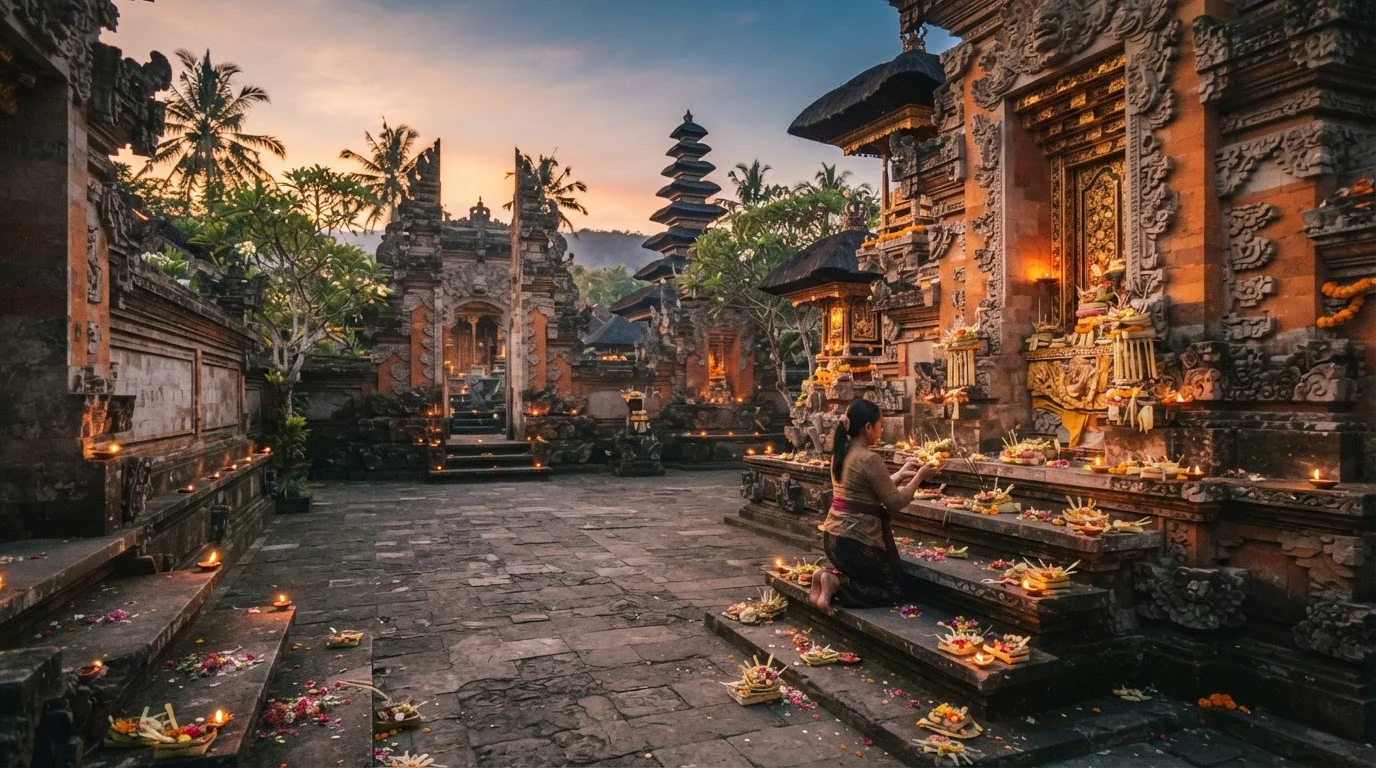
Offerings are another area requiring care. Never remove flowers, food, or objects left as offerings — these are gifts to the divine, not decorations. In some traditions (Hindu and Buddhist sites, for example), visitors may make their own small offerings, but follow the guidance of local staff or signage rather than improvising.
Some Restrictions Apply to Everyone
Being a foreign visitor does not exempt you from site rules — and claiming ignorance after the fact rarely smooths things over. If you are asked to leave an area, do so immediately and graciously. A small number of sacred sites have introduced fines or entry bans for repeated etiquette violations by tourists, so the stakes can be real.
A few other pitfalls worth noting:
- Do not sit with your back facing an altar or religious image.
- Avoid public displays of affection inside sacred spaces.
- Do not touch religious statues, relics, or sacred objects unless explicitly invited to.
- Keep children close and engaged — running or playing in worship areas is disruptive.
How to Prepare Before You Arrive
The most respectful thing you can do is invest a little time before your visit. Here's a simple preparation approach:
- Research the specific site, not just the tradition. Customs can vary between two temples of the same religion in different countries — or even in different parts of the same city.
- Check the official site or a trusted tourism authority for entry rules, restricted areas, and dress requirements. Conditions can change, so verify close to your travel date.
- Learn a few words in the local language — a greeting or a polite request goes a long way in signalling good faith.
- Pack appropriately. Carry a lightweight scarf or shawl you can use as a head covering or shoulder wrap. Wear slip-on shoes if you know you'll be removing them frequently.
For a broader pre-trip cultural checklist, see our guide: Before You Land: A Cultural Preparation Checklist. It pairs well with this article as you plan any trip that includes visits to meaningful cultural spaces.
Visiting sacred sites with awareness and care doesn't just protect the places themselves — it enriches your own experience in ways that no photograph can capture.