Why Well-Meaning Travelers Still Get It Wrong
Travelers rarely cause offense on purpose. The problem is that most of us unconsciously carry our home-country assumptions into every new destination — assuming that a smile means the same thing everywhere, or that the way we greet a stranger back home is universally polite. It isn't.
Cultural missteps happen in the gap between good intentions and unfamiliar context. Understanding why these errors are so common is the first step toward avoiding them. For a deeper look at how disorientation fuels these moments, see our guide on understanding culture shock and why it happens.
Assuming that tipping is universally expected — or universally welcome.
Why it happens: Travelers from tipping-culture countries like the United States often feel that leaving money is simply polite. In Japan, South Korea, and parts of China, however, tipping can be perceived as insulting or imply that the staff member needs charity.
Wearing shoes inside a home or place of worship without checking first.
Why it happens: In many Western countries, keeping shoes on indoors is standard. Travelers simply default to what feels normal and don't register the cue to remove footwear — even when a neat row of shoes at the door is a clear signal.
Using the left hand to pass food, money, or gifts in certain cultures.
Why it happens: In parts of South Asia, the Middle East, and sub-Saharan Africa, the left hand is traditionally considered unclean. Most travelers from other regions have no awareness of this norm and pass items naturally with whichever hand is convenient.
Speaking loudly in public spaces and treating silence as awkward.
Why it happens: Volume norms vary enormously. Travelers accustomed to lively public conversation may not realize that in countries like Japan, Finland, or Germany, loud talking on public transport or in restaurants can be considered genuinely rude rather than just slightly annoying.
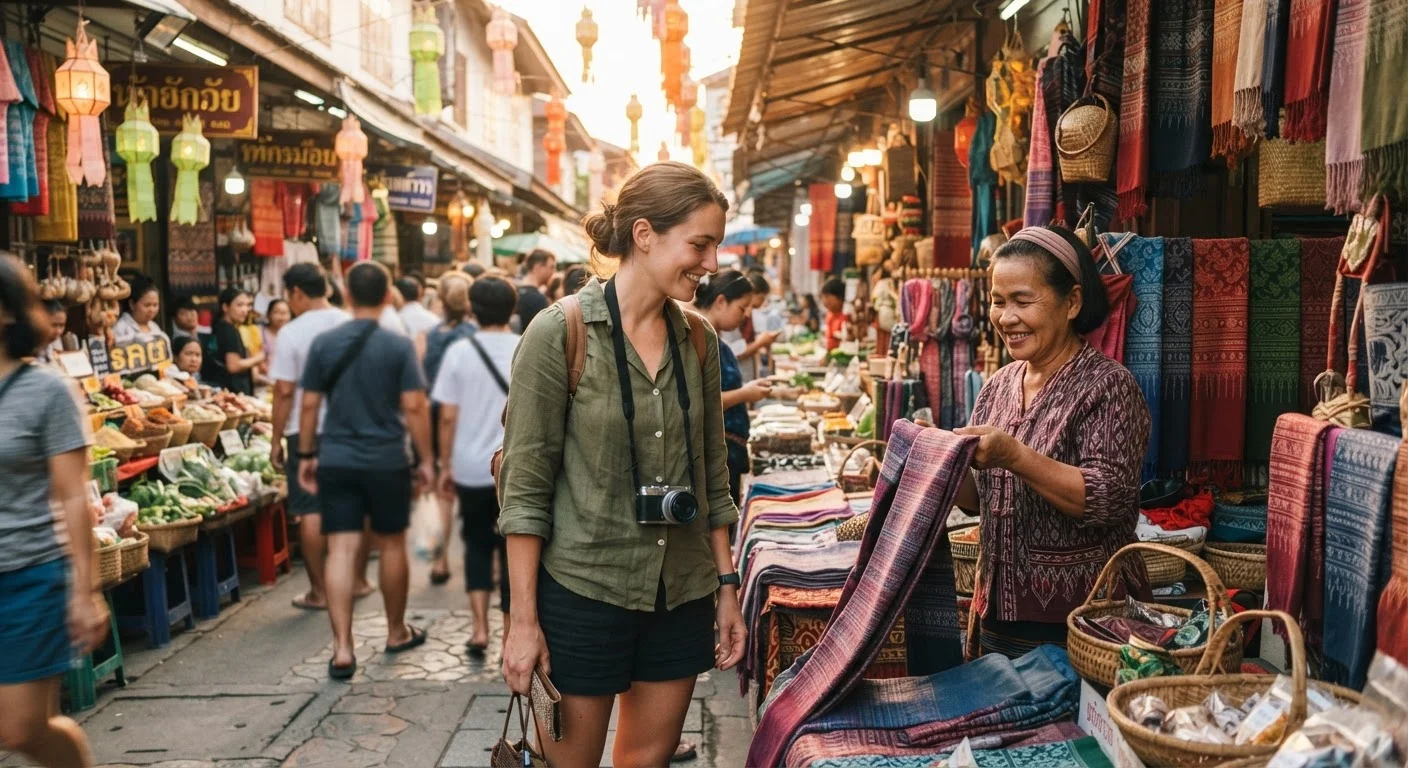
Photographing people, ceremonies, or sacred sites without permission.
Why it happens: Travelers treat a compelling scene as a photographic opportunity without pausing to consider the human or spiritual significance behind it. The impulse to capture and share is immediate; the ethical consideration comes later — if at all.
Arriving precisely on time — or showing up very early — when invited to a social gathering.
Why it happens: Punctuality norms are not universal. Travelers raised in cultures where "on time" means exactly the stated hour may offend hosts in cultures where arriving a little late is the expected courtesy that gives the host time to prepare.
Practical Steps to Travel More Respectfully
Avoiding cultural missteps doesn't require memorizing an encyclopedia. A small amount of preparation delivers outsized results. Before your trip, spend an hour researching local customs around greetings, dress, dining, and photography — our cultural preparation checklist walks you through exactly what to look for.
74%
Travelers who felt embarrassed by a cultural mistake abroad
A survey by cultural intelligence researchers at the Hofstede Insights network found that the majority of international travelers reported at least one moment of cultural embarrassment during their trip.
1 hour
Pre-trip cultural research that reduces major missteps
Travel etiquette educators broadly suggest that even a single focused hour of destination-specific cultural research before departure significantly reduces the likelihood of serious offense.
When you're already in-country, observation is your best tool. Watch how locals interact before jumping in. If you make a mistake — and at some point, you will — a calm, genuine acknowledgment goes further than over-apologizing or explaining yourself at length. Most hosts appreciate visible effort far more than perfection.
It's also worth remembering that not every rule you've heard is accurate. Some etiquette "facts" circulating online are exaggerated or flat-out wrong. See our piece on myths about cultural etiquette to separate durable truths from popular misconceptions.
Local Laws Can Criminalize What Feels Routine
Some behaviors that seem trivial at home — such as chewing gum in Singapore, making certain hand gestures in Greece or Brazil, or dressing immodestly near religious sites in many countries — can result in fines or legal trouble. Always verify local laws through your government's official travel advisory before departure, and treat these as non-negotiable rules rather than cultural suggestions.
Photography deserves its own moment of pause. Pointing a camera at a local person, a religious ceremony, or a sacred site without asking first is one of the fastest ways to cause genuine harm to a community's trust in visitors. Our article on photography ethics and etiquette covers when to ask, when to refrain, and why it matters deeply.